
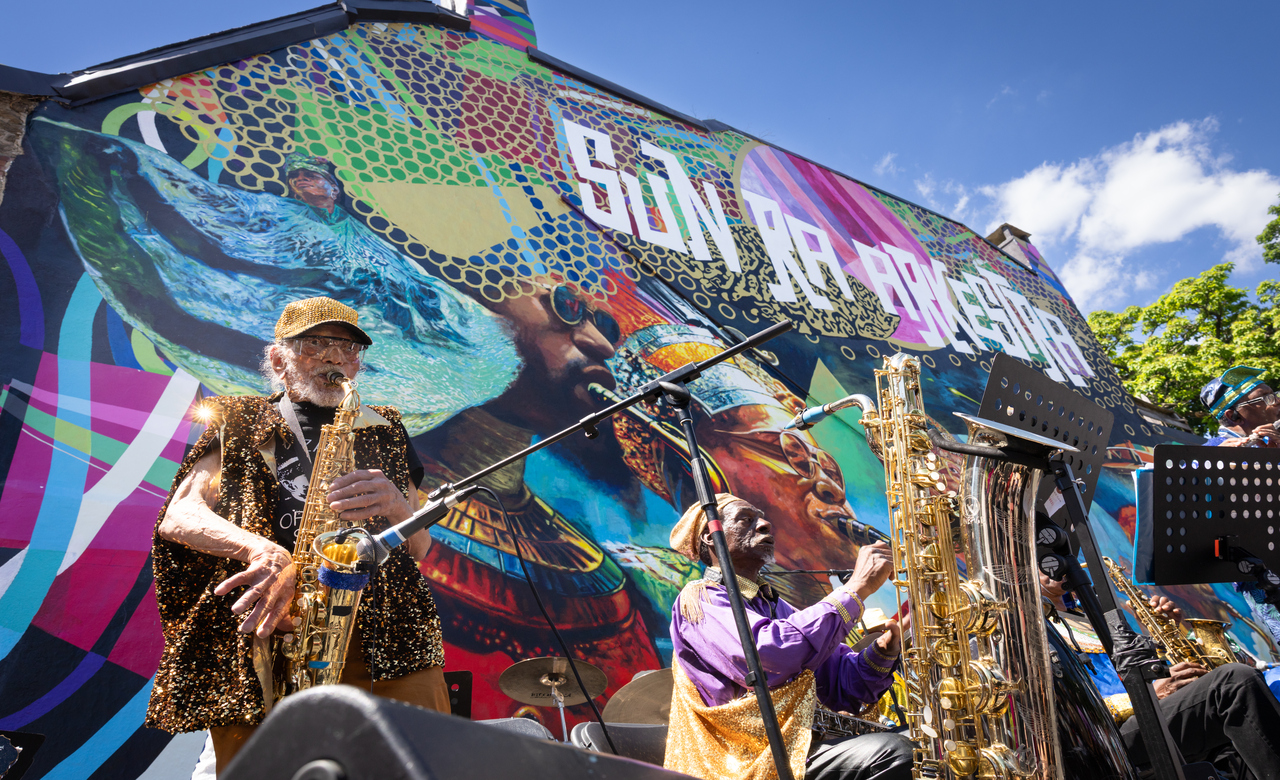
At first glance, Philadelphia’s murals may seem as though they are simply part of the city: covering building facades, lining transit stations, appearing beneath bridges and transforming walls that might otherwise go unnoticed. But behind every image lies something harder to measure: a story, a community, an artist and, in many cases, a conversation about who the people of a city are and what they want to remember.
That is why, on September 30, the City of Philadelphia officially proclaimed October 2026 as Mural Arts Month during a ceremony at LOVE Park. The month-long celebration will honor the artists, communities and stories that have made Philadelphia an international reference point for public art. From October 1 through October 31, the city will host new mural dedications, tours, conversations, community activities and projects designed to bring residents closer to a collection that now includes more than 4,000 works.
The scale of that collection helps explain why murals have long since become more than an artistic endeavor. Since its beginnings in 1984, Mural Arts Philadelphia has evolved from a municipal effort addressing graffiti into one of the most significant public art programs in the United States. The city says its work goes beyond transforming physical spaces. It also seeks to strengthen communities, expand arts education for young people, support restorative justice initiatives and develop projects connected to health and well-being.
A City That Chose to Tell Its Stories on Walls
The significance of Mural Arts lies not simply in the number of murals, but in the process behind them.
For more than four decades, professional artists have worked alongside residents, community organizations, schools, public agencies and private institutions to determine which stories deserve a visible place in the city. That approach has turned many walls into a kind of urban archive a record of the people, neighborhoods, struggles, celebrations and aspirations that make up Philadelphia.
Emily Mello, executive director of Mural Arts Philadelphia, has emphasized precisely that idea: Mural Arts Month offers an opportunity to look again at works residents see every day and discover the stories behind them.
The effort takes on particular significance in 2026, as Philadelphia stands at the center of celebrations marking the 250th anniversary of the United States. Public art provides another way to expand that historical narrative and give different communities a role in shaping how the present is remembered.
One example is Printmaking by the People: Citywide Voices of 2026, a project that brought more than 1,000 people together in community workshops around a deceptively difficult question: What does freedom mean today? The ideas generated through those conversations are becoming part of an artistic initiative intended to turn residents’ voices into a collective portrait of the city.
From Neighborhood Murals to a Cultural Destination
The phenomenon also has a tourism dimension. In 2026, USA TODAY 10Best named Philadelphia the “Best City for Street Art,” the second consecutive year and the third time in four years that the city received the recognition. The award followed a competition in which experts and editors selected the nominees before the public voted.
But the strongest evidence of the murals’ cultural impact remains on the streets themselves. Visitors can explore the city’s murals through organized tours, while residents encounter an artistic language woven into everyday life. Visit Philadelphia notes that Mural Arts has produced more than 4,000 murals since 1984, with tours offering visitors an opportunity to learn the stories behind the works.
That model turns art into cultural infrastructure. It does not require four walls, a ticket or a museum entrance to exist. It occupies public space and, by definition, invites everyone to share it.
October as a Laboratory for the City
The 2026 program will carry that philosophy into neighborhoods across Philadelphia. On October 3, Heart of Kensington Creates Art Crawl will bring together more than 10 new murals, installations and community projects, along with 1.2 miles of collectively created art along the Market-Frankford Line. The initiative aims to strengthen the cultural identity of the Kensington corridor through a combination of art, neighborhood participation and community activities.
On October 17, Vámonos Pa’l Monte will bring that same spirit to Philadelphia’s Puerto Rican community through a four-mile artistic procession from the City Hall area toward Norris Square, connecting identity, memory, landscape and Puerto Rican cultural heritage.
New mural dedications and specialized tours will also take place throughout the month. Among them is a Washington Avenue West walking tour scheduled for October 21 featuring Jane Golden, the founder of Mural Arts, and Conrad Benner.
The month will culminate on October 31 with Mural Arts Fest at LOVE Park, from noon to 5 p.m., featuring live painting, music, art activities, family programming and participation from artists and community organizations.
The celebration, however, raises a question that extends well beyond October: How do you preserve a collection of more than 4,000 works when those works are permanently exposed to weather, urban development and the passage of time?
Mural Arts Month also draws attention to that responsibility. Maintaining Philadelphia’s identity as the “Mural Capital of the World” is not simply about painting new walls. It requires investing in artists, developing the next generation of creative leaders, preserving existing works and ensuring that communities continue to have a voice in shaping the landscape they call home.
In Philadelphia, murals are no longer simply urban decoration. They are visible memory. And throughout October, the city will do something few places can accomplish so naturally: turn its own streets into an exhibition space where history is not hidden behind glass, but displayed in full view of everyone.