
There’s a difference between living somewhere that looks beautiful and living somewhere that truly feels like home.
The Heritage of Green Hills in Cumru Township, Berks County, was recently recognized by U.S. News & World Report as a 2026 Best Senior Living community in both the Independent Living and Assisted Living categories, with Personal Care and Memory Care at the Care Center receiving high ratings for its “Feels Like Home” atmosphere.
For the team at the senior living community, that “Feels Like Home” recognition is particularly meaningful because creating a home-like environment is about much more than comfortable furnishings and attractive surroundings. It means knowing the people who live here, understanding what they need, and helping each person live as fully and independently as possible.
And sometimes, it means letting go of expectations about who someone used to be and meeting them exactly where they are.
Care starts with the individual
The Heritage Care Center provides Personal Care and specialized Memory Care in a small, highly personalized environment. Personal Care residents receive the assistance they need with daily tasks while maintaining as much independence as possible. In Memory Care, residents living with Alzheimer’s disease and other forms of dementia receive additional structure, support, and security.
In both settings, care begins with the person rather than a predetermined routine.
“We’re not expecting them to be anything,” Personal Care Director Michele Butch explained. “We’re just expecting them to be the person that they are right this second.”
That distinction can be particularly important for someone living with dementia.
Families have a lifetime of memories and expectations connected to someone they love. A daughter remembers the mother who always looked a certain way. A husband remembers the wife who juggled dates, names, and appointments impressively. Grandchildren remember a grandmother who remembered all the details of their favorite games.
As dementia progresses, those expectations can become painful and even frustrating for everyone involved. The Care Center team has the opportunity to build a relationship based entirely on who that resident is now — what makes them comfortable, what they enjoy, what they can do, and what kind of assistance will help them have a good day.
The goal isn’t to continually remind someone of what they can no longer do. It’s to find ways to help them continue doing everything they still can.
The right support can help someone thrive
Families are sometimes reluctant to consider Memory Care because they feel that their home is the best place for their loved one to be. In reality, a more structured environment with ample opportunities for engagement, socializing, and expert care can help them thrive.
A person living with dementia may reach a point where navigating the world becomes difficult. They may stay in their room more often, stop participating in activities, struggle with grooming or dressing, or simply appear lost and unsure of what to do next.
With the right level of support, things can change.
“We routinely see residents who had retreated more into themselves begin to attend activities and meals, taking a renewed interest in the world around them,” Butch said. “I remember a gentleman who would sing in Italian here, something he did throughout his life when he was in a good mood. When residents move to Memory Care, they often are happier because they are receiving the correct level of support and connection.”
The move to memory care doesn’t necessarily mean regaining an ability that has been lost, but it does create an environment in which someone can make the most of the abilities they still have.
Even something as ordinary as lunch can become an opportunity to preserve independence. As dementia progresses, a resident may have difficulty using a knife and fork, but still be perfectly capable of picking up food and eating independently. The solution might be as simple as adapting the meal into a sandwich, so that it can be eaten by hand.
It may not be the way the person ate five years ago, but it allows them the dignity of doing something for themselves today.
Small enough to know the people who live here
The Heritage’s Memory Care neighborhood has just 20 residents, allowing team members to get to know each person closely.
That matters in dementia care.
Familiarity can provide reassurance even when someone’s ability to remember names and details has changed. A resident may not be able to tell you a caregiver’s name, but they may recognize the face and understand on another level that this is someone they know and trust.
Consistency is so important that Care Center leaders deliberately identify team members who are particularly well suited to Memory Care and work to maintain familiar faces in the neighborhood.
Memory Care is also prioritized when staffing adjustments need to be made. The Care Center generally staffs an additional person on each shift beyond its baseline staffing needs, with team members cross-trained so they can step into different roles when extra support is needed.
The result is care that feels personal and familiar, rather than institutional.
A beautiful place to call home
Of course, the physical environment matters, too.
The state-of-the-art Care Center was designed to be comfortable, welcoming, and filled with natural light. Personal Care offers spacious private studio and one-bedroom suites with kitchenettes, along with outdoor spaces that include gardens, raised beds, a water feature, pergola, and fire pit. Memory Care residents enjoy private studios as well as access to secure outdoor spaces where they can enjoy fresh air, gardens, and views of The Heritage’s scenic campus.
Personal belongings can make those spaces even more familiar. Residents and families are encouraged to bring cherished furniture, photographs, artwork, and other belongings that help a new residence feel like their own.
And home wouldn’t be home without good food.
The Care Center has its own dining rooms, but residents aren’t treated to a lesser version of The Heritage’s famously delicious food. The Care Center menus mirror what’s served in the Independent Living neighborhood. That can mean everything from fresh fish and seasonal dishes to comforting favorites such as roast turkey with homemade stuffing or spaghetti and meatballs.
Food is nourishment, but it is also familiarity, pleasure, memory, and an important part of everyday life.
Part of the larger Heritage community
The Care Center isn’t an isolated part of campus. Connections with The Heritage’s Independent Living residents help make Personal Care and Memory Care part of the larger community.
Independent Living residents volunteer in the Care Center, help with programs, and participate in the Tri-C Committee’s Welcome Buddy program. Welcome Buddies visit new Care Center residents, answer questions peer-to-peer, and help them become comfortable in their surroundings.
What was originally intended to help during the first days and weeks after a move has evolved into something more meaningful.
The buddies keep visiting. They stop by to see people when they’re in the Care Center. They check in with residents they’ve gotten to know. And relationships that started as a formal welcome have become genuine friendships.
For the Independent Living residents, those relationships provide connection and purpose. For Care Center residents, they offer companionship and the comfort of having another familiar face stop by to say hello.
A home for families, too
Perhaps one of the most important elements of a home-like environment isn’t something you can see during a tour.
It’s the relationship the Care Center builds with families.
The transition to Personal Care or Memory Care can be emotional, particularly for a spouse or adult child who has been providing care at home. Families may know their loved one needs additional support and still wonder whether they are making the right decision.
The Heritage team understands that those families need care, too.
Sometimes that means answering a spouse’s phone calls every day while their loved one adjusts. Sometimes it’s sitting down for an hour — or longer — with a family member who needs to talk. Staff members provide educational resources, explain changes associated with dementia, answer questions about why care is provided in a particular way, and reassure families as they navigate unfamiliar territory.
Once the daily responsibility for caregiving is lifted, something else can happen, too.
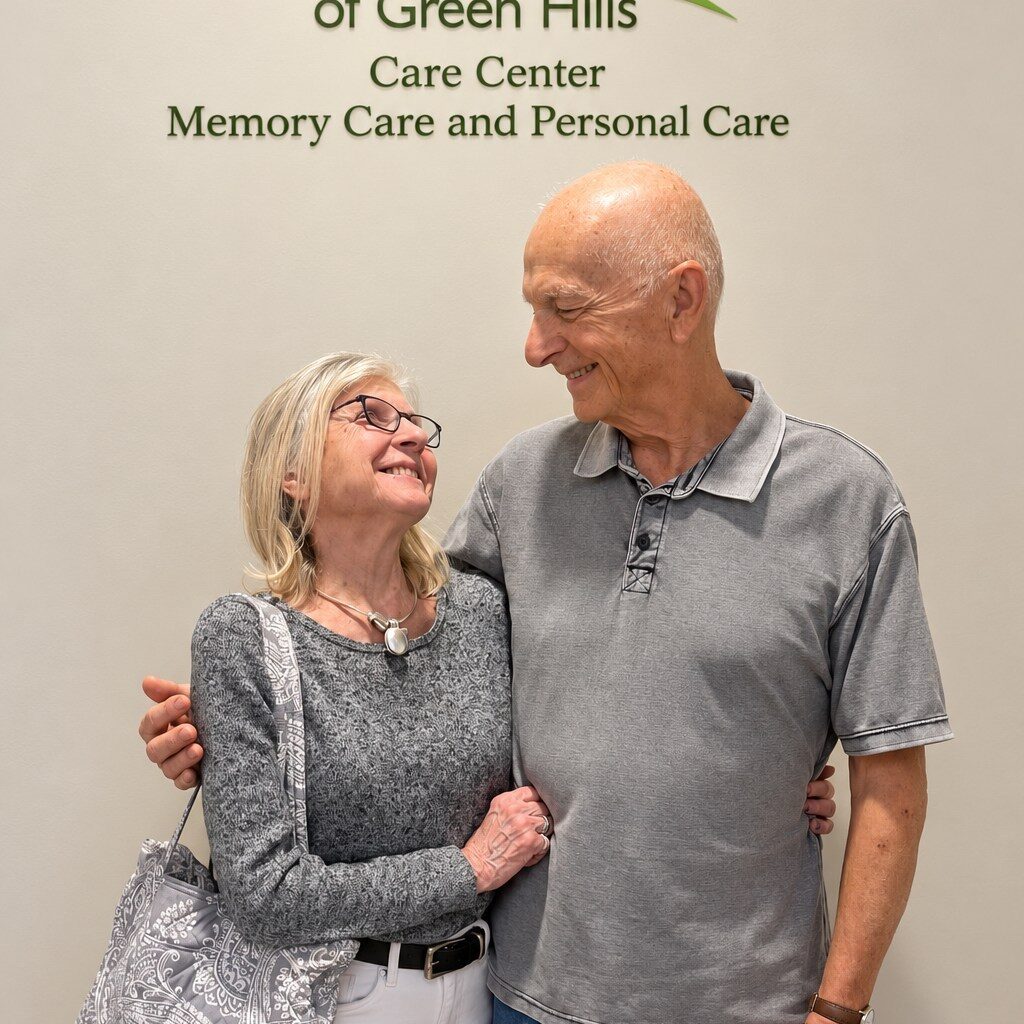
A husband can visit his wife and simply be her husband. A daughter can sit down for lunch with her mother instead of worrying about whether she has eaten. Families can spend their time together enjoying one another instead of managing medications, meals, bathing, dressing, and the countless other responsibilities of caregiving.
Residents receive the support they need. Families get to be families again.
The Heritage Care Center isn’t just “home-like.” It’s home.
To discover if Care Center at The Heritage of Green Hills is right for your loved one, schedule a personal tour at https://heritageofgreenhills.com/contact.