
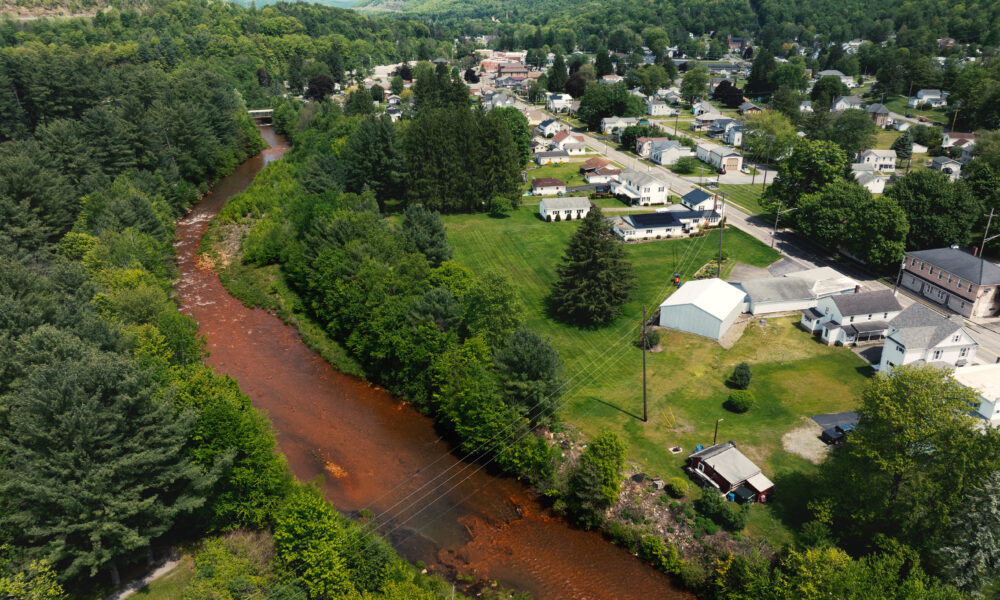
When the lingering sun of late May inches along to peer down on the Tioga River — its water glistening — it does so as birds chirp overhead, as a chipmunk darts through rustling riverbed brush, and as yellow butterflies dance into the gorge.
This river doesn’t roar; it trudges along steadily. Water laps over rocks and flushes back to create a current that freshwater kayakers might consider a Class 2. As it does, it leaves behind deposits of minerals dredged up from mines that coal barons dug nearby more than two centuries ago.
Standing above the river on a bridge in Blossburg, a North Central Pennsylvania town of 1,500 that straddles the Tioga, it’s not immediately apparent that there’s anything wrong with the red-rocked river. Except, while life teems along its banks, there is virtually nothing beneath the water’s surface.
In this stretch of the Tioga, there are no fish. There are no bugs — save for a small number of macroinvertebrates. And there haven’t been for decades. Five coal mines that line its tributaries, left unsealed at the end of their productive lives, have long leaked highly acidic water rich in metals like iron and aluminum, which choke out aquatic life. It’s a process known as acid mine drainage; as of 2020, abandoned coal mines left more than 850,000 acres still damaged across the country — 84% of them in Appalachia.
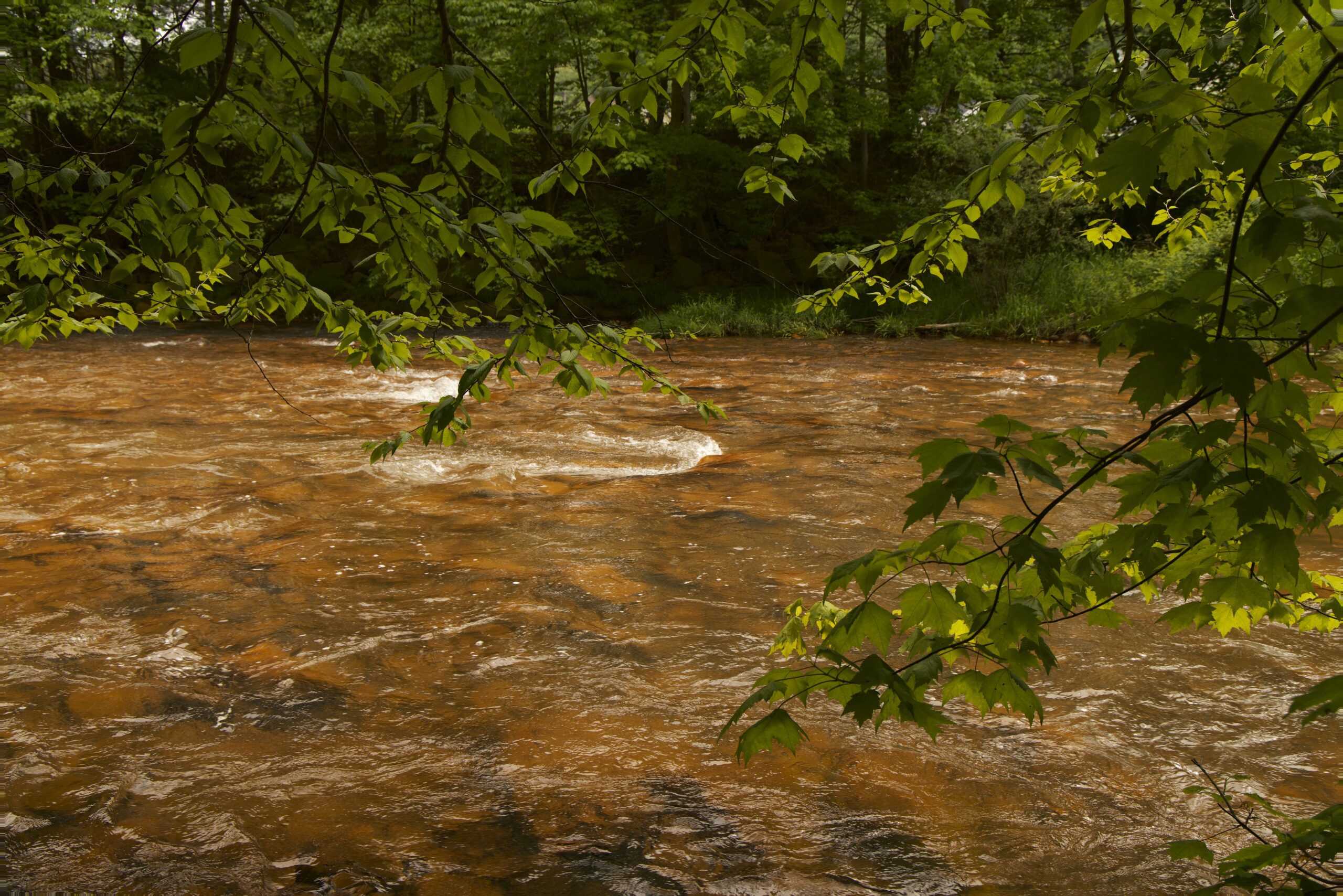
Drainage from abandoned coal mines has caused the water of the Tioga River to turn orange.
“It’s dead,” said Andrew King, the mine drainage program coordinator at the Susquehanna River Basin Commission, a multistate taskforce devoted to protecting the river. The Susquehanna receives flows from the 58-mile Tioga after it snakes north for 58 miles into south-central New York and meets with another to form the Chemung River. At over 440 miles, the Susquehanna is the longest river on the East Coast. It eventually spills into the Chesapeake Bay.
For several years, King has been working with a team of engineers, residents and stakeholders on the construction of a treatment facility designed to clean up the Tioga, bring back cold water fish species and create an outdoor recreation economy that comes with a river alive with native brook trout, wild brown trout, dace, sculpin and other aquatic life.
“The Tioga is going to go from dead to being a trout river, and not a little trout river,” he said. “The Tioga River is going to turn into a destination fishery.”
The facility’s construction has been more than two decades in the making, as local conservationists, led by 40-year residents Charlie and Joyce Andrews, of the Tioga County Concerned Citizens Committee, have worked to build political will for the project. After all, Pennsylvania is home to more than 5,500 miles of waterways polluted by acid mine drainage left behind by legacy coal mining. Fighting for their stretch of freshwater to be cleaned ahead of others required a steady drumbeat of grant applications, studies and meetings.
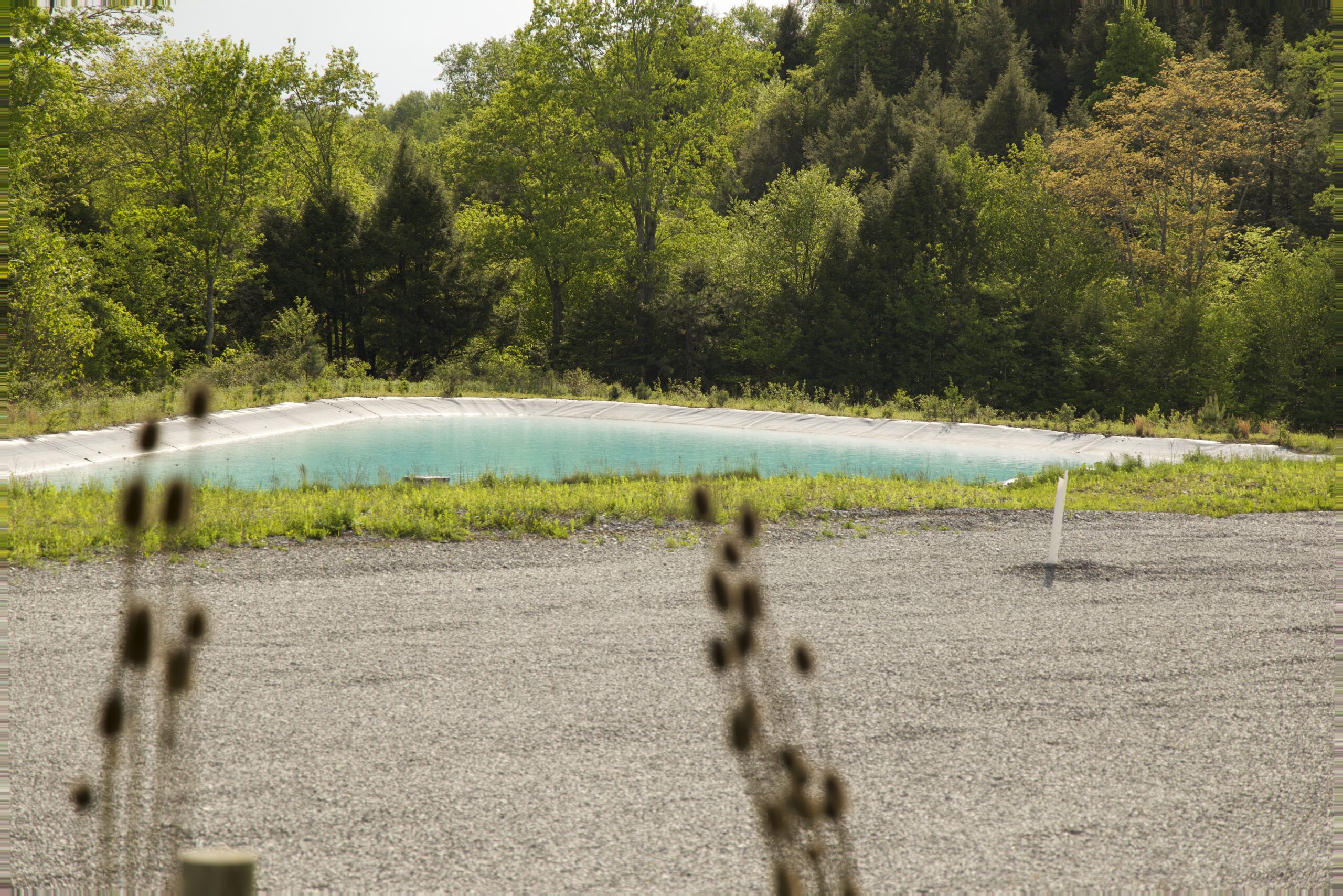
A polishing pond helps remove harmful materials and sediment at a water treatment facility in Fall Brook.
In 2015, they took a first step in building two passive treatment systems that drain pollutive minerals over limestone beds to lower the water’s overall acidity. The systems were successful, but small in scale — only impacting a five-mile stretch of the Tioga watershed. But in 2024, the Susquehanna River Basin Commission received a $68 million grant from the Biden-era Infrastructure Investment and Jobs Act for a system designed to clean the entire river by functioning more like a sewage treatment plant. Wildlife should reappear within a matter of years once the system is operational.
“It happens way faster than anybody expects,” King said.
The Tioga active treatment system was the largest grant recipient that year, and organizers say it is still on track even after Congress, in January, reallocated more than $500 million for abandoned mine reclamation to other causes, siphoning $169 million away from Pennsylvania. Advocates argued the jobs act cash injection, though historic, was well below what was needed to clean up all the mining pollution in the U.S. How successfully the Keystone State can clean up its coal pollution on a leaner budget is an open question.
Nonetheless, the Tioga project is slated to come online by 2029.
Tioga County Commissioner Shane Nickerson says that, growing up in Blossburg in the early ’80s, he didn’t know anything other than life along an orange-stained freshwater artery.
“You don’t realize that the damage there from acid mine drainage is really a thing,” he said. “It’s orange — your mother always tells you, ‘If you’re going to go in the river, wear your old sneakers,’ … and that’s just kind of how it was.”

Shane Nickerson stands of the banks of the Tioga River in Blossburg.
Nickerson has fond memories of the Saturday mornings of his childhood when he would wander into old abandoned coal mines with his friends, flashlight in hand. “You’d say, ‘OK, you guys go this way, we’re gonna go this way,’” he recalled. It was not obvious to him, as a youth, that nothing lived in the Tioga. Until one day, when he caught a wild fish and tried to make it a pet. When it was clear it was beginning to die, he attempted to release it into the Tioga a few blocks from his house.
“That’s when I figured out that oh, there’s something wrong with this river,” he recalled.
There’d been something wrong with the Tioga long before Nickerson was born. “At Blossburg,” reads a 1925 article in the New York-based Star-Gazette, the Tioga “is polluted with mine drainage, the sulphurous content of which has coated the stones in its bed with a thick yellow-brown deposit.”
Standing by the riverbed in Blossburg, Nickerson reflects on the complicated legacy big industry leaves behind in blue-collar towns. Scars of pollution are coupled with a tight-knit sense of community forged on worker solidarity. Blossburg was home to William B. Wilson, the country’s first secretary of labor, who cut his teeth organizing mineworkers in town. In the mid-20th century, Pennsylvania’s mines employed close to 200,000 people. Today there are fewer than 5,000. In Blossburg, the industry is shuttered, but still celebrated. The town hosted its 34th annual coal festival at the end of May.
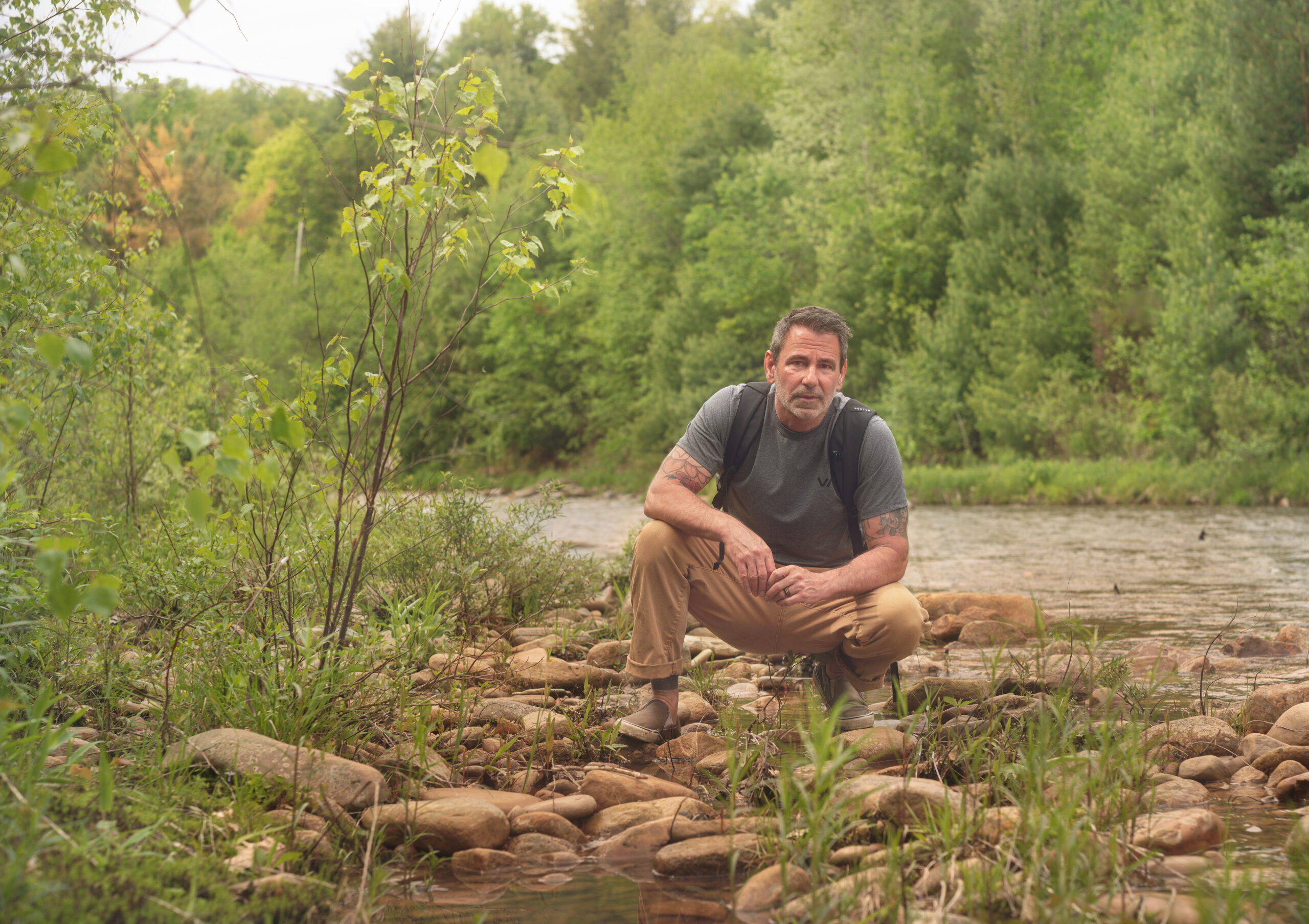
Nickerson poses for a portrait the edge of the Tioga River.
“We wouldn’t have been in existence without it,” Nickerson told Capital & Main. But, as new industries have come to town, like fracking and manufacturing, he considers the cost of cleanup that coal left behind. It is a cruel irony that many of the areas grappling with such damage are uniquely ill equipped to handle it. Towns with abandoned mine land face higher poverty rates than those without, according to the Ohio River Valley Institute, a nonprofit thinktank that also asserts that these scars deter future economic development.
“I just think that using things up and then leaving it alone and just moving on just is unacceptable,” said Nickerson, who served as Blossburg’s mayor for 10 years.
The first Democrat elected to the Tioga County Board of Commissioners in 12 years, Nickerson has made it a priority to breathe economic life into an area facing population declines, school closures and job losses. Before taking office, Nickerson, alongside his wife, worked to repair empty Main Street storefronts and push for the creation of a skate park in town. Now, as commissioner, he is focused on tackling the region’s opioid crisis. The county ranked seventh in the state for drug overdoses in 2022.
But it wasn’t until Charlie and Joyce Andrews came around, he said, that the community felt they had any power to fix longstanding issues with the Tioga.
The Andrewses, who moved to Tioga County in the 1980s, reflect on decades of work with an acute sense of humility — though many call them local heroes. Like Nickerson, they’ve never known a clean Tioga River. They also never saw a dirty one as an inevitability. Together they helped fend off a proposed landfill in the 1980s — once successful, they shifted focus to the river.
“We put in for some grants. … A couple times, we got turned down, and then we’d go and would apply again, and eventually we would get a grant,” Charlie Andrews recalled. They would fundraise, but never imagined getting nearly enough to find a full-scale solution for the river.
“Once the river gets polluted, it takes a lot more to clean it up,” Joyce Andrews said. “It was basically unintended consequences of an industry that had helped build the area.”
The last mine in Tioga County shuttered in 1990. Nearly 200 years before that, German immigrants were navigating through what would become Blossburg when they came upon a lump of black, porous material they realized was capable of generating energy when burned. The first mine sprouted up around 1815, and with it, a railroad to carry that coal to New York. Towns began to spring up around it, some that have nothing to show for their existence today. The town of Fall Brook, six miles east of Blossburg, was, in 1862, home to hundreds of houses, a company store, carpenters and blacksmiths, and a school. Today, there is no trace of it, save for a grown-over cemetery, where headstones are faded and mossy, if visible at all.
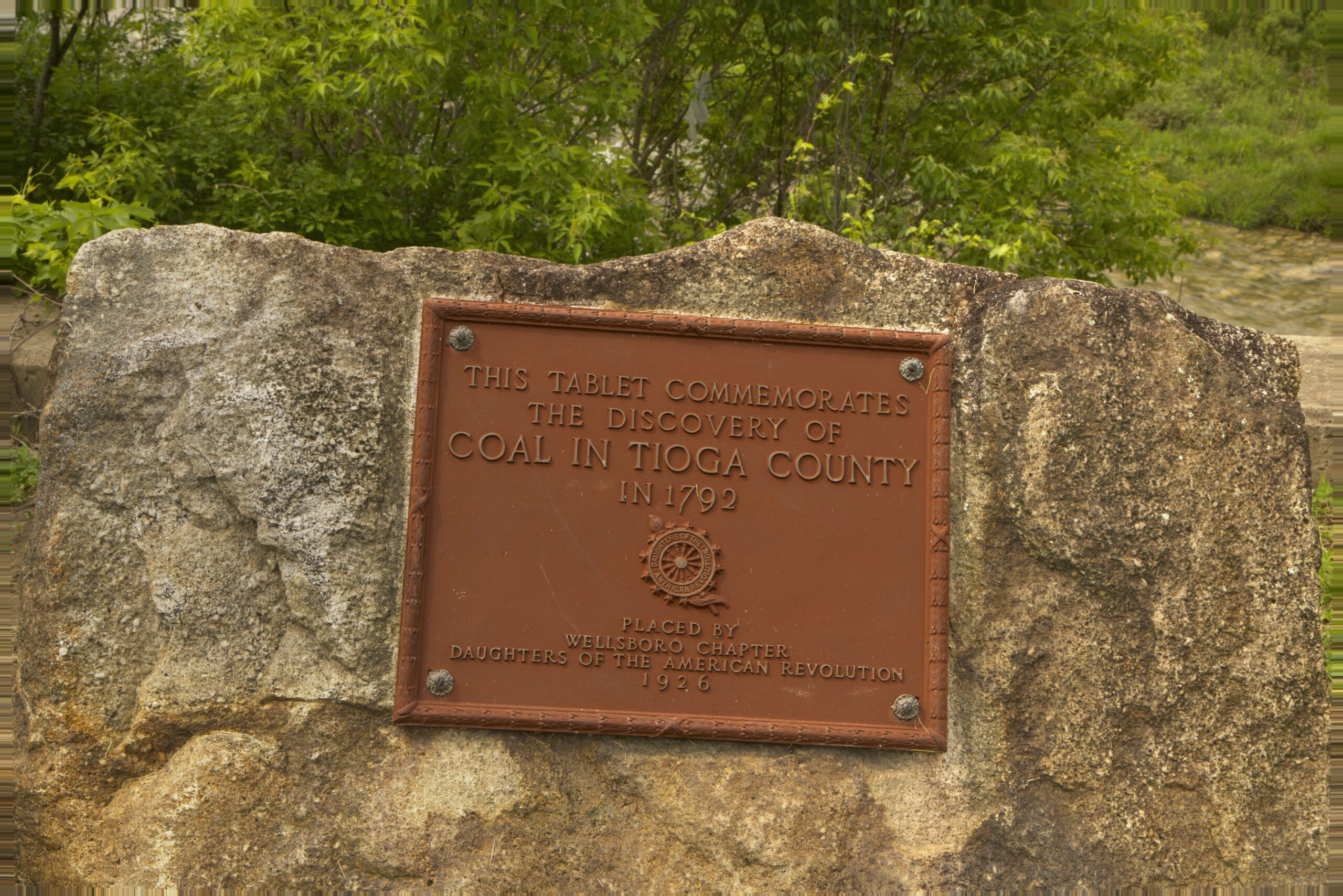
A historic plaque in Blossburg commemorates the discovery of coal in Tioga County in 1792.
Damage from deep mining — when coal is removed through shafts tunneling hundreds of feet underground — in the late 1800s, and eventually, surface mining, in which coal is removed at the Earth’s surface, in the mid-20th century, has left scars not just in the water but on the land. Tree-planting nonprofit Green Forests Work recently teamed up with students at local Commonwealth University-Mansfield to rebuild 300 acres’ worth of forest around the Tioga River. Their work builds on that of a group of longtime fishing enthusiasts who, over nine years and many weekends, said they have planted 22,500 trees.
Longtime Tioga County resident and former county planner Jim Weaver is one of those weekend workers. His organization, a local chapter of Trout Unlimited, has also worked on streambed restoration in anticipation of trout populations returning to the Tioga.
Another thorn in the state’s side: In the last 60 years, a non-native insect called the Hemlock woolly adelgid has proliferated in Pennsylvania, threatening to endanger Hemlock trees which, from the riverbed, provide crucial shade for trout that can survive only in cold water. Weaver helped create a tree-planting strategy to offset this species loss.
For the years of anticipation of a clean Tioga to precede the launch of an active treatment plant, maintaining a healthy river ecosystem will require more than just metal-free water, said Jennifer Demchak, professor of environmental, geographical and geological sciences at Commonwealth University-Mansfield. When enough macroinvertebrates are able to survive in the Tioga, fish will begin to navigate in that direction, “but you can’t predict what’s going to happen in nature,” she added.
The climate crisis introduces a slew of unknowns — rising air temperatures warm the water, for instance, which is exacerbated by a lack of tree cover, and the death of trees causes erosion, which may bring silt back into the river that suffocates wildlife, as it has before. The river is a fragile ecosystem made up of many interconnected elements that, if altered by changing climate, could hamper the project’s success.
Yet, residents still daydream about the clean fresh water they hope is to come.
“It’s going to change everything,” Nickerson.
Weaver remembers that during one of the first community meetings he attended to rustle up support for the river cleanup project in the early aughts, attendees were each asked to share their vision of the river 50 years on.
“People spilled their guts,” he said. “One of them said, ‘We need to let the people in Mansfield know that the Blossburg kids are coming, because when there’s trout in the Tioga River, they’re going to be fishing the whole way.’”
Copyright 2026 Capital & Main.
Photos by Matt Gunther for Capital & Main.