
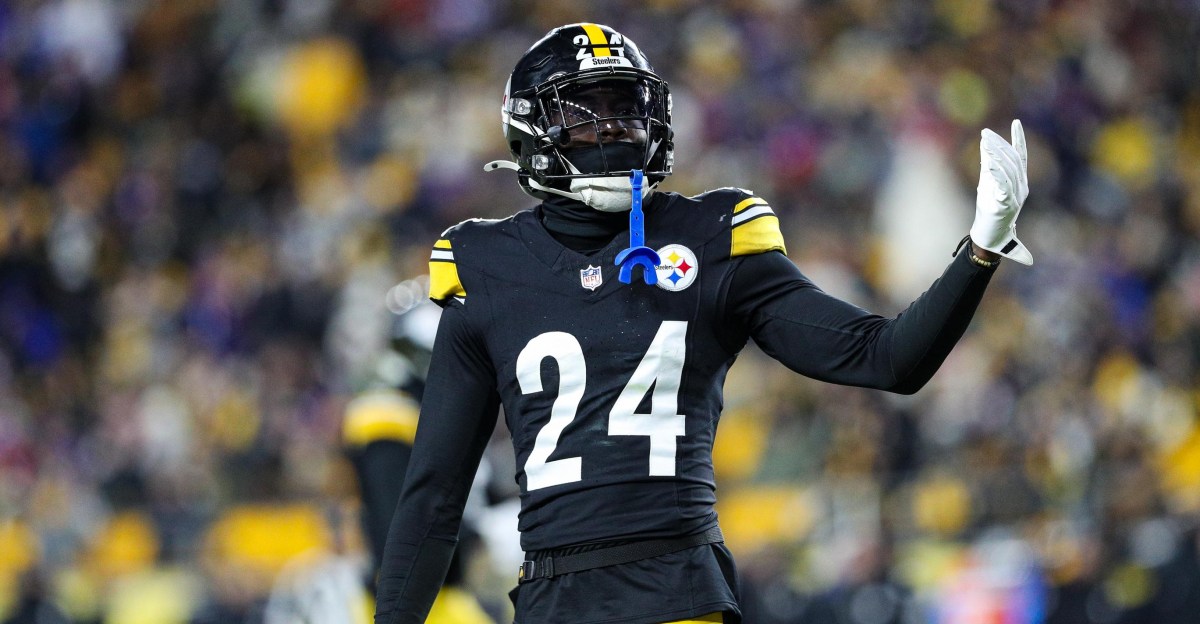
This is an absolutely fascinating article by Jonathan Jones at The Athletic. While he discusses the Porter Jr. trade and why many in the league think Dallas overpaid, he also talks about why discounting future draft picks (e.g., “A 2027 second round pick is more valuable than a 2028 second round pick”) is incorrect and driven by GMs’ employment insecurity. It even cites research by Richard Thaler, a founder of modern behavioral economics.
Here are some of the relevant paragraphs on JPJ, but it is a longer article, and I’d encourage you to take a minute to read it.
The Joey Porter Jr. trade presented perhaps the largest delta between public perception and league perception of a deal that I have seen in some time.
On Wednesday night, the Pittsburgh Steelers did their usual thing: deal a top draft pick to the Dallas Cowboys. First it was George Pickens, then Broderick Jones and now Porter, who went to the Cowboys for a 2027 sixth-round pick and a 2028 second-rounder. Steelers fans believe general manager Omar Khan didn’t get enough. Most of the NFL disagrees.
[…]
Many around the league believed Dallas overpaid, based largely on the belief that teams don’t view Porter as a top-tier corner. The Cowboys have a strong recent history of overpaying for talent: a fourth for Trey Lance, a fourth for receiver Jonathan Mingo, a fifth for Joe Milton, a fourth for Rashan Gary.
“They were bidding against themselves for Porter,” says one executive with a team that was erroneously tied to trading for the cornerback. (There was at least one other team in the running, though: Lions head coach Dan Campbell conceded Friday that Detroit was “in on” Porter.)
[…]
The 2027 draft is set to be the deepest in years, so in that case a draft pick in a better class is more valuable than a pick in a lesser class. But no one is stopping Khan from using his 2028 second-rounder as ammo in next year’s draft, or even before the Nov. 10 trade deadline to help the 2026 Steelers.