
Late last month, a scheduled metal and alternative rock show at a popular Lackawanna County music venue was canceled over online bickering among fans and the artists themselves.
That one-sentence summary of what happened might barely rank as newsworthy, for some.
For those in the artistic community, the entire debate centers on an existential struggle that came for them first but, someday, will have to be reckoned with by all.
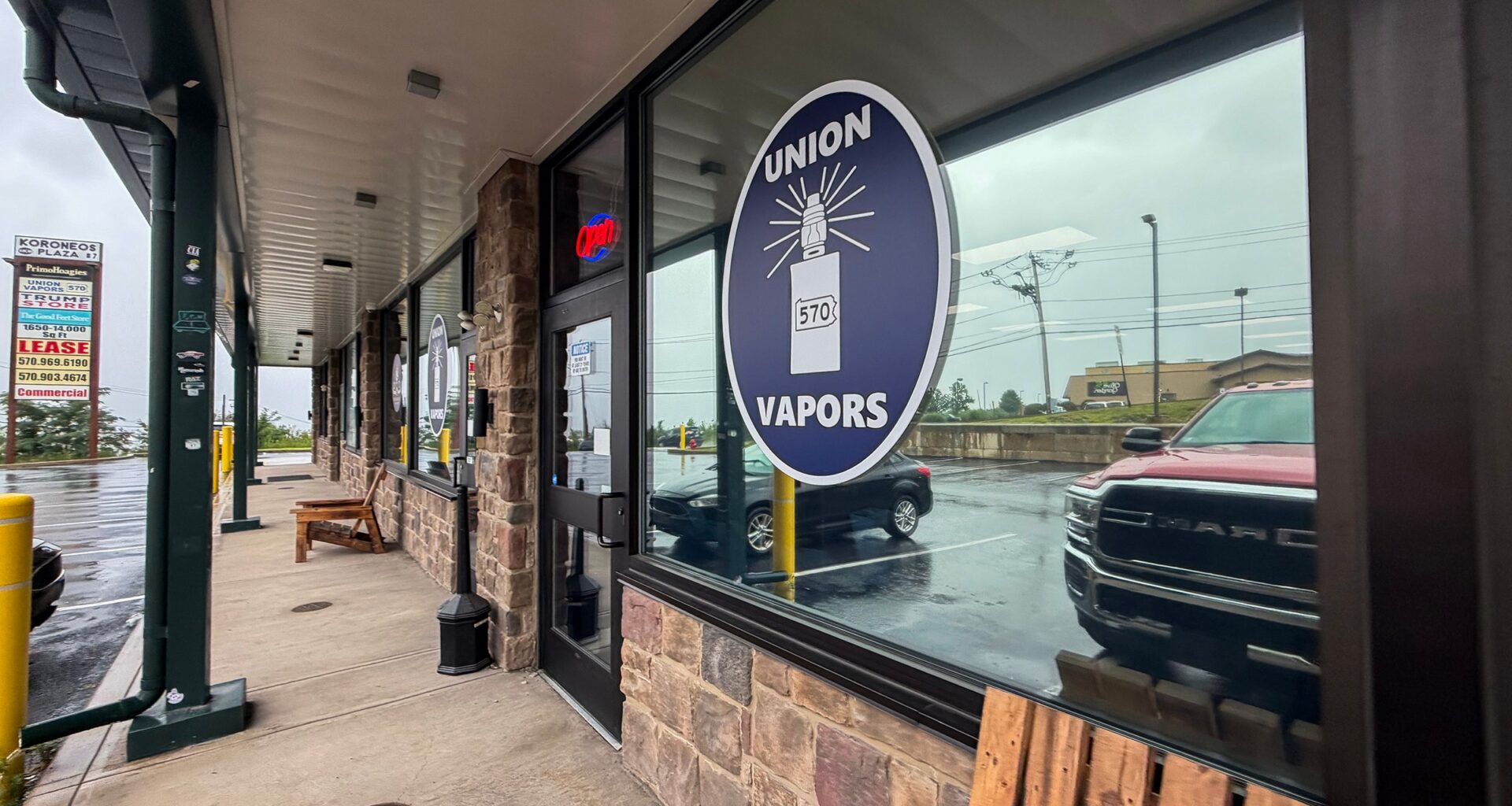
To go into a little bit more detail: A handful of acts — Slapjaw, Purple Lung, DOUR and Shodemon — were scheduled to perform a Sept. 25 show at Union Vapors 570 in Dickson City. One of the bands, the Scranton-based Slapjaw, posted an image evidently generated by artificial intelligence on its social media platform to promote the show.
The bands decided to cancel the show after a lively online discussion between critics of AI use and a Slapjaw representative devolved into “bullying,” said Ken Stucker, a co-owner of the venue. Union Vapes 570’s social media accounts became the center of a continued debate over how AI should be used in the arts when news of the cancelation hit, and Stucker vowed to create a written policy that would prohibit any act that wants to perform at his venue from using AI to promote the gig on any platform.
Only issue is, he doesn’t know how far this policy could, or should, go.
Modern artists are too often caught between the lure of affordable digital tools that can easily generate promotional materials with a few keystrokes and the click of a button and that community’s unwritten standards that protect the most important tenets of art itself: Humanity, authenticity and individuality.
It is worth wondering whether any of those can truly be achieved with the help of AI. It is also worth considering whether AI simply helps all of us enhance all three. That is why venue owners like Stucker get caught in the middle when having to develop anti-AI policies. On one hand, AI tools offer the less artistic among us to execute artistic ideas they otherwise wouldn’t have the ability to create. On another, isn’t true art based in our ability to create it without the help of computers inspired by work developed by tens of thousands of other artists?
If anyone is going to understand the value of artistic ability, and spearhead the need for the guardrails that will protect it over the long term, it has to be artists backing other artists.
This is an issue considered vital to understand and address not just by promoters locally, but by one of the world’s most recognized leaders.
Pope Leo XIV published a message on his X account stressing the Catholic Church’s desire to “renew alliances” with artistic and cultural institutions in order to “safeguard our humanity” in the face of AI’s advancement.
“In this era of artificial intelligence, it is becoming urgent to distinguish human art from what machines produce,” the pontiff wrote. “There is an ontological difference, even before an aesthetic one, between art and what a machine can generate through statistical calculation based on millions of images created by others.
“Algorithms lack the spark of humanity.”
It very well could be that, in 50 years, that six-word sentence winds up rating among the most prescient messages this pope ever delivered. Because the time to seek, define and protect that spark for mankind, is unquestionably now.
We believe the issues brought forth in this story could provide the impetus for an all-important discussion human beings need to have as technology and artificial intelligence change, every day, the world we know. The world we built.
There is a longstanding tradition in the music industry that promotion of the act has to be as genuine, as authentic, as the music itself. As Stucker so poignantly pointed out, these were things meant to be done affordably, but also authentically.
The acclaimed astrophysicist Neil deGrasse Tyson famously described the difference between science and art. Science, he said, is a study of the preexisting. A scientist can discover something about the universe, all the while knowing that it existed even undiscovered. Art is not that way.
“In the arts, what you create, no one born before you, or who will be born from your death onwards, will ever compose exactly the same thing you did,” Tyson pointed out. “So in that sense, art is a unique expression of the individual.”
In that way, artistic integrity is distinctly human, the most key cog in a world that thrives on creation. It is up to us to determine how much of it has to stay human, and the lengths we’ll go to make sure it stays that way.
Maintaining artistic integrity shouldn’t be about a rejection of all technology. But it should insist, above all else, that human intention and human effort remain at the center of that work.