
Throughout his remarkable 38-year career at Boeing, Anthony (Tony) Parasida (BS CE ’78) helped develop iconic aircraft like the V-22 Osprey and the F/A-18 Super Hornet. A civil engineer, he rose from a drawing board in Philadelphia to become the company’s Senior Vice President for Human Resources and Administration.
No matter the project or position, Parasida credits his success to the foundation he received at the University of Pittsburgh, to the strong work ethic interwoven into the fabric of his hometown, and to his instinct to work collaboratively. He sees these qualities thriving in the Swanson School of Engineering, and it’s something he has chosen to support.
A civil engineering student from the start
Parasida grew up in the borough of Leetsdale, on the Ohio River, outside of Pittsburgh. The youngest of four siblings, he excelled in math and science and wanted to be a civil engineer. “I really didn’t know what they did in real life,” said Parasida, who enrolled at Pitt in 1974. “But from the start, I was a civil engineering student.”
He loved his time at the University. “The campus was really rocking in those days,” he said. In 1976, Pitt’s football team won the NCAA Division I National Championship. Parasida recalled the electric atmosphere on campus, which left an indelible mark on him.
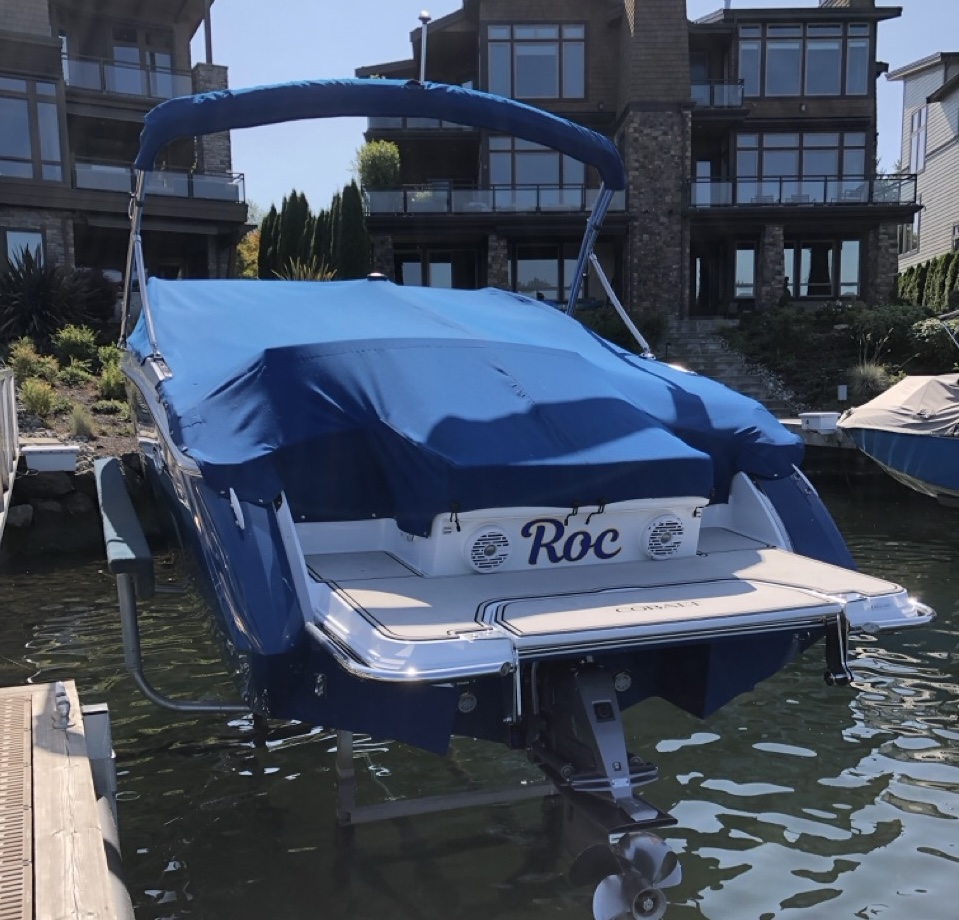
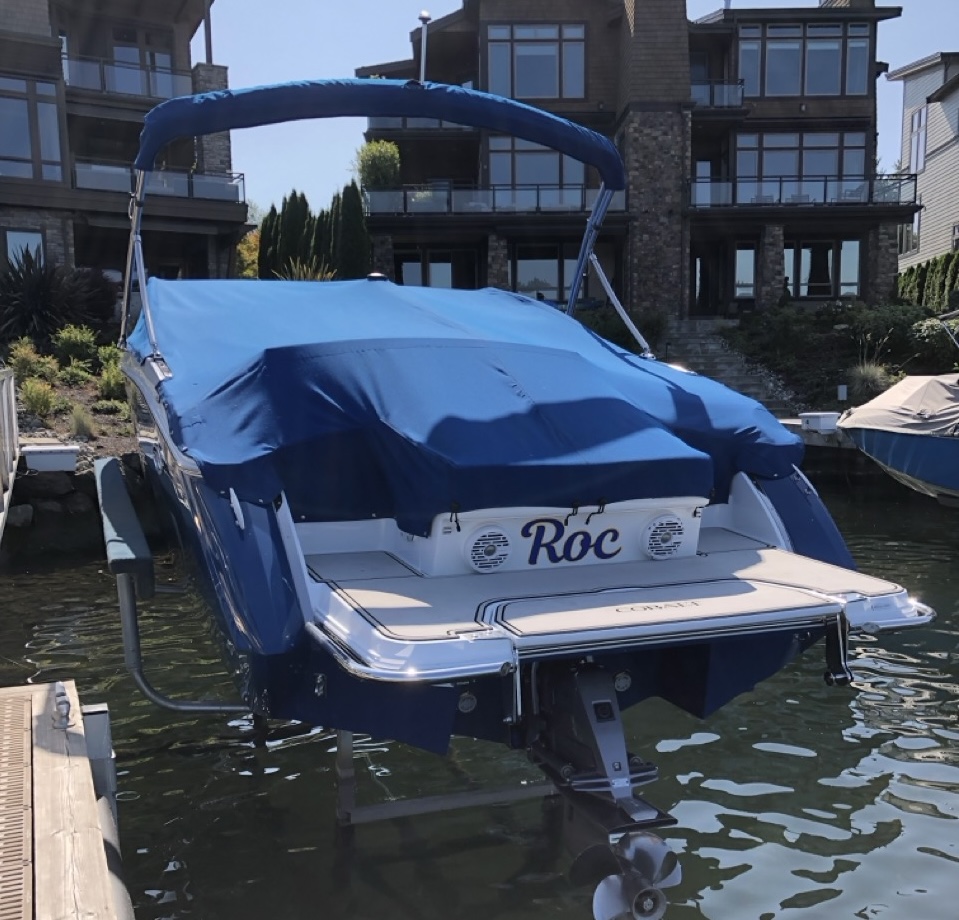
Parasida named his boat ROC after the Pittsburgh Panthers mascot.
If the atmosphere was exciting, the academics challenged and inspired him. Benedum Hall, which opened in 1971, was a new building with impressive facilities. “I remember the laboratories, where I got my first hands-on experience. I thought the laboratories were incredible.”
Parasida remembered his first-year orientation, where the incoming engineers were told that only half of them would reach graduation. He was one of the students who earned a degree, and the first of his siblings to finish college.
“My father expected that I’d go to work at the steel mills,” Parasida said. “It’s funny how that worked out. Pitt was the only school I applied to, and the rest was history.”
An opportunity to soar
During Parasida’s senior year, aircraft manufacturer Boeing visited the school during a recruiting fair. He was weighing two offers from other companies when the global aerospace giant reached out to him with a position, which he accepted.
“I spent a lot of time in Philadelphia and then St. Louis and Seattle, and then back to St. Louis, and Chicago,” he said. “I had many different jobs on a myriad of projects, doing everything from engineering, to engineering leadership, to general management.
“The Pitt education prepared me for this. And coming from Pittsburgh, there’s a work ethic of keeping your head down and doing a good job day in, day out, and good things will happen.”
In 1984, he began working on the V-22 Osprey, a tiltrotor aircraft that takes off vertically and flies like an airplane. He started on the drawing board and left as the program manager. It would become his favorite project, one that taught him the virtues of patience and persistence.
“It takes years to develop a new aircraft,” Parasida said. “You go through a development program and a flight test program. You deal with issues that arise and then programs get cancelled and restarted. It takes so long to see your total result.”
From the V-22 Osprey, Parasida worked as the program manager on the F/A-18E Super Hornet fighter jet. For his and his team’s work, he received the U.S. Navy’s prestigious 2004 “Ned Conger” F/A-18 Distinguished Service Award, which recognizes “commitment and dedication to the success of the F/A-18 Program.”
Parasida was the first contractor and the first person from Boeing to receive the award. He credited his team and the profound responsibility that comes from collaborating with the Armed Forces. “You know that you’re doing something that makes a difference for the men and women in uniform, a difference for the country,” he said.
In 2013, after 35 years of engineering, managing, and leading projects and units across Boeing, Parasida moved into what would seem foreign territory: human resources. He began serving as Senior Vice President for Human Resources and Administration and joined Boeing’s Executive Council.
“I wasn’t educated from a pure human resources standpoint. I wasn’t an expert,” he said. “But I knew to surround myself with great people and apply the same leadership principles I applied to all the projects I worked on.”
Looking around corners
As a young design engineer, Parasida had developed a transmission deck for an aircraft. One day he got a call from the team building it with bad news. The deck was constructed with a hard material that caused damage when it was mounted.
“I learned that you must look around the corner at all the repercussions of everything that you do,” he said. “I took that experience and have applied it to whatever I’m doing in life, whether it’s people or engineering or business related. Make sure you’re not doing more harm than good based on secondary effects of whatever you’re working on.”
Parasida would go on to make more mistakes, of course. “If you’re not making mistakes, you’re not doing anything,” he said. “The important thing is to learn from them.”
Just as important was finding the right people. “A big part of leadership is getting the right people together, people who are motivated and can work together.”
Today when Parasida visits Benedum Hall, he is impressed with its evolution. Now 55 years old, the building has more labs and many new spaces designed for collaboration. “That’s a good thing,” he said. “We do such complex things. No one person designs an airplane. It’s a team effort.”
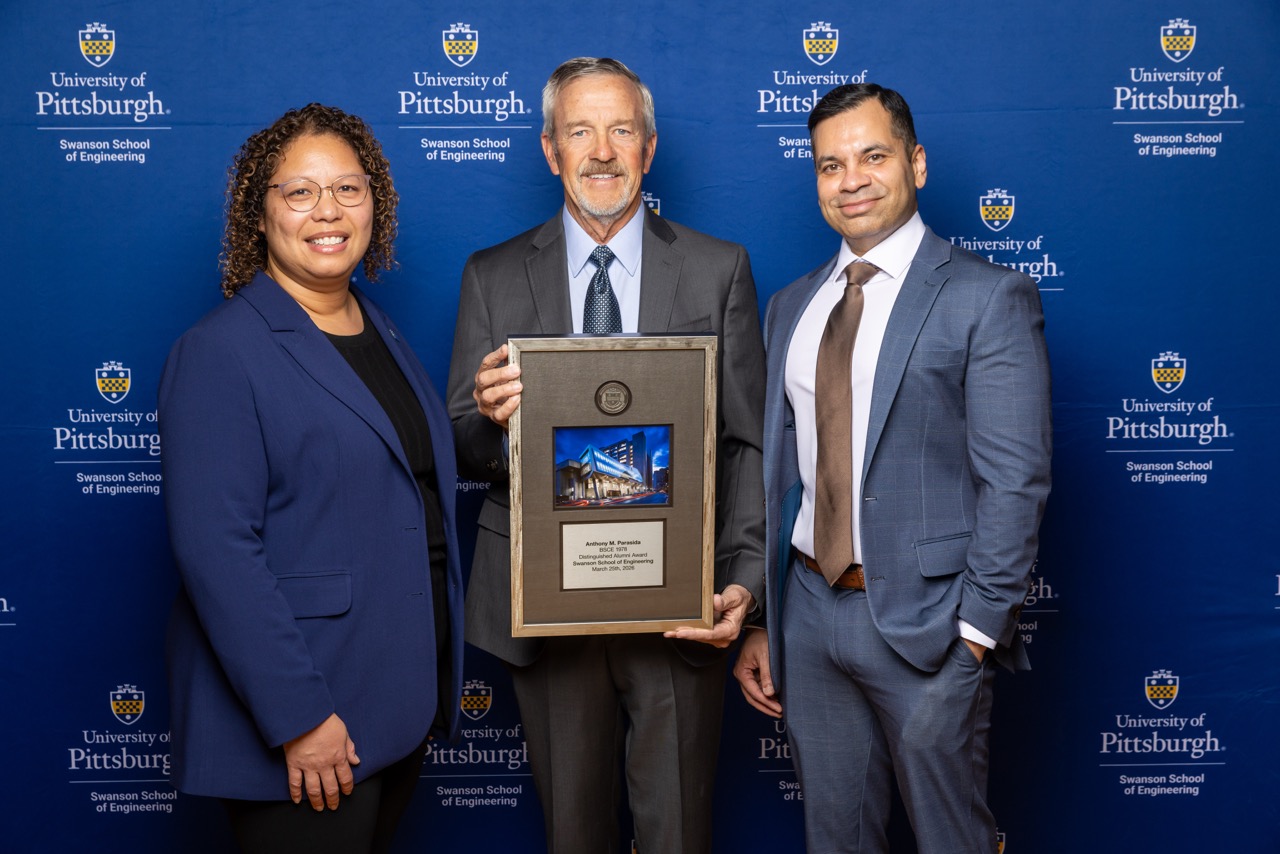
Parasida, center, with Michele Manuel and Vikas Khanna at the Distinguished Alumni Banquet in 2026. The Swanson School recognized Parasida as its top honoree.
A member of Pitt’s 1787 Society, Parasida supports the kind of collaborative, hands-on learning he sees in the Swanson School. “It’s important to help with scholarships, to help kids get a great education like I did,” he said. “Pitt laid the foundation for the great career and the success I’ve had personally.”
Life after Boeing
In 2016, Parasida retired from Boeing. Now instead of waking up at 4:30 a.m., he sleeps in, as he said, “all the way to 6:30.” Instead of startling awake in a cold sweat about a project, he worries about his golf swing. And instead of complex aircraft, he designs and builds everything from benches to boxes to bookshelves. “With woodworking, you get satisfaction from completing a job in a week instead of years.”
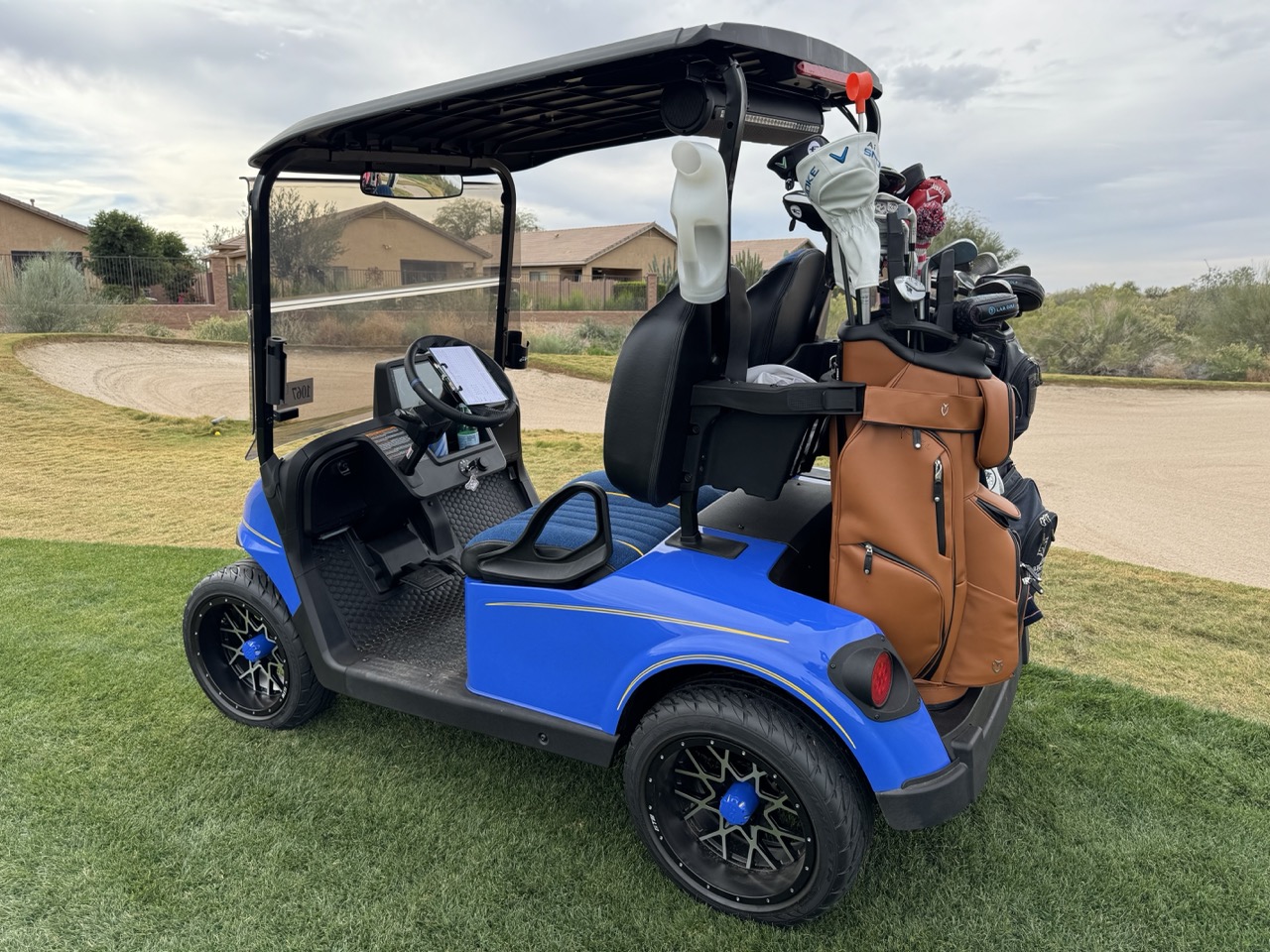
Parasida has had his golf carts painted in Pitt colors.
When he retired, Parasida was given a mounted piece of a V-22 Osprey’s frame. It proudly hangs on his wall, a daily reminder of his 38 years at Boeing and the aircraft he helped bring off the drawing board.