
KeysQuestions4Explore4
Perry’s idle cooling tower — a completed, 516-foot concrete skyscraper that has never cooled a single thing — is the most expensive architectural decoration in American energy history, and it’s about to become the backdrop for a $4.2 billion federal announcement.
The reactor that tower was built to serve was canceled in 1994 at 45% complete, yet the tower still stands today with no serious plan to use it or demolish it.
Now Meta has locked in 20 years of output from the one reactor Perry actually runs, and the DOE is prepared to fund a 213-megawatt expansion — meaning a plant that almost didn’t survive is suddenly one of the most strategically valuable nuclear sites in the country.
Ask The Box →
Ask The Box:
SummarizeContextWhat does it mean?Related
Energy
A 440-ton slice of steel rolled through the gates of the world’s biggest fusion experiment before dawn in southern France, the ninth and last piece of a plasma chamber that will weigh 5,732 tons welded together, and each slice already carries 93 miles of factory welds
4 hours
Energy
A tungsten alloy held at 2,282°F for 100 hours shrank the crystals inside it by 60 percent without a single pass through a rolling mill, because two mismatched lattices build up strain while it sits there, doing to the metal what a steel mill does by crushing it
5 hours
Energy
365 trains hauled 364,000 tons of clean stone into Britain’s oldest nuclear waste site over a year and a half, so its earliest trenches can be sealed under a clay cover that swells shut when rain hits it, and the waste itself never has to move at all
22 hours
Energy
The first new commercial nuclear fuel plant America has built in more than 50 years finished its shell in 10 months, sized to press uranium into 700,000 billiard-ball spheres a year, and the first reactor it will feed is still waiting for permission to pour concrete
23 hours
AI-generated summary from reviews, comparisons and articles by AutoNotion
There’s a decent chance you’ll be hearing the name Perry a lot next week. Reuters reported over the weekend that the Department of Energy plans to lend Vistra, the plant’s owner, about $4.2 billion to boost output across its nuclear fleet. Additionally, the Energy Secretary Chris Wright is expected to announce it at Perry, on the shores of Lake Erie in Ohio, on Monday. Meta already agreed back in January to buy everything the plant makes for 20 years. Not too shabby when you learn it wasn’t even supposed to make it this far.
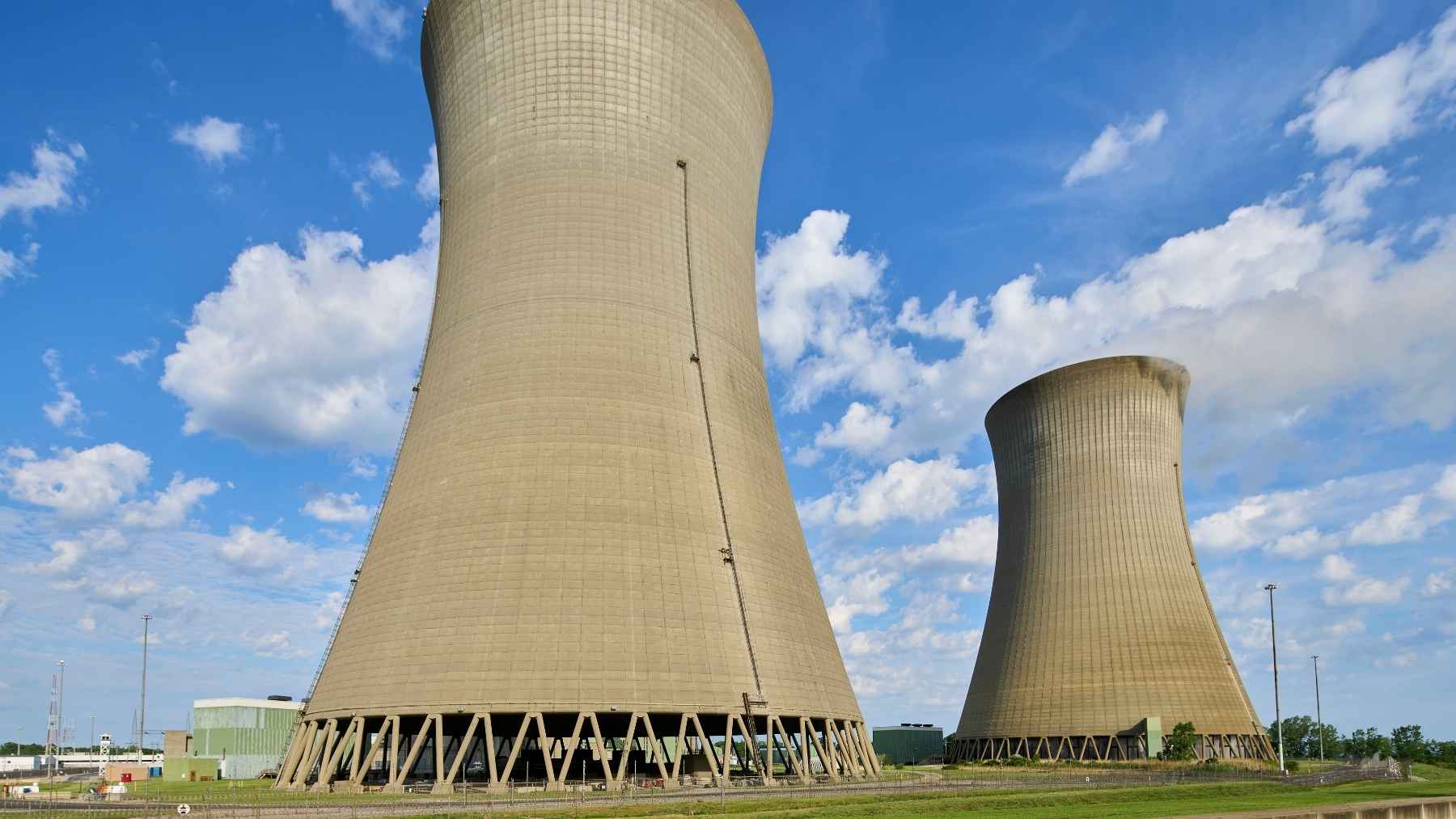
But forget the money for a second, because Perry’s most interesting feature is something visible from the road. The plant has two identical 516-foot concrete cooling towers standing side by side. One of them puffs out a steam plume all day. The other one hasn’t worked a single shift in its life.
So how does a nuclear plant end up with a spare skyscraper?
Perry was supposed to be twice as big
We’ll gotta go back to the beginning.
Cleveland Electric Illuminating and a group of partner utilities ordered Perry in the early 1970s as a two-reactor plant, with a large General Electric boiling-water reactor and a 516-foot cooling tower for each unit. Ground broke in 1974, and both units went up together for a while.
Then demand forecasts sagged. This meant work on the second unit stalled in the mid-1980s, and by the end of that decade, Unit 2 sat on hold at roughly 45% complete. The company formally canceled it in 1994, with most major structures already completed, including the entire second tower. Unit 1, meanwhile, loaded fuel in 1986 and went commercial in November 1987 as the 100th nuclear plant built in the United States, by Vistra’s count.
Unit 2’s tower never got a reactor to cool. It’s still standing today, and as far as I can tell, there’s never been a serious plan to either hook it up or tear it down. Finished nuclear hardware that never runs is rarer than you’d think, though it happens. Germany built an entire fast breeder reactor, loaded it with liquid sodium, never gave it a single fuel rod, and eventually put a free-fall ride inside its cooling tower.
Perry’s spare is basically the restrained American version of that story.
Autonoción Newsletter
No spam. Unsubscribe anytime. Privacy policy (opens in new window)
What does a cooling tower do all day, anyway?
Here’s the short version: a reactor boils water into steam, the steam spins a turbine, and then you’ve got to turn all that steam back into water so it can go around again. The cooling tower is where the leftover heat ends up. Warm water pours through the base of the shell, air rushing up the 516-foot chimney carries the heat away, and the cooled water heads back for another lap. A tower like Perry’s doesn’t use fans at all. The shape does the work. Which also means an unused one is basically an enormous, very expensive piece of architecture. (And that’s the short version.) Not every plant bothers with towers, either; California’s last nuclear plant pulls the Pacific straight through itself instead.
That prominent steam plume isn’t radioactive, and neither is the idle tower. Water running between the condenser and the tower stays inside its own closed piping loop and never touches reactor water, a point both the operator and Lake County’s emergency planners spell out in writing. That plume you see from the highway? It’s plain water vapor, interestingly enough.
The tower that does work handles a serious load. The reactor it serves produces 1,268 megawatts at full power, making it among the largest boiling water reactors in the country, following a 5% power bump regulators approved in 2000. The plant’s 2006 engineering documentation describes a cooling loop designed to circulate 545,000 gallons per minute, fed by three pumps rated at 185,000 gallons per minute each, through buried pipes 12 feet in diameter. That’s roughly an Olympic swimming pool’s worth of water every 75 seconds, going in a circle.
The rest of the 1,100-acre site is greener than you’d expect from a nuclear station. More than 850 acres of forest and marsh are kept as a certified urban wildlife sanctuary, which puts Perry in the same odd club as the Florida plant whose cooling canals turned into the country’s densest crocodile nursery.
Towers built
2 × 516 ft
Two natural draft shells finished. One in service, one never connected.
Single reactor
1,268 MW
GE boiling water reactor, commercial since November 1987.
TARGET
Planned uprate
+213 MW
Extra output Vistra plans to deliver starting by 2031.
Renewed license
2046
20-year extension approved in 2025, replacing a license that was due to expire in November 2026.
Perry is about to be pushed harder than ever
Which brings us back to the money we first mentioned.
Perry’s original 40-year license was due to run out this November, and for a long stretch, the smart bet was that the plant wouldn’t outlive it. Vistra’s chief strategy and sustainability officer, Stacey Doré, has said the company’s three nuclear plants in Ohio and Pennsylvania “were on a path to retirement” as recently as 2020. Instead, regulators renewed Perry’s license in 2025, and it’s now good through 2046.
Then came the buyers. In January, Vistra told investors in an SEC filing that Meta will purchase Perry’s full 1,268 megawatts for 20 years, with deliveries starting in late 2026, plus another 213 megawatts Vistra plans to wring out of the same reactor through an uprate, arriving in stages between 2031 and 2034. That’s a lot of promises hanging off one reactor and one tower.
An uprate, if you haven’t run into the term, is the nuclear industry’s version of tuning the engine you already own. You swap in beefier components, push more steam through the plant, and get more megawatts from the same reactor, and you don’t have to license a whole new reactor to do it. The Energy Department’s environmental review of the Perry project, published in September, describes the planned scope as new turbine hardware, a replacement steam dryer, and a set of additional small cooling cells to deal with the extra heat.
The fix for the need for more cooling at Perry is a set of small new cooling cells at a site with a spare 516-foot cooling tower standing fully built a few hundred feet away. I’m sure there are perfectly sound engineering reasons, starting with the fact that the idle tower was never piped into Unit 1’s condenser, and connecting it now would be a huge project in its own right. It’s still a pretty funny sentence to type.
As for the $4.2 billion, nothing’s signed yet. The Energy Department’s own paperwork frames it as a loan guarantee that the government hasn’t finished evaluating. It’s penciled in for now; the permanent marker figures come in later. Nobody is in a rush to spend billions, I’m sure.
Vistra says Meta’s deliveries from Perry begin in late 2026, the first of the extra 213 megawatts is due by 2031, and the renewed license runs through 2046. If Reuters has it right, Secretary Wright will make the loan official at the plant on Monday, October 6th, with both towers in the background and exactly one of them earning its keep.