
Photography by Tom Altany/University of Pittsburgh
The following first appeared in the Fall 2026 issue of Pitt Magazine as part of a collection of anecdotes, fun facts, figures and more — 42 of them in all, one for each of the Cathedral of Learning’s 42 floors. The issue celebrated the centennial of the Cathedral’s 1926 groundbreaking.
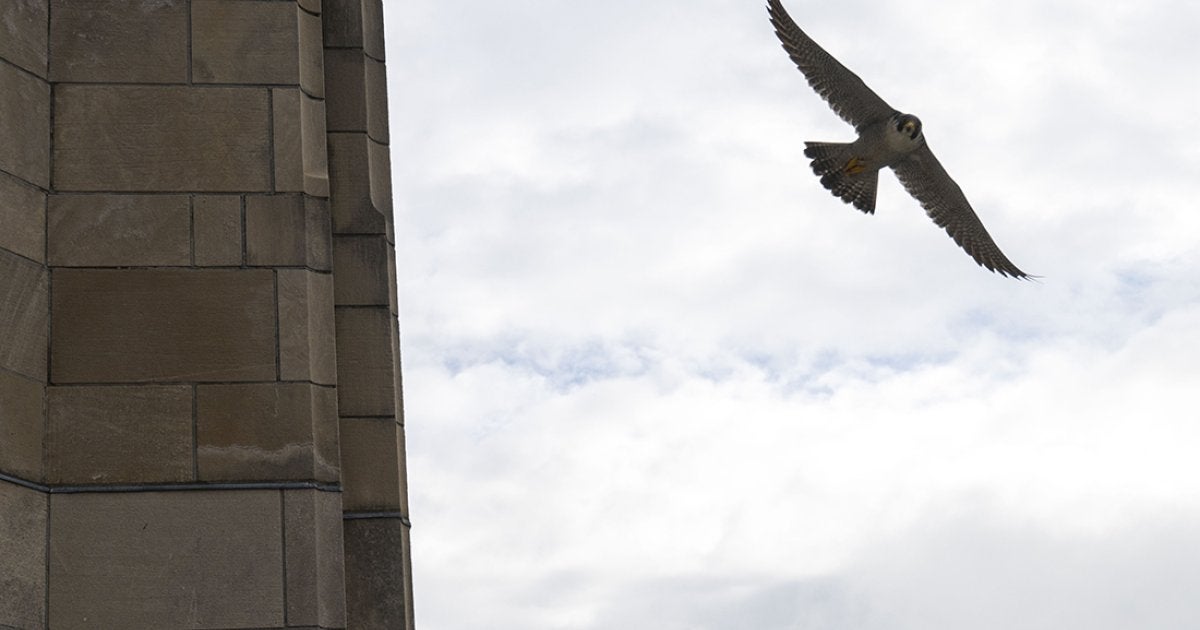
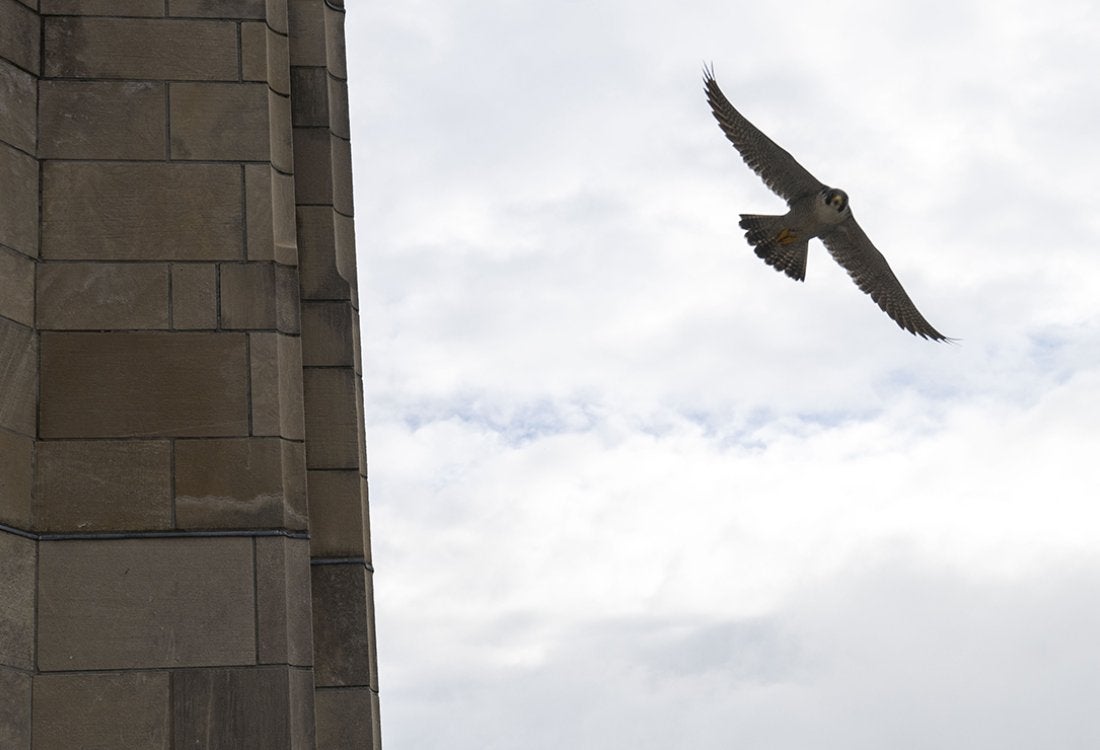
About 25 years ago, two endangered peregrine falcons found their way to a home atop the University of Pittsburgh’s Cathedral of Learning.

As Pitt looks back on the September 1926 groundbreaking of the Cathedral of Learning, check out additional stories, photos, a timeline and more from the now century-old history of the University’s campus in the sky.
No longer nesting in Pennsylvania as of the 1960s, peregrines began to repopulate the state in later decades, though still with an uncertain future. Fond of extremely high perches for nesting, surveying their territory and spotting the songbirds they prey upon, falcons had successfully nested and raised chicks among the skyscrapers of downtown Pittsburgh as early as 1991.
But downtown wasn’t an ideal habitat; construction activity would disrupt the falcons’ nesting area on the Gulf Tower, leading them to abandon that nest by 2017 and never return.
One day in January 2001, a passionate birder named Kate St. John spotted two falcons in courtship flight, circling the lofty heights of the Cathedral. She notified the Pennsylvania Game Commission, the Western Pennsylvania Conservancy and the University of Pittsburgh.
The partners came together and installed a nesting box in 2002. In recent years, Pitt has collaborated with the National Aviary on Pittsburgh’s North Side to maintain a webcam trained on the Cathedral nest box around the clock during the nesting season.
“Over the years, Pitt has been an ideal host for a falcon nesting site,” St. John says. “Look at this building … You can literally see for miles from up there.”