
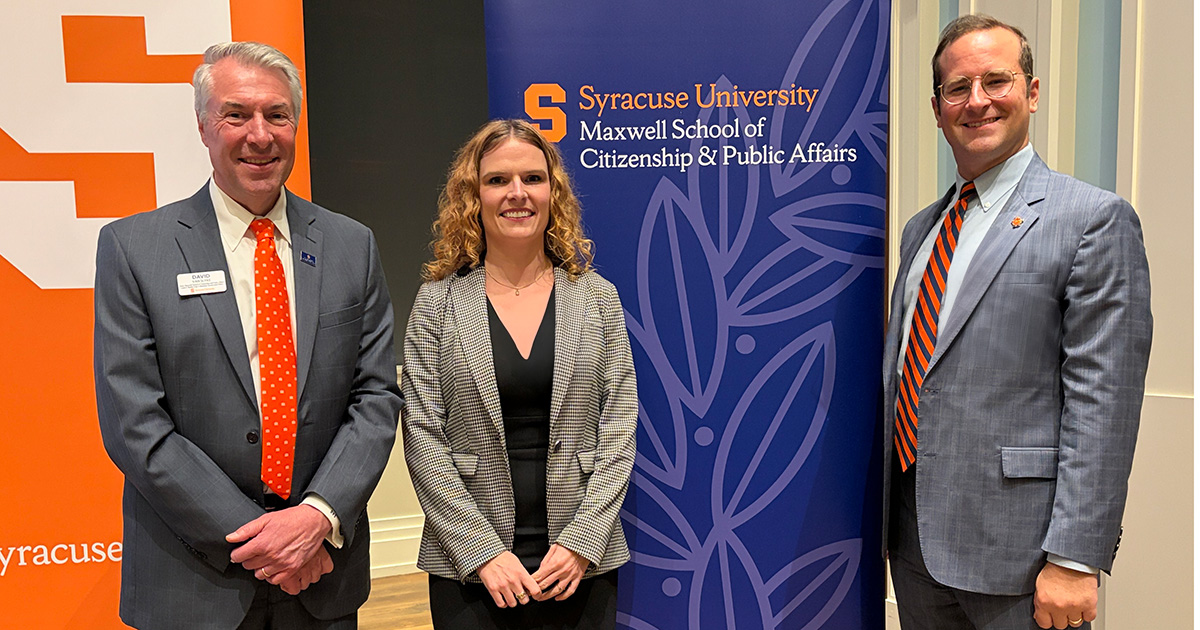
In the Q&A that followed her talk, Murphy shared that the Haitian Revolution led to the second independent republic in the Americas.
“Some of the people who fought for Haitian independence were troops in the Battle of Savannah during the American Revolution,” she said. “So there’s a direct line in terms of some of the inheritances of U.S. independence in other parts of the Americas, which I think is something to be proud of.”
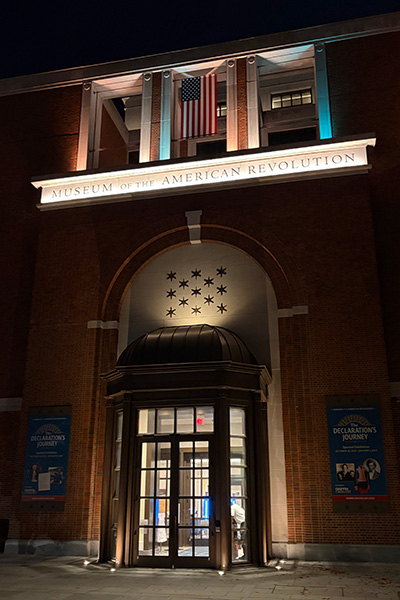 The event was held Sept. 23 at Philadelphia’s Museum of the American Revolution.
Throughout the evening, attendees also had a chance to browse autographs from U.S. presidents such as George Washington and Abraham Lincoln, from the collection of Matthew Correia ’08 B.S. (Econ). Correia shared the stories behind acquiring the signatures from every U.S. president and vice president, and he told fellow alumni he is the first person to have an autograph by every vice president.
Correia’s signed Washington artifact is a soldier discharge from 1783, the Revolutionary War’s final year, and includes a message from the then-general: “The road to glory in a patriot army and free country is thus open to all.” This, Correia said, alludes to the Revolution’s reach for meritocracy. “They wanted to create a different type of governance, a different type of relationship of the people to the government.”
Murphy’s historical perspective, along with the backdrop of the museum and Correia’s collection, served as reminders that America’s story is a work in progress.
“We are still learning so much more, both about our history, but then also what it means for our future,” said Philadelphia-based education consultant Heidi Ramirez ’96 B.A. (PSt) after Murphy’s presentation. “This year has reminded us that there are so many voices in this thing we call American history and that just keeps evolving.”
That sentiment is captured in Maxwell’s USA@250 lecture series, which features faculty talks on women’s rights, Frederick Douglass, immigration, the U.S. Constitution and more and is available to all on YouTube. The series reflects Maxwell’s mission to bring scholarship on the nation’s founding directly to the public in this semiquincentennial year.
“A milestone like this isn’t just for scholars to study,” Van Slyke said. “It’s a call for all of us who care about the health of American self-government to carry forward.”