
LEHIGH VALLEY, Pa. — A bill that would phase out firefighting foam containing PFAS, commonly known as “forever chemicals,” is moving forward in Pennsylvania after overwhelmingly passing the state Senate.
Senate Bill 980 passed the Senate 48-1 on Oct. 5. The bipartisan legislation is sponsored by state Sen. Gene Yaw, R-23, and state Sen. Nick Miller, D-14, whose district includes portions of Lehigh and Northampton counties.
The legislation would restrict the manufacture, sale, distribution, and use of firefighting foam containing per- and polyfluoroalkyl substances, or PFAS. The bill would begin phasing in those restrictions in 2027.
The measure now heads to the Pennsylvania House.
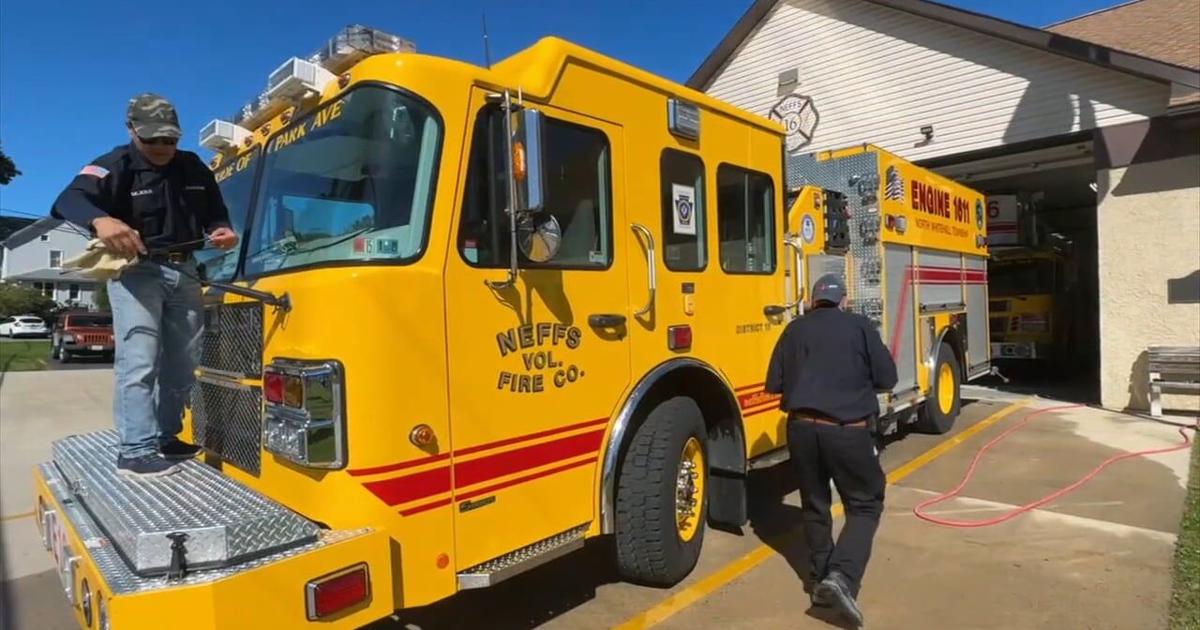
For one Lehigh County fire department, however, the transition away from PFAS-containing foam happened years ago.
Neffs firefighters made the switch three years ago
Inside the Neffs Volunteer Fire Company, Chief Jim Steward showed 69 News the non-fluorinated foam his department now carries.
“This is alcohol, ARSFF,” Steward said while pointing to a barrel inside the station. “This is non-fluorinated foam.”
Steward, who has served as chief for 34 years, said the department stopped using foam containing PFAS about three years ago as concerns about potential health effects continued to grow.
“It wasn’t until the last 10-20 years that we started hearing about concerns of it being a carcinogen for the firemen,” Steward said.
PFAS are a large family of synthetic chemicals that have been used for decades because of their resistance to heat, water, and oil. Certain types have been used in aqueous film-forming foam, or AFFF, particularly for fighting fires involving flammable liquids.
The chemicals are often called “forever chemicals” because of their persistence in the environment.
For Steward and his department, the growing body of information surrounding PFAS eventually prompted a change.
“There was enough data and enough other information that started to make us feel like it was time to get rid of them,” he said.
Steward said the department uses firefighting foam about four or five times a year.
What Senate Bill 980 would do
SB 980 would phase out PFAS-containing firefighting foam beginning with restrictions on its manufacture, sale and distribution.
The legislation also addresses another potential source of firefighter exposure: personal protective equipment.
Stephanie Wein with PennEnvironment, who worked on the legislation, said the measure includes a labeling requirement for firefighter turnout gear containing PFAS.
“There’s also a requirement in the bill that would require labeling of the turnout gear that firefighters use that does contain PFAS,” Wein said.
The legislation includes exceptions for certain facilities where PFAS-containing foam may still be necessary, according to the bill’s sponsors.
Wein said supporters are pushing for final passage before the end of the current legislative session.
“It would mean that when we’re either training our firefighters or when they’re responding in communities, these toxic chemicals aren’t being broadly used and entering our environment, whereas forever chemicals, they stay,” Wein said.
Emmaus has spent millions addressing PFAS in drinking water
The potential environmental consequences of PFAS contamination are already familiar in the Lehigh Valley.
Emmaus has been working for years to address PFAS in its public drinking water system. Borough documents show a multimillion-dollar effort to construct PFAS treatment at Well No. 1. In 2025, borough council authorized financing that included up to about $2.05 million in PENNVEST funding and roughly $9.73 million in principal forgiveness for the water-treatment project.
Emmaus’s 2026 budget documents also identify PFAS treatment as a major expense, with millions allocated toward the removal system and continuing operating costs once treatment is in place.
The borough has said what initially appeared to be a relatively simple filtration project developed into a much larger process involving engineering studies, Pennsylvania Department of Environmental Protection requirements, evaluation of alternative water sources and ultimately construction of a treatment system.
Emmaus continues to publish updates on its PFAS remediation work as the new treatment system moves toward operation.
Decades of exposure leave unanswered questions
While the proposed legislation focuses on reducing future use of PFAS-containing foam, Steward spent decades fighting fires during a period when those foams were commonly used.
Asked whether more than 40 years around the foam leaves him concerned about his own health, Steward didn’t claim to know what that exposure may mean.
“You can never know,” he said. “That’s one of those things, I guess.”
For his department, at least, the foam firefighters carry today no longer contains PFAS.