
From Philly and the Pa. suburbs to South Jersey and Delaware, what would you like WHYY News to cover? Let us know!
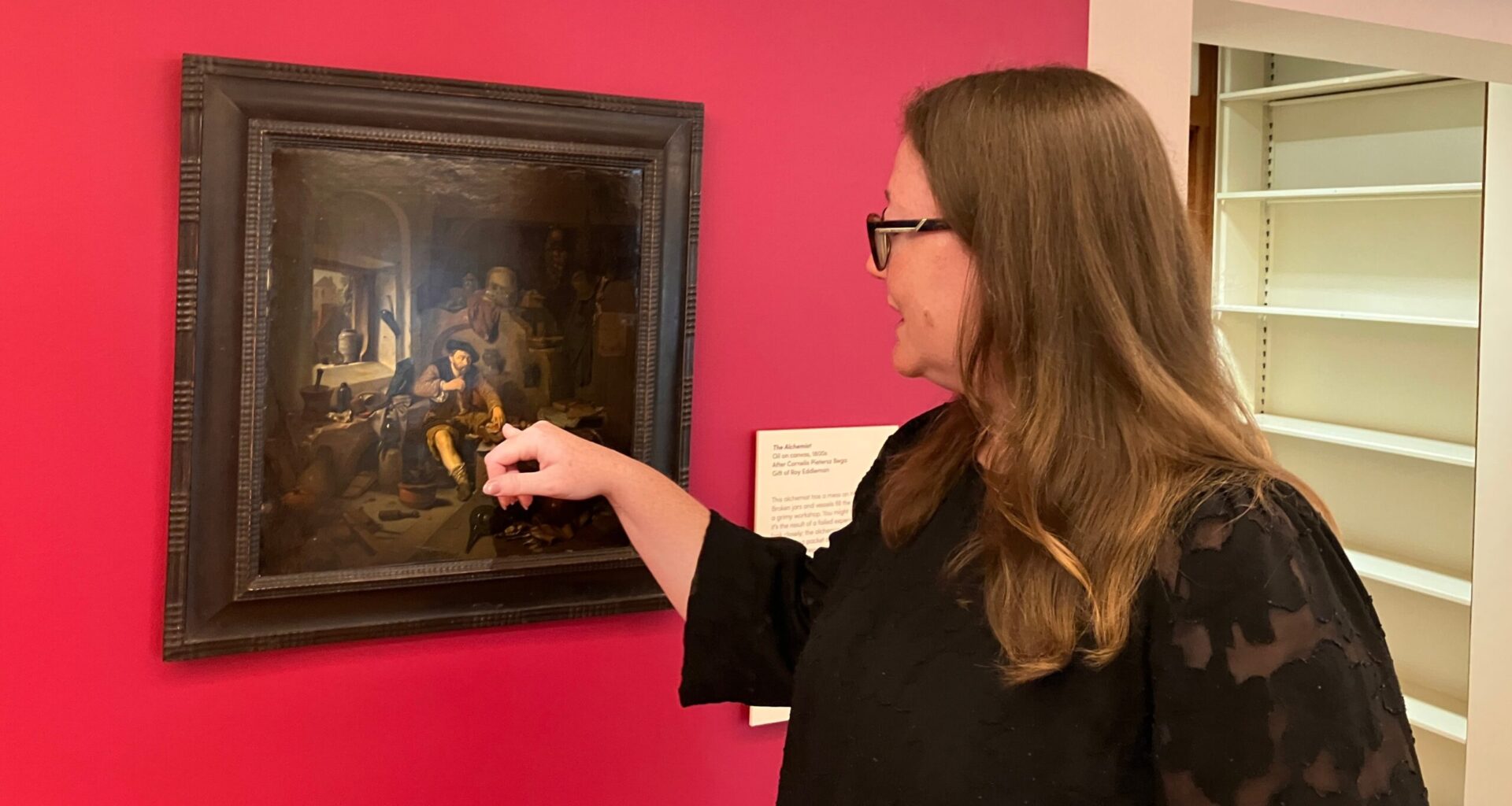
The painting is simply titled “The Alchemist.”
In this work from the 1800s by artist Cornelis Pietersz Bega, a disheveled man sits in a dimly lit workshop. Broken vessels and chards of glass litter the floor. The man stares at a handful of bright red powder, likely pigments for color he created through a complicated process.
It gives insights into the life and work of alchemists, knowledge seekers who laid the groundwork for modern science through experimentation, and lots of trial and error. A new permanent exhibit at the Science History Institute in Philadelphia sheds light on their contributions.
“Fire and Gold: The Art of Alchemy (1450-1850)” offers a detailed look into how alchemists manipulated substances and created new materials, tinctures, medicines and colors.
“Famously, the color vermilion, which is this beautiful, powerful, potent red, yes, it’s made by alchemy,” said art historian Elisabeth Berry Drago, who curated the exhibit. “It’s found in nature as the mineral cinnabar, but if you combine mercury and sulfide in a jar, if you superheat it, it sublimes and it becomes vermilion.”
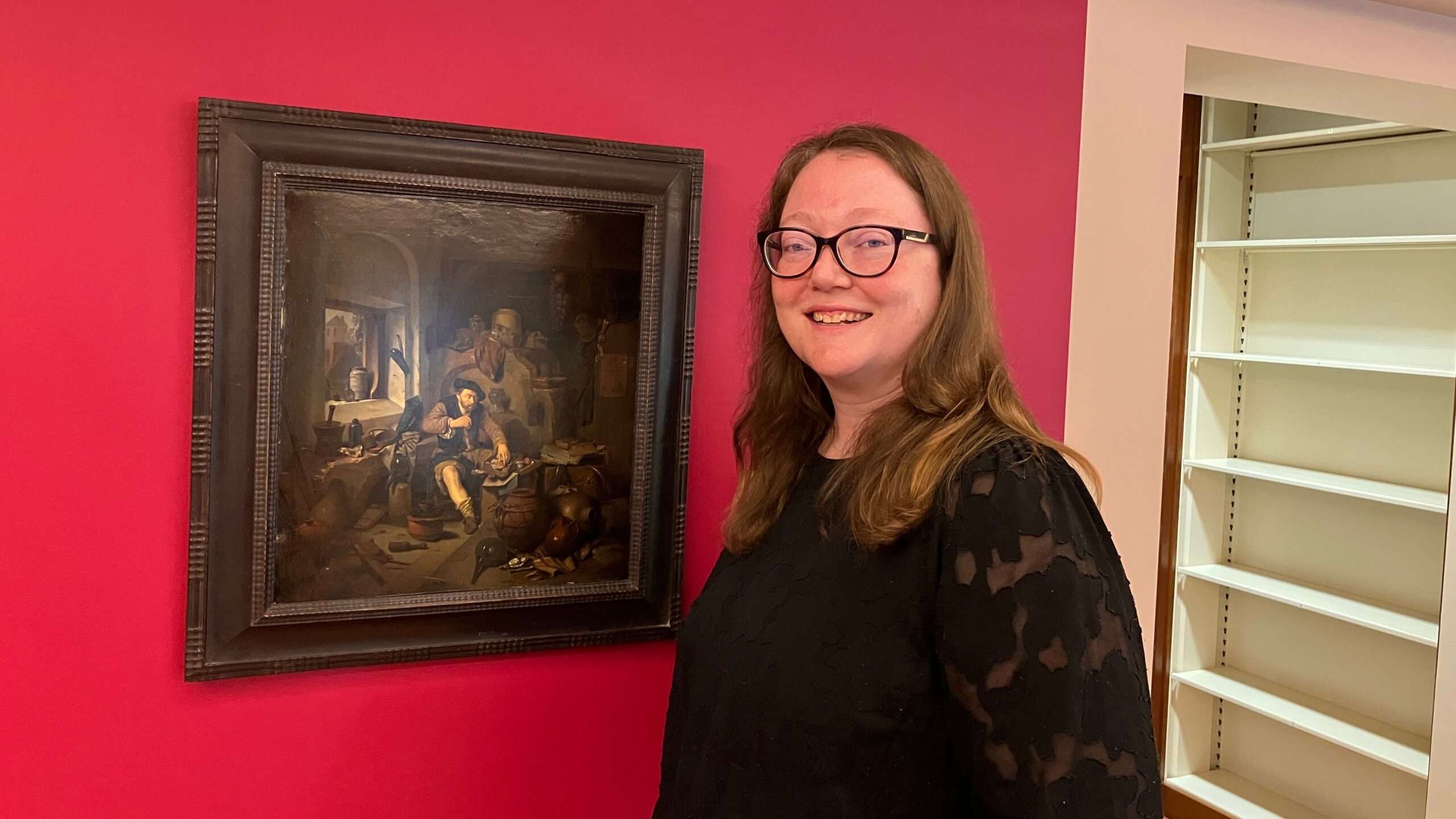 Exhibit curator Elisabeth Berry Drago examining “The Alchemist,” a painting from the 1800s by artist Cornelis Pietersz Bega (Maiken Scott/WHYY)
She believes that this is what is shown in the painting.
“This could be what success looks like, in the alchemical world, you set fire to things, you break your equipment, you use up your material and you get there, in the end,” she said.
Alchemy is often misunderstood as the quest to create gold out of ordinary metal, and the goal of the exhibit is to show that it was much more than that.
“Alchemy is, essentially, early modern chemistry. It’s searching for an understanding of matter,” Berry Drago said. “So they’re building our understanding of, you have a thesis, you conduct experiments, you repeat your experiments, someone else repeats your experiments.”