
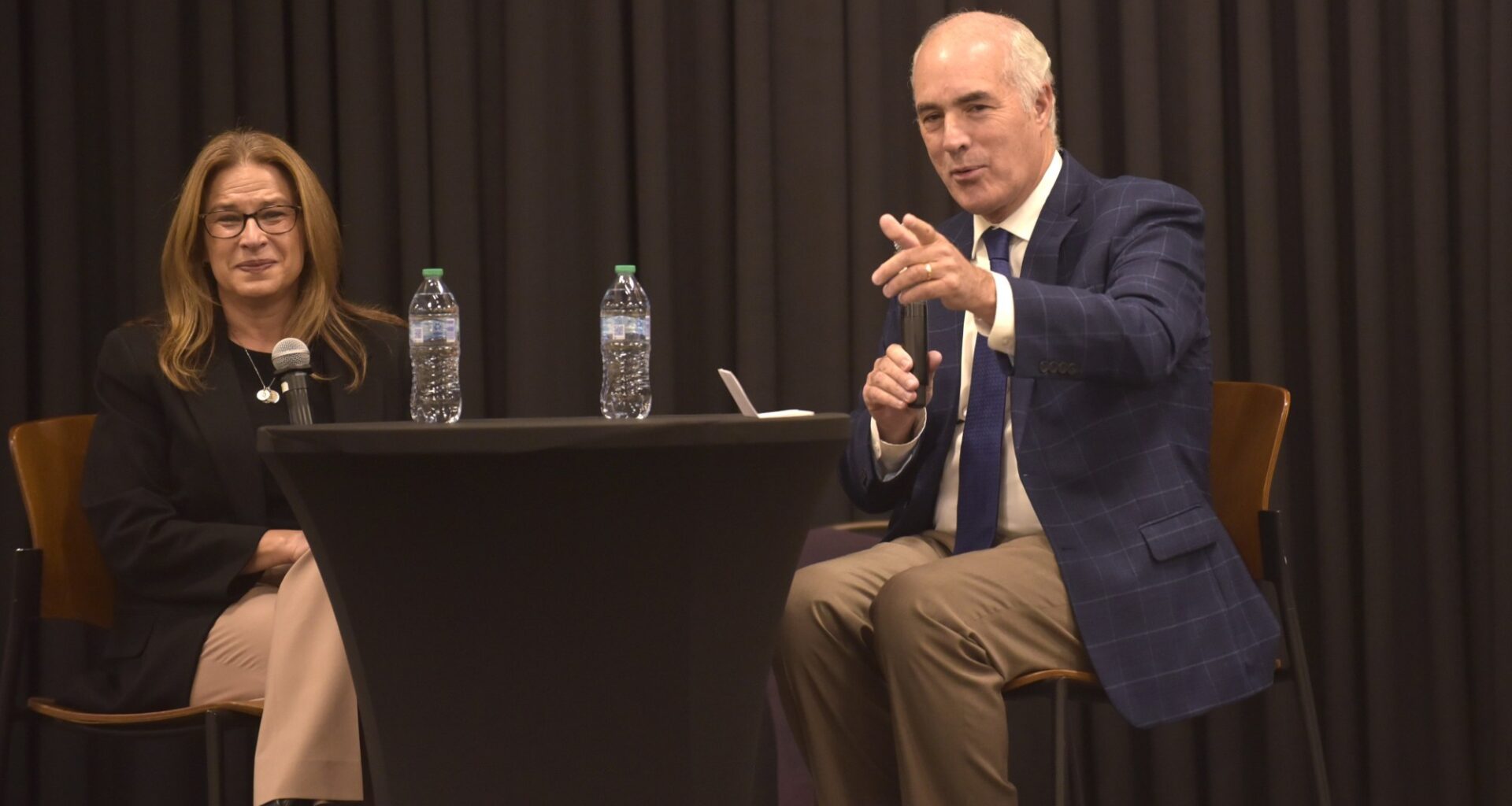
SCRANTON — Pennsylvania first lady Lori Shapiro hopes continued outreach shines a brighter spotlight on the skills of people with disabilities.
Shapiro — who helps connect companies with disabled individuals seeking jobs — joined former U.S. Sen. Bob Casey during the 25th annual U.S. Conference on Disability at the University of Scranton on Wednesday morning.
Edward and Patricia Leahy started the conference to honor their late son, Edward R. Leahy Jr., who died in 1993, shortly before his 9th birthday, after being born with multiple disabilities.
Through her work advocating for the Integrated Vocational Engagement and Support Team program, which assists individuals with disabilities in moving into competitive employment, Shapiro strives to ensure all potential workers know the full scale of available occupations.
“It’s important we make sure they see there are so many opportunities for them out there,” she said. “It’s wonderful in workplaces when people see people with different abilities can make really amazing contributions. There are so many different fields where they could have a really unique experience, but they are sometimes very limited in their thinking because of the messages they receive from other people. We want to make sure people with disabilities have a seat at the table to make decisions about the policies that are going to impact them.”
Shapiro noted interactions with youths during an Office of Vocational Rehabilitation summer work program opened her eyes to the abilities of disabled individuals.
“I thought to myself, I’ve really been making assumptions about what people with disabilities are capable of,” she said. “I didn’t know too much about OVR, but I saw the amazing work they were doing.”
That experience led Shapiro to begin introducing OVR resources to firms throughout Pennsylvania.
“As I’ve been traveling across the commonwealth, I’ve been meeting with companies large and small,” she said. “For the companies that never thought about it or didn’t know about OVR, they walk out and say, ‘This is such an amazing opportunity to do something for the community and do something good for our business.’ They quickly realize people with all abilities bring unique strengths to the workforce. They make workplaces and communities stronger, more vibrant and more productive.”

Former U.S. Sen. Bob Casey, who currently serves The University of Scranton as its Leahy Distinguished Fellow in Public Service, offers remarks during the school’s U.S. Conference on Disability on Wednesday, Oct. 7, 2026. (CHAD SEBRING/STAFF PHOTO)

Former U.S. Sen. Bob Casey, who currently serves The University of Scranton as its Leahy Distinguished Fellow in Public Service, offers remarks during the school’s U.S. Conference on Disability on Wednesday, Oct. 7, 2026. (CHAD SEBRING/STAFF PHOTO)

Pennsylvania First Lady Lori Shapiro offers remarks along with former U.S. Sen. Bob Casey during the University of Scranton’s U.S. Conference on Disability on Wednesday, Oct. 7, 2026, at the university. (CHAD SEBRING/STAFF PHOTO)
Show Caption
1 of 3
Former U.S. Sen. Bob Casey, who currently serves The University of Scranton as its Leahy Distinguished Fellow in Public Service, offers remarks during the school’s U.S. Conference on Disability on Wednesday, Oct. 7, 2026. (CHAD SEBRING/STAFF PHOTO)
Casey — who serves as the Leahy Distinguished Fellow in Public Service at the University of Scranton — recalled when officials lauded the work ethic of disabled individuals during a visit to a warehouse facility in the York area several years ago.
“They kept talking about how dedicated and reliable (they were) … how they never missed work, how they did their job well, and were kind of model employees,” he said. “As Patricia, Ed and others have made reference to it, people with disabilities have a lot of ability. You just have to make sure we find it and give them a chance to display it.”
Casey also referenced the importance of fulfilling the four goals of the Americans with Disabilities Act: equal opportunity, full participation, independent living and economic self-sufficiency.
“We have to make sure the policy supports full participation, and recent federal policy changes, in my judgment, undermine that,” he said.
Shapiro stressed that matching disabled individuals with a fulfilling job plays a big role in their overall development.
“We all know that employment is really important if we want people with disabilities to be able to reach their full potential and live the lives they choose,” she said. “I think families are really happy to see people talking about this, because a lot of times I think people with disabilities are a little bit in the shadows.”