
 GREENSBURG, Pa. —
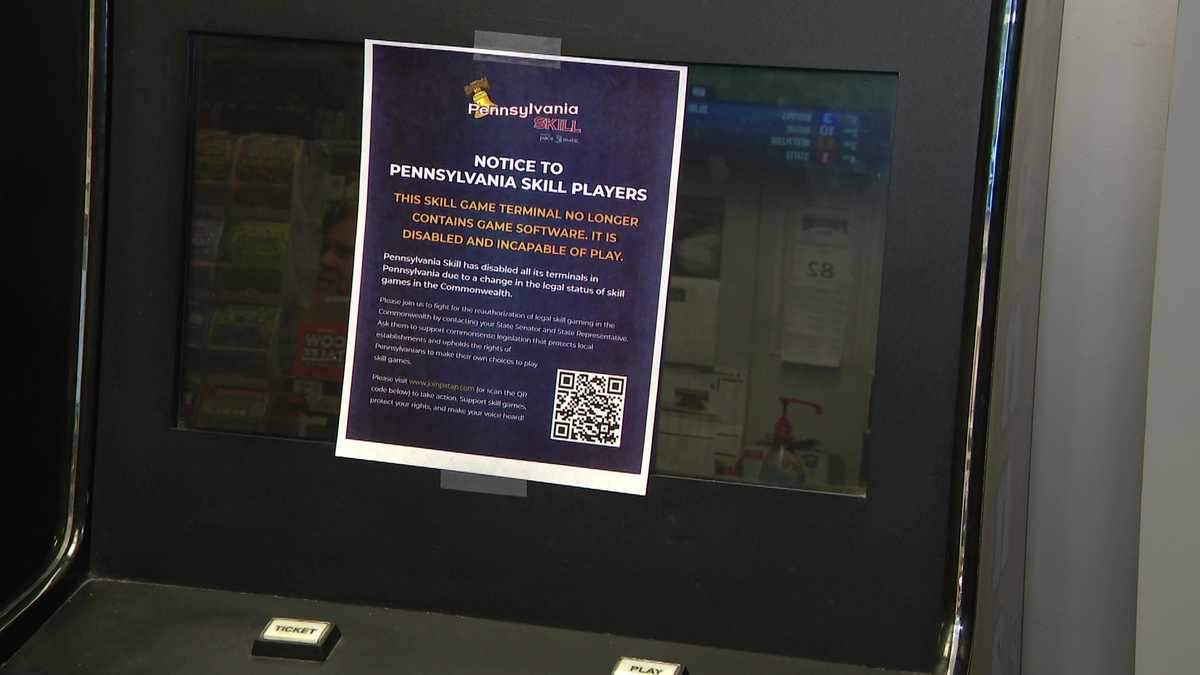
Thousands of Pennsylvanians are preparing for thousands of skill game machines to disappear come Tuesday night.
At midnight on Oct. 13, as ruled by the Pennsylvania Supreme Court in June, skill games and slot machines must follow gambling guidelines.
“The amount of people this is going to affect is astounding,” PA Tavern and Players Association President Doug Sprankle said. “It will be detrimental to Pennsylvania. You’re going to see closures across the state, unemployment, and mortgage failures.”
The state Supreme Court granted a 120-day grace period after its ruling earlier this year to allow the General Assembly time to regulate the games.
Since no action has been taken, the machines will become illegal to operate next week.
“I’m no economics expert, but we’re probably going to have to bring more revenue in,” said Michael Saunders, president of Bovard Fire Hall. “It’s a good support system to help us do things, not only to keep this club running, but also to help with the social hall, fire department, and it covers the utilities for the whole building. Our electricity bill was $1,100 last month. That’s just one. Our gas bill will be high in the winter.”
Bovard Fire Hall in Hempfield Township is one place that has already taken out its skill games. Leaders there have already started thinking about how to get that money back.
“If it means raising prices, raising rental fees in the hall, maybe playing more small games of chance,” Saunders said. “We’re not making a ton of money here. Our goal is to provide for the community. Hopefully, we can bring our business up to where we won’t have to raise prices. That’s the simplest thing.”
That money helps fire halls, social clubs, VFWs, restaurants and other establishments put on fundraisers and, in some cases, assists first responders.
“We’ve helped [the Bovard fire department] buy some equipment over the years as well,” Saunders said. “Other places are very afraid. I’m a member of the VFW [in Greensburg]. They’re worried, and rightfully so.”
Other places are waiting as long as possible before taking their machines out.
“Approximately between $3,000 and $5,000 a month is the income from those,” Hilltop Social Club Trustee Bill Heffelfinger said. “We’re figuring we’ll lose between $50-60,000 a year. Five thousand dollars a month is a lot of money. We use that money to benefit the members, community, and we’re going to have to think of ways to make that up.”
Heffelfinger told Pittsburgh’s Action News 4 that trustees with the Hilltop Social Club in Greensburg aren’t sure how they’ll make up the money yet.
However, they do anticipate a trickle-down effect.
“[The machines] not only bring in income, but we also will lose income probably from the bar and our open kitchen,” Heffelfinger said. “It’s income that we use to give back to the members and to different fundraisers that we have. It’s a real big deal around here.”
The effects go beyond the dollars and cents. The operators who provide the machines to thousands of clubs won’t have work.
“There’s thousands of jobs that are on the line here that have been around for over a decade or more that will go away,” Sprankle said. “People are looking to do Thanksgiving giveaways. They’re trying to give back to their employees. They want to be involved in their communities in big ways. They need revenue to do that.”
While something could be worked out between now and Tuesday, optimism is dwindling.
“There’s still time to do something,” Sprankle said. “Whether it’s a stay or full-blown legislation, there’s options on the table. The biggest thing people can do is call their legislator, senators and representatives and say we need to get something done here.”
“Hopefully, the state will at least delay this until they can make a decision on really how to control them,” Heffelfinger said. “I know there are some bills that are being processed. Hopefully, they’ll get passed. Hopefully it’ll get a good look.”
Bipartisan measures including HB2213 and SB1079 are still in committee consideration.
According to the state Supreme Court ruling, there are approximately 70,000 skill games in Pennsylvania.