
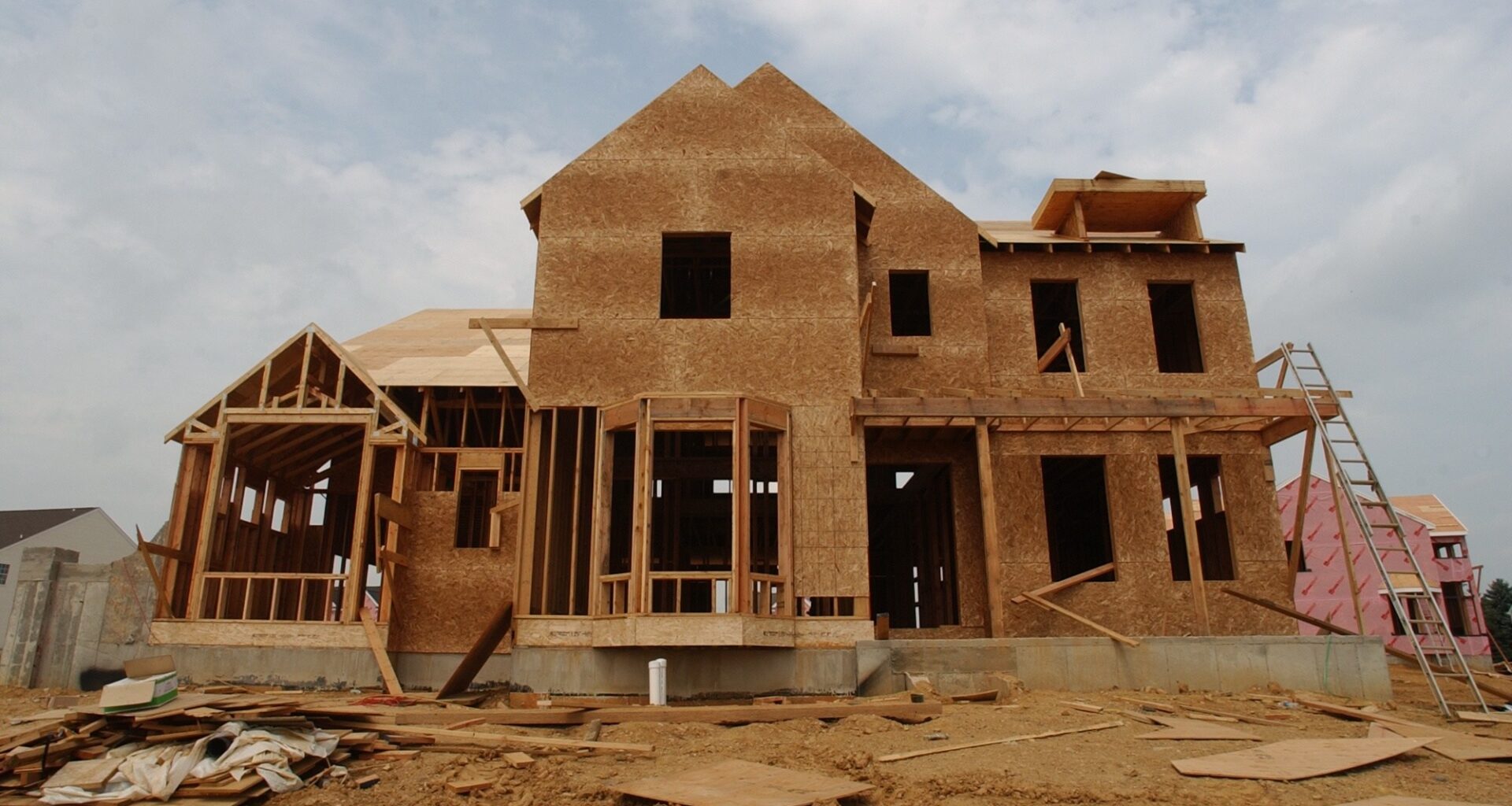
Everyone needs a place to live. That’s a pretty simple statement of fact. Yet, few issues are as personal, complex or consequential. Where we live affects where our children go to school, how much time we spend commuting, what we can afford and whether we feel rooted in a community.
Housing isn’t just another issue. In many ways, it’s the issue above all the others, with a cascading effect that washes over every aspect of life.
This is why literally hundreds of really dedicated people from across the region have spent the last two years helping us develop the Lehigh Valley Housing Supply and Attainability Strategy.
It was inspiring to see more than 220 of them join us at DeSales University to release the strategy and a data dashboard that can help every community analyze its housing situation and enable developers to determine where and what to build, while giving people a glimpse of where they can — and can’t — afford to live in the Lehigh Valley. You can find the Housing Strategy and Data Dashboard at lvpc.org/housing. The dashboard is designed track housing production from year to year. Already in 2026, more than 4,700 homes have been proposed through September.
The growing number of people who can no longer afford to live here is what started this movement in the first place. Our analysis showed that much of the Lehigh Valley had become unattainable for many of the families already living here. It revealed a more than 9,000-unit housing shortage, brought on by a decade of suppressed building after the housing downturn, even as this region continued to grow by more than 4,000 people a year. A national housing shortage was exacerbated here because our high quality of life makes us attractive to new people and businesses. In other words, developers stopped building, but people just kept coming.
The ensuing shortage helped cause the median home price to double in just 10 years. When our kids can’t afford to live here, the net result is that we jeopardize the community and economic success we spent decades building.
That’s when Lehigh County did an extraordinary thing. Its leaders made housing a priority, not just for the county, but the entire region, and invested in a study to find solutions. That led to a unique partnership between the LVPC, Urban Land Institute, Lehigh County and ultimately Northampton County to develop the 152-page Housing Strategy. It includes hundreds of recommendations divided into categories of Construction and Development, Finance, Land Use and Regulation, and Collaboration and Partnership.
This is a complex puzzle, so there’s no silver bullet that will solve this issue, but rather a slate of achievable actions that range from installing efficiencies to shorten the review process, making it easier to provide a greater diversity of home types and encouraging innovation — in financing, construction and government regulations — that can bring more affordable homes to market more quickly. That means considering modular, tiny and 3D printed homes, redeveloping vacant or underused retail centers, developing innovative financing to support small builders, and streamlining regulations without making the municipality more vulnerable.
What it means most is partnerships and collaboration between developers, builders, banks and municipalities are going to be key in digging out of this shortage. And that’s where I’m most encouraged because that’s what this region specializes in. No other region in Pennsylvania, and probably the nation, has so many municipalities planning together in multi-municipal plans, and few other regions have used so many public private partnerships to get infrastructure projects done. We have proven we can tackle this, but it’s going to take everyone, and even then, it’s going to take time. This problem is nearly two decades in the making and it’s going to take years to rebalance this housing market.
Everyone needs a place to live. That was the simple statement we started with. The solutions aren’t nearly as simple. But they are possible.
They will require builders to build, municipalities to innovate, lenders to think differently, governments to collaborate and all of us to recognize that housing isn’t somebody else’s problem. It is a regional problem because it affects every part of our community. We spent two years bringing hundreds of people together to understand the problem and build a strategy. Now comes the hard part: turning that strategy into homes.
It will take time. It will take patience. And it will take all of us.
This is a contributed opinion column. Becky Bradley is executive director of the Lehigh Valley Planning Commission. She can be reached at planning@lvpc.org.