
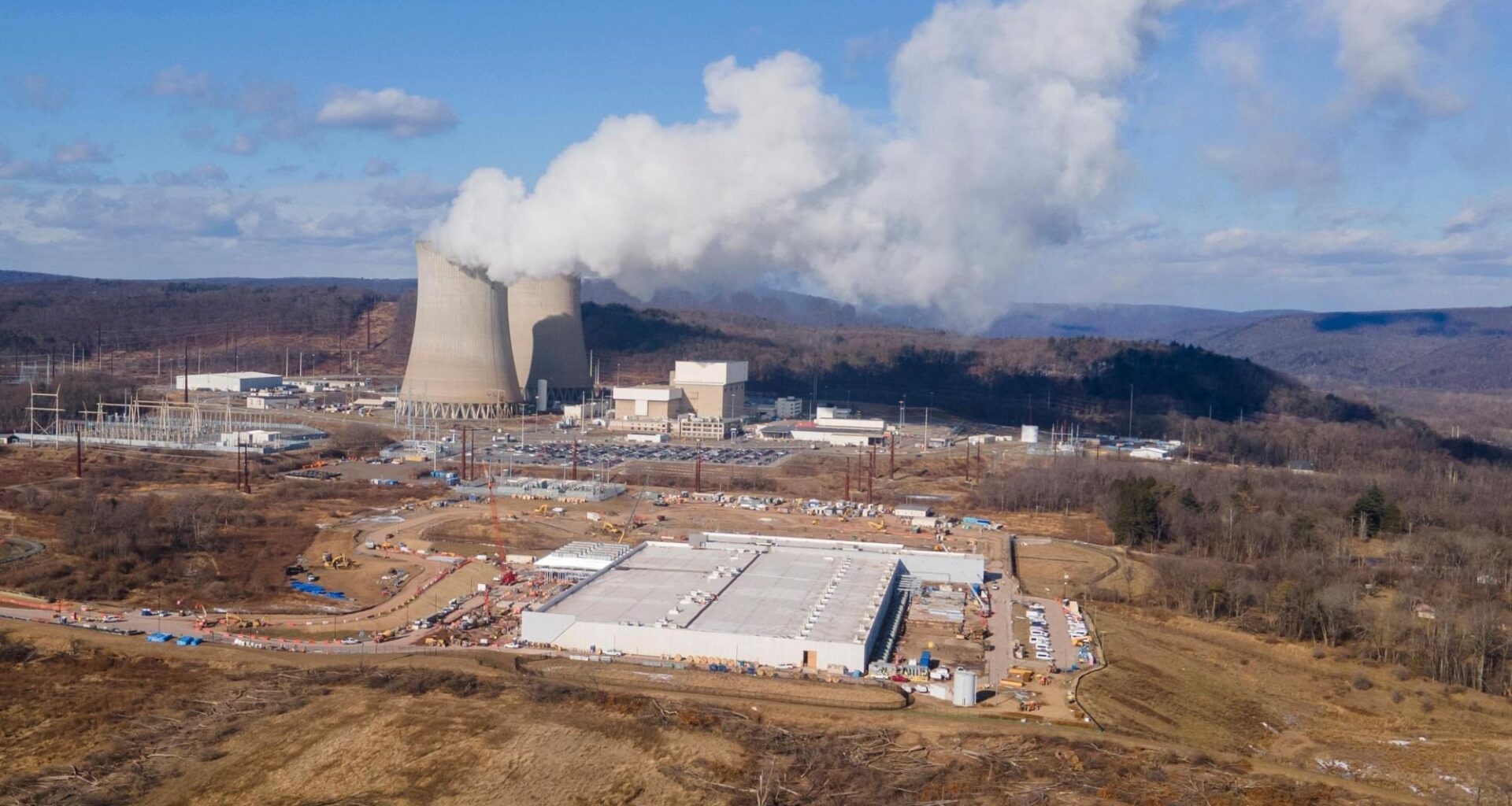
In 2026, it has been hard not to hear about the growth of data centers in the Lehigh Valley.
Several municipalities in Lehigh and Northampton counties debated and passed ordinances regulating them as members of the public have packed meetings to voice their opposition to them.
Coincidentally, it’s also an election year for state legislators. The Morning Call asked every major party candidate running for state House or state Senate to summarize their position on data centers.
Here is where the Lehigh Valley’s legislative candidates stand:
14th Senate District
Nick Miller, D, incumbent: Miller’s campaign did not respond to The Morning Call, but in a news release from July regarding data center legislation being brought to the Senate floor, Miller said: “Pennsylvania needs strict, enforceable guardrails around data center development. These projects cannot come at the expense of higher utility bills, strained infrastructure, or communities being left out of the process even if it creates economic opportunities. Families should never be forced to subsidize the cost of powering billion-dollar tech corporations.”
Omy Maldonado, R: “Since Day 1, I’ve been consistent in believing that local control is a must when it comes to data centers. Pennsylvania should give communities the time, tools and authority to decide whether these projects are right for their community, and residents deserve a meaningful voice in that process.
“After listening to residents at their doors and attending community meetings across our area, my position is I do not believe data centers are a good fit for the Lehigh Valley. They may work in other areas but not in the Lehigh Valley. I also do not support using taxpayer dollars to incentivize them.
“These decisions must be made with transparency and accountability, putting the long-term interests of our communities first.”
16th Senate District
Jarrett Coleman, R, incumbent: “I don’t believe data centers are a good fit for Pennsylvania, and I oppose them in the communities I represent. But it isn’t Harrisburg’s place to make that decision for everyone. Pennsylvania has long trusted local communities to make development decisions, and some welcome these projects.
“That’s why I introduced Senate Bill 1345, which lets municipalities enact temporary moratoriums of up to 18 months on high-impact data center applications. It balances local control with the statewide impact these projects can have on energy and infrastructure.
“I also believe data centers shouldn’t just be self-sufficient. They should be required to generate excess power that feeds back into the grid, lowering prices for everyone else.
“And I introduced Senate Bill 1344 to repeal the data center sales tax exemption and use the new revenue to reduce the gas tax my constituents pay at the pump. Putting a little extra money in people’s pockets will do more than another subsidy for multibillion-dollar companies.”
Mark Pinsley, D: “Data centers should not disturb our quiet, harm our environment, contaminate our water, pollute our air, or skyrocket our power costs.
“We need a statewide moratorium of at least 18 months that can be renewed. It must pause all new proposals, current proposals, and construction.
“I want a total ban on hyperscale data centers, so we must legally define data center uses. Definitions and regulations should be based on the impact to communities, not solely on a data center’s footprint.
“Data centers should get no special treatment: No NDAs; no tax incentives; no zoning exemptions, waivers, or loopholes. Every proposal, review, and update must be available online.
“Data centers must bring 100% of their own energy, and pay for all necessary generation and grid upgrades. They must use renewables, and phase out all fossil fuels within a set window.
“The only water used in data centers should be for human needs and fire suppression, not for cooling server equipment.
“There must be a bond at least 125% of the cost of decommissioning, paid up-front in escrow upon project approval. All equipment must be properly recycled.
“Pennsylvania data centers must only be built by Pennsylvania labor unions.”
18th Senate District
Lisa Boscola, D, incumbent: “Data centers cannot be allowed to jeopardize our power grid, burden residential ratepayers and must be built in the appropriate locations, steering clear of residential neighborhoods and farmland. I have been ahead of the curve on this issue.
“In January, I took aggressive legislative action to protect our communities by introducing a six-bill package to better regulate data centers. My legislation included clear guardrails: data centers must fully fund their own utility infrastructure upgrades and supply their own generation to maintain grid reliability. The bills also empower the Public Utility Commission to halt high-impact projects that threaten our power supply, grant local municipalities the legal authority to enact robust environmental and water protections, and mandate Community Benefit Agreements.
“Just as we successfully did with casinos and landfills, these agreements require developers to pay localized host fees that directly mitigate community impacts.
“In June, I voted to repeal the unnecessary sales tax exemptions for data center equipment. This August the governor signed an executive order regulating data centers that incorporated many ideas from my six-bill package.
“We need to stay vigilant on hyper-scale data center development so there are no costs passed along to residential consumers and our grid is protected. “
Scott Janney, R: “Local protection comes first. But a rushed ‘no data centers ever’ stance risks losing in court and leaving our communities less protected. I support a 180-day pause so municipalities have time to plan, strengthen zoning, and understand what these massive projects could mean for their residents.
“We must balance property rights with smart rules. BYOP: Bring Your Own Power. Data centers should provide the additional energy capacity they need — not compete with families and existing businesses for ours. We need strong protections for water, noise, and land use and we should use abandoned and existing industrial sites before sacrificing natural lands and farmland.
“If data centers come, the people who live there should benefit, from lower taxes, improved infrastructure and other real community benefits.
“My approach is simple: protect our communities, plan logically, and make sure opportunity benefits the people already there.
“And Harrisburg has its own BYOP responsibility: Bring Your Own Protection. State government should give local communities the tools, standards, expertise, and legal support they need to protect themselves.”
22nd House District
Ce-Ce Gerlach, D: “Ce-Ce Gerlach believes Pennsylvania must take a much more serious approach to data center development. As a City Council member, she sponsored Bill 52, which strengthened the city’s data center regulations by adding public notice requirements and additional controls on data center development.
“Local governments should not be left alone to make these enormous, potentially life-altering decisions. Currently, primarily part-time elected officials and volunteer planning commissions are the decision makers for projects that can have major consequences for electricity costs, water usage, the environment, land use and impact to surrounding neighborhoods. The state needs to establish strong, enforceable standards so communities are not forced to fight these battles one municipality at a time.
“Ce-Ce supports a pause on new data center development while those protections are put in place, just as she supported a pause as a Councilmember. She also opposes giving wealthy data center corporations taxpayer-funded tax breaks. As Gov. Shapiro has said, these are some of the wealthiest companies in the world, and they should not be allowed to shift costs onto Pennsylvania families while receiving special tax treatment. Pennsylvania should welcome economic development that benefits our communities, not development that asks working families to subsidize massive corporations.”
Robert Smith Jr., R: Smith’s campaign did not respond to The Morning Call, but in answering a question from Armchair Lehigh Valley, Smith said he supports both repealing the data center tax incentive, and a thorough review of the impact data centers would have on the economy, electricity costs, water resources, infrastructure and local communities. “If an incentive is not producing the promised benefits, it should be reconsidered.” He supports Coleman’s bill that would allow local municipalities to place an 18-month pause on data center approvals.
131st House District
Milou Mackenzie, R, incumbent: Mackenzie’s campaign did not respond to The Morning Call, but her legislative office issued a statement in August following Gov. Josh Shapiro’s executive order on data center development: “As an eighth-generation Pennsylvanian who has always cherished our beautiful farmland and peaceful way of life, I have been alarmed in recent months by the flood of data center proposals targeting some of our most bucolic communities. One of those communities is Upper Hanover Township in the Montgomery County portion of the 131st District.
“I stand with my constituents who do not want data centers built near their homes or on rich farmland, and who do not want their water supplies strained or their energy costs driven higher.
“In Harrisburg, I have voted ‘yes’ on House Bill 2496 (zoning bill consideration period for data centers), House Bill 2198 (eliminating sales tax exemptions for equipment purchased by data centers) and House Bill 2359 (requiring transparency in data center development). I will continue to support every piece of legislation that protects the property, quality of life and environment of the people I represent in the 131st District and across Pennsylvania.
“The people whose lives will be most affected by these projects must have the right to be heard and to have their concerns respected. Local governing boards must also be held accountable.
“Gov. Shapiro’s executive order endorses the direction set by these House bills, and that is a welcome development. Still, more must be done to guarantee that peaceful Pennsylvania communities are not overrun by data center developers. Decisions about whether and where data centers are allowed to be built should rest with the citizens. Let the people decide.”
Meriam Sabih, D: “First and foremost, I must emphasize that my values are with protecting the community. AI and technology that call for hyperscale data centers are moving quicker than the legislature can keep up, so I am in full support of not only guardrails to ensure regulation to protect Pennsylvanians across the state, but for a moratorium for however long it takes communities to feel comfortable and informed.
“Data center proposals have coalesced into a real threat to our air standards, water supply, energy bills and quality of life — and I promise to champion restrictions that prevent these threats. A moratorium will give local governments the time they need to gain input from their residents, but further, I support rate payer protections, renewable energy requirements, water usage regulations, pollution guardrails and eliminating all tax breaks for data centers. If data centers want to call our state home, they must work with the residents that were here first and make sure they aren’t hurting our communities. As state representative, I will not allow billionaires to bully people into quick decisions.”
132nd House District
Caren Lowrey, R: “I understand the need for data centers, but where and how they are built matters. I do not support placing data centers next to schools, neighborhoods or other sensitive community spaces, and I have been vocal at local meetings and publicly since these projects were first proposed.
“Municipalities need the authority and time to make these decisions carefully. I support a temporary statewide moratorium so communities can update zoning rules, strengthen protections for noise, air quality, water, traffic and emergency planning, and ensure residents have a real voice.
“That pause should include projects that have been filed but have not yet received final approval, including Atlas. Filing an application should not allow a project to bypass protections a community determines are necessary. Pennsylvania should also reevaluate tax incentives for data centers. Taxpayers should not subsidize projects that place major demands on our electric grid and local infrastructure while shifting costs onto families and small businesses.
“My position has been consistent from the beginning and has never wavered: protect local control, require responsible siting, and put the health, safety and quality of life of residents and students first.”
Mike Schlossberg, D, incumbent: “We are woefully behind on data center regulation, despite the best efforts of the Pennsylvania House of Representatives. We have approved 10 bills designed to slow the growth of data centers. These include local option moratoriums, giving the Public Utilities Commission additional regulatory powers, repealing the data center sales tax break, requiring transparency, giving local government resources to develop the data center controls and more.
“I voted yes on all ten of these bills. … Data centers should be treated as infrastructure in our future economy. As our economy becomes more high tech, the need for these facilities will grow. However, like all infrastructure, where data centers go — and how they are regulated — is an issue that we must address.”
134th House District
Miriam Maldonado, R: Maldonado’s campaign did not respond to The Morning Call.
Peter Schweyer, D, incumbent: Schweyer’s campaign did not respond to The Morning Call.
135th House District
Joseph Poplawski, R: Poplawski’s campaign did not respond to The Morning Call, but during a debate with incumbent Steve Samuelson hosted by Greater Lehigh Valley Chamber of Commerce CEO Tony Iannelli for his “Business Matters” TV show, Poplawski said he didn’t want any data centers in the district. “In Bethlehem there is more of a need in this country for steel and we can provide that,” he said. “We don’t need data centers.”
Steve Samuelson, D, incumbent:
136th House District
Pilar Cavallo-Campisi, R: “Data centers offer a significant opportunity for communities ready to embrace innovation and growth. By negotiating smart deals, enforcing strong zoning laws and promoting responsible environmental practices, we can ensure these facilities create jobs, improve infrastructure, and boost the economy — without compromising our values or quality of life.
“As your conservative representative, I am dedicated to protecting our community’s interests while welcoming technological advancement and economic opportunity. I have several strategies in mind to address community concerns and ensure data centers benefit everyone. Together, we can make data centers a win-win for our future.”
Robert Freeman, D, incumbent: “We need to rein in the proliferation of data center developments and address the problems they pose. Data centers use tremendous amounts of electricity and water. The noise they generate, large scale, and inappropriate locations near residential areas and on farmland are concerns that need to be addressed.
“Many current local zoning and land use ordinances are inadequate to deal with them. They need updating to better control data center development and mitigate negative impacts. That is why I cosponsored and voted for legislation to allow municipalities to impose a 180-day moratorium on data centers to revise local ordinances to place safeguards restricting their location and placement. I would prohibit the increased cost of electricity used by data centers from being passed on to current rate payers.
“Additionally, all costs associated with regional transmission facilities and network upgrades caused by data centers should be paid by them and not passed on to other customers. We need strong environmental standards over water withdrawals by data centers, punishing those that release untreated water back into the environment and denying water permits to those that would use too much water. The sales tax exemption on equipment purchased by data centers should be ended. Non-disclosure agreements between data centers and local governments should be prohibited to ensure greater transparency regarding data center proposals to make sure residents are fully informed about the details of such developments.”
137th House District
Joe Emick, R, incumbent: Emrick’s campaign did not respond to The Morning Call, but Armchair Lehigh Valley reported that Emrick said in a July Facebook post that he is “championing the effort to halt” data center development. It was also reported in June that Emrick voted in favor of three house bills to regulate data centers and increase environmental protections. He also voted for bills that allow for a six-month pause on development and repeal tax incentives. He voted against a bill that would require the state Public Utility Commission to develop data center regulations that would include banning electric companies from passing costs of infrastructure updates and energy demands from data centers onto customers.
Jeff Warren, D: “Data centers are the new wave of development threatening Northampton County after years of warehouse proliferation. Having helped protect thousands of acres of farmland on County Council, I will continue these efforts against data centers.
“Tech corporations should never be allowed to steamroll local communities, hurt our environment and drive up bills for working families. Any developer seeking to build in Pennsylvania must pay their own way, bring their own resources, and earn full community consent transparently — and if a community does not consent, they should have the power to institute a temporary moratorium while they adjust their ordinances and zoning rules.
“As per the Governor’s GRID plan, data centers should have to bring their own water and power, and fund 100% of grid upgrades so local resources aren’t impacted. The PUC must provide strict oversight to prevent utility costs from shifting to residents. Developers must sign legally binding community benefit agreements that invest in schools, roads and emergency services, alongside plans to control noise and construction traffic. Facilities must publicly report their water, energy, and environmental impact, giving communities full power to shut them down if they fail to meet standards. If the developers can’t, they can’t build here.”
138th House District
Jared Bitting, D: “The proposed hyperscale data centers in Northampton County raise serious concerns about their scale and impact. I do not believe the projects in Upper and Lower Mount Bethel townships should move forward. After attending meetings and hearing residents’ concerns firsthand, I support their efforts to protect their farmland, water, communities, and quality of life.
“Pennsylvania may already have a solution in its abandoned mine lands and the state should examine these sites for data centers. Penn State researchers found that mine sites may offer natural underground cooling to reduce energy demands and dedicated water sources to ease pressure on community supplies.
“Beyond the environmental impact, we must consider how artificial intelligence will affect our economy, communities, and daily lives. I have concerns about some uses of AI, but this is not a blanket condemnation. AI has enormous potential to improve lives. In healthcare, applications that assist with cancer detection could be revolutionary. We should encourage beneficial innovation while considering its broader impacts.
“I support Pennsylvania House legislation establishing greater guardrails for data-center development. The state should give municipalities the resources and authority to make informed decisions. For future hyperscale proposals, I support a temporary moratorium while appropriate safeguards are established.”
Ann Flood, R, incumbent: Flood’s campaign did not respond to The Morning Call.
183rd House District
Zachary Mako, R, incumbent: Mako’s campaign did not respond to The Morning Call.
Deirdre Kamber Todd, D: “We must zone AI data centers strictly to keep them safe and out of our backyards.
“I am in favor of strict zoning requirements for all phases of data center and ancillary structure use, including creation, operation, alteration, and demolition. Guardrails include:
” • Centers are permitted only in industrial areas on plots of at least five acres, along with distance mandates with respect to neighborhoods and schools;
” • Appropriate setbacks, berms, and tree buffers must surround the property;
” • Height, noise, and vibration limitations must be imposed;
” • Centers must use a closed-loop water systems, with studies provided to ensure community resource sufficiency, safe water, and safe waste-water disposal;
” • Power supply studies must ensure electric and funding sufficiency to avoid community impact and price increases. If using a private power supply, separate safety studies must be approved;
” • Locational use studies, such as road use and traffic control, must be provided;
” • Annual reporting and proof of compliance (e.g., acceptable utilities consumption, environmental impact, locational use, and site safety) must be provided;
” • Site alteration is subject to identical approvals as the original review and construction;
” • Site restoration is required for decommissioned buildings.”
187th House District
Rachel Cuevas, D: “I believe local governments should have the autonomy to control the growth of data centers in their municipalities, including through moratoriums. Pausing gives communities essential time to develop appropriate zoning rules and study the impacts of data centers on quality of life and resources like water, electricity, and farmland. Residents must be consulted and have a respected seat at the discussion table before any development moves forward.
“The state should also end the sales tax and property tax incentives for data centers — the big tech corporations simply do not need these financial carve-outs. Any future development needs to deliver clear and enforceable community benefits and comply with regulations.
“As for those regulations, developers should be mandated to report projected and actual energy and water usage throughout every phase of development, and developers must pay for their own infrastructure costs — no shifting financial burdens onto residents. There must also be strict environmental standards to protect our nature, as well as requirements for fair wages and good worker treatment to ensure projects don’t get through on empty promises of ‘more jobs.’ It is time to stand up for our communities and demand full transparency and strict accountability from data centers.”
Gary Day, R, incumbent: “I voted to pause new data center applications, so residents can have the power and authority to decide where they go, through their municipality’s planning process.
“I voted to end the special sales tax exemption that shifted costs onto families. I have written legislation that would help residents benefit from, rather than subsidize, big power users.
“If a data center is built, it belongs on a brownfield or an old quarry, not on pristine farmland. And it must pay its own way. Data centers need to provide their own electricity and water, with absolutely no burden on taxpayers. They should be a real benefit to the communities that host them, helping to lower the cost of electricity and water for local families, not raising it.”
This story will be updated if additional candidates respond.