
(TNS) — Amid a mounting backlash to classroom screen time, some school leaders are scaling back on digital devices.
But others say mandated online testing and hefty supply costs have left them with no option but to forge ahead with lessons on devices.
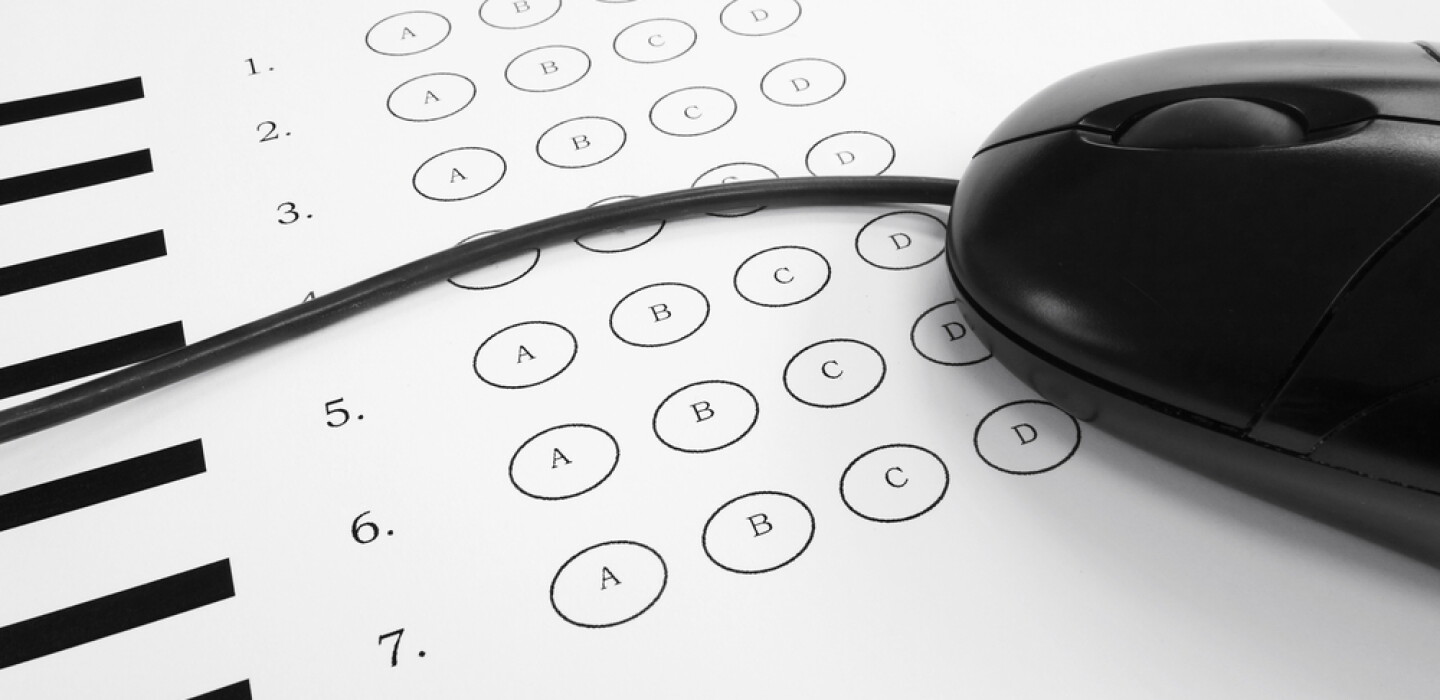
While Pennsylvania schools have had the option to test students online since 2012, this spring marked the first year online testing was required. Gov. Josh Shapiro announced the change in 2024, giving schools about two years to prepare.
“These changes will result in a reduction in the amount of time students need to spend on standardized testing by about 30 minutes per test,” Shapiro told reporters at the time. “That’s a lot of time to be reclaimed.”
And the governor said online testing would decrease the time teachers spent administering exams. In 2019, most states had already moved their annual tests primarily online, citing quicker results and better accommodations for students with disabilities and multilingual learners.
In fact, 55 percent of Pennsylvania schools were conducting assessments online before the mandate, according to Department of Education spokesperson Erin James.
But for Pittston Area School District in Lackawanna County, it was the first time that students sat for their state exams online. Assistant Superintendent John Haas said that led to a drop in students’ scores.
“Our students performed better taking the paper-and-pencil [test] rather than computer-generated,” Haas said.
Students must click between multiple screens to see the reading passages and questions they must answer, making the test tricky for young students to navigate, he added.
State leaders have yet to publicly release this spring’s Pennsylvania System of School Assessment (PSSA) results, so it’s not yet possible to say whether the change sunk reading scores statewide.
But in the southwestern part of the state, Canon-McMillan School District suffered a similar drop in scores, according to Superintendent Greg Taranto.
He said the share of third graders scoring ‘proficient’ or ‘advanced’ on the spring reading exam fell from a districtwide average of 69 percent in 2025 proficiency to 62 percent in 2026.
“But quite honestly, I was not going to put kids on a Chromebook … just so they have higher test scores,” Taranto said.
Canon-McMillan has eliminated screen time for all students in kindergarten through second grade. The district has also stopped using online apps across its elementary school instruction.
Taranto said the district’s parents and teachers have embraced this approach, valuing “protecting our kids’ brains and best learning approaches” over standardized test scores.
While research on school screen time is limited, one study found evidence that reading on screens hurt students’ performance compared to reading print texts. Other studies of online learning, meanwhile, have found no, and even small, positive effects on student learning.
According to James, the switch to online testing is part an overarching plan to devalue standardized testing statewide. Critics of state assessments often argue they fail to accurately measure student intelligence and instead reflect which students are better prepared.
In 2024, Shapiro signaled similar thinking when he said he would “love to go a step further and get rid of these tests entirely” but couldn’t due to federal testing requirements.
But while Shapiro has been vocal about his disdain for state testing and cellphones in schools — calling on lawmakers last year to pass a bell-to-bell ban — the governor has been quieter on the issue of screen time in classrooms at large.
When asked for his position on screen time in schools, representatives for the governor’s office said in a statement that Shapiro wants to “create healthier environments that teach students competency both online and offline,” pointing to his fervor for a cellphone ban.
But on the issue of screen time more generally, spokesperson Rosie Lapowsky said Shapiro prefers local control, allowing district administrators to decide the best policies for their schools.
Officials with the education department also said online testing would save the state millions of dollars, although they said they couldn’t provide an exact number yet because the state is in the process of switching which company it uses to administer its exams.
COSTLY DECISIONS
Washington School District, in a small city south of Pittsburgh, reported that nearly all reading and writing instruction in its schools involves digital devices. Educators in the district say they have been able to reduce their materials costs because of that.
According to Washington Junior High School Principal Lou Magnotta, purchasing software licenses for online textbooks instead of physical ones can save as much as $60 per student.
Washington is one of hundreds of Pennsylvania school districts that have had to make tough decisions about curriculum costs due to historic underfunding. The district is now receiving additional state dollars each year to close a $6 million “adequacy gap.”
But increasing demand for key computer parts has also led to technology price hikes for school districts and across industries.
Alex Becker, co-lead with the advocacy group PA Unplugged, said that, given the rising costs, school board members should scrutinize whether online learning tools will actually result in savings long-term.
“I would also want to understand, what are their associated costs? What are the costs to continue refreshing Chromebooks or laptops or iPads at the rate they are?” Becker asked.
This spring, the Pennsylvania Department of Education surveyed 657 school districts and charter schools about their screen time and digital device use.
PennLive’s analysis of the survey results found that schools reporting higher levels of digital instruction also served more economically disadvantaged students. Of the 31 schools that said their third through fifth grade reading instruction was majority-online, 58 percent of students, on average, came from low-income households.
Meanwhile, only about 48 percent of students at schools reporting the lowest levels of digital reading instruction — no more than a quarter of instructional time — came from low-income families.
“Affluence now appears to be equated with less screen time,” Becker said. “Whereas maybe 10 years ago, you would have thought the more affluent districts have more devices, more time on screens, more technology. We’re seeing this shift.”
Becker said schools could better put their dollars to use by hiring more teachers instead of investing in digital devices. Researchers generally rank small-group tutoring and instruction based in the science of reading as more effective and less costly than personalized learning technology and AI use.
Taranto suggested concerned parents start by talking to school leaders about their curriculum review process and identify subjects that may need updated materials.
Heather Schugar, who teaches a course on e-reading to prospective teachers at West Chester University, said the most important thing is to keep the experts at the front of the classroom.
“We want to be really purposeful about it,” Schugar said. “Not replacing reading instruction, not replacing the teacher.”
©2026 Advance Local Media LLC. Distributed by Tribune Content Agency, LLC.