
Lackawanna County Commissioners Thom Welby and Chris Chermak vowed not to raise property taxes next year following the county’s precipitous 2025 hike and the implementation of its polarizing reassessment this year.
Commissioner Bill Gaughan agreed the county should do everything it can to avoid further burdening taxpayers already grappling with inflation and pronounced affordability challenges, but also called for cognizance of the county’s own cost pressures and concerted efforts to balance the budget without jeopardizing recent financial progress.
Officials will unveil a preliminary version of the county’s 2027 budget Thursday, setting off a weekslong process of public budget hearings and continued work on the proposed spending plan that will culminate in its passage later this year. With that process and the release of specific budget details still pending, Welby, a Democrat, and Chermak, a Republican, confirmed in separate phone interviews Tuesday their unwillingness to increase taxes on county property owners.

Lackawanna County Commissioners Bill Gaughan, Thom Welby and Chris Chermak applaud during the commissioners meeting held at hte county goverment center in Scranton Wednesday, September 1, 2026. (SEAN MCKEAG / STAFF PHOTOGRAPHER)

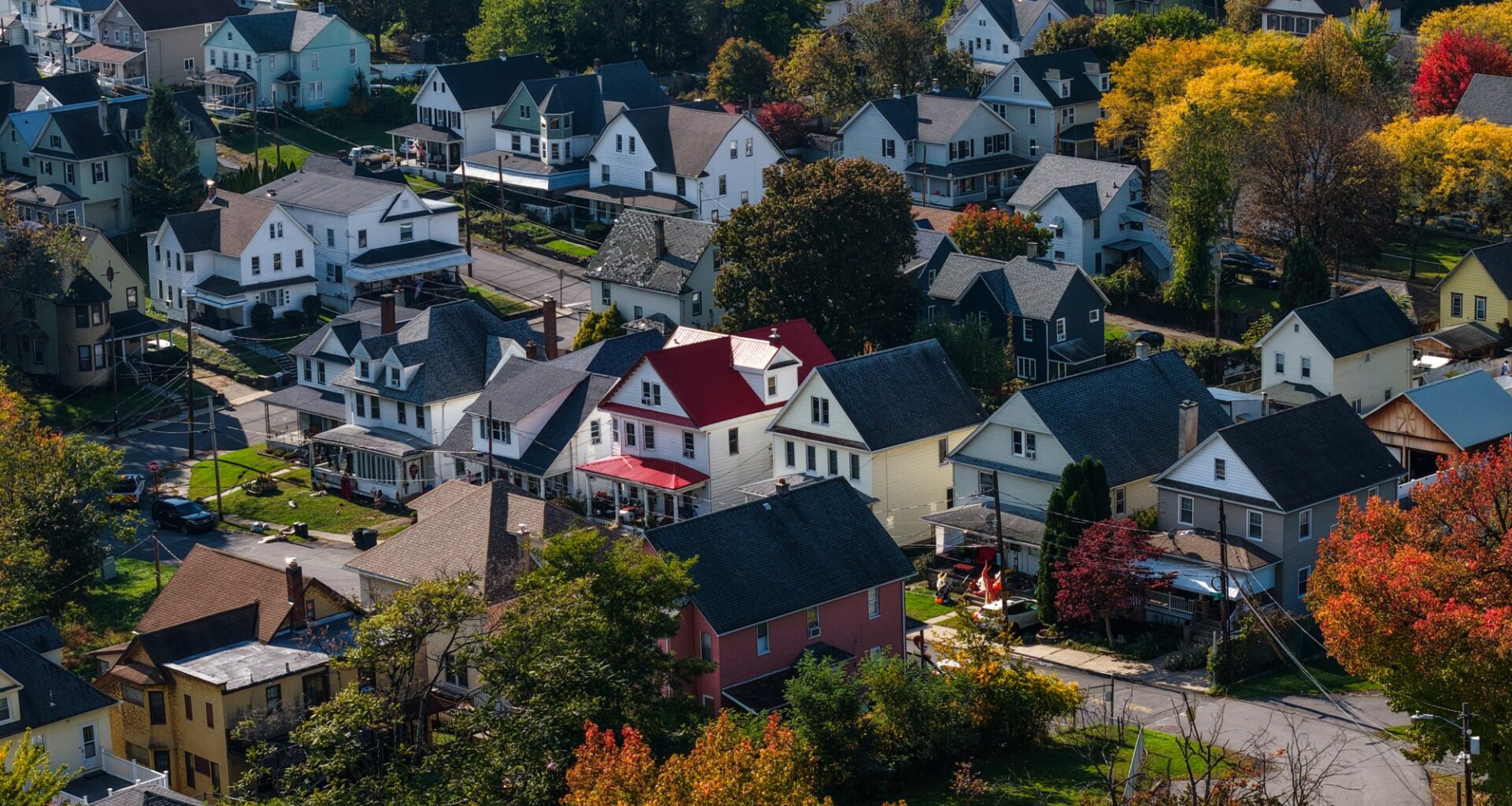
Homes can be seen in North Scranton Tuesday, October 13, 2026. (SEAN MCKEAG / STAFF PHOTOGRAPHER)

Homes can be seen in North Scranton Tuesday, October 13, 2026. (SEAN MCKEAG / STAFF PHOTOGRAPHER)

Homes can be seen in Scranton’s Hill Section Tuesday, October 13, 2026. (SEAN MCKEAG / STAFF PHOTOGRAPHER)

Homes can be seen in the South Side of Scranton Tuesday, October 13, 2026. (SEAN MCKEAG / STAFF PHOTOGRAPHER)
Show Caption
1 of 5
Lackawanna County Commissioners Bill Gaughan, Thom Welby and Chris Chermak applaud during the commissioners meeting held at hte county goverment center in Scranton Wednesday, September 1, 2026. (SEAN MCKEAG / STAFF PHOTOGRAPHER)
That commitment comes about two years after the new Democratic-majority administration of Gaughan and then-Commissioner Matt McGloin begrudgingly approved a nearly 33% tax hike for 2025 to mitigate a pronounced financial crisis they inherited upon taking office in 2024. They approved the increase over Chermak’s objections, arguing the most significant county tax hike in more than a decade was made inevitable by the failure of previous administrations to address a ballooning structural deficit and other fiscal challenges.
After McGloin resigned unexpectedly in early 2025, prompting a bitter monthslong battle in and out of court over how to fill his vacant seat, Chermak and Gaughan unveiled a preliminary 2026 budget last October that didn’t include a tax increase. Chermak, Gaughan and Welby — who won a 2025 special election to fill McGloin’s unexpired term and replaced interim Democratic Commissioner Brenda Sacco in November just weeks after she was appointed to temporarily fill the seat — then approved the tax-hike-free 2026 budget in December.
While the 2026 budget didn’t increase taxes, tax bills fluctuated this year as a result of the county’s first comprehensive property reassessment since the late 1960s. Because reassessment must be essentially revenue neutral for taxing bodies, the county’s overall tax rate dropped substantially as new, higher assessed property values took effect. Some property owners saw their 2026 tax bills increase as a result of reassessment, while others saw their bills decrease or remain more or less the same.
Asked about potential 2027 tax changes against that backdrop, Welby said county officials are currently working on ways to eliminate a preliminary budget shortfall in the draft spending plan but was adamant that he won’t vote to raise property taxes.
“While we may be looking at a deficit — we’re looking at a deficit right now, but the team is looking at ways to eliminate that deficit — but I can tell you that Thom Welby won’t be voting for any tax increase, period,” he said.
Chermak went even further, noting he’s “certain” commissioners won’t approve a tax increase this year for 2027, or next year for 2028. If increases are proposed “I will stand hard,” Chermak said. “I won’t vote for that obviously.”
He noted that the office of commissioner is on the ballot in 2027.
“Whoever is running I’m certain isn’t going to want to announce a tax increase then either,” Chermak said. “After a whopper of 33%, I think the county should be in good shape for a long time after that.”
Whether commissioners ultimately approve a tax hike in 2027 for 2028 remains to be seen, but Chermak’s and Welby’s stated refusal to entertain an increase in the 2027 budget makes the prospect of a hike next year unlikely. A pair of commissioners constitutes a majority on the three-member board, and is enough to pass a tax-hike-free budget with or without Gaughan’s ultimate support.
Gaughan insists holding taxes steady should be the goal, but reiterated his belief that Chermak and Welby are effectively the majority commissioners and that he’s the de facto minority commissioner, despite the fact that he and Welby are both Democrats.
“Look I agree with them that we need to do everything in our power to avoid a property tax increase, nobody wants to do that, but saying ‘no’ is just the beginning of the conversation, not the end of it,” Gaughan said. “I think that the both of them will have to be equally clear about how they intend to balance this budget, protect essential services and address the structural problems that have plagued this county for many years.”
“As the majority they have a responsibility to put forward a financially sound plan, and as minority commissioner I intend to examine that plan carefully, offer constructive recommendations and insist that whatever is done is sustainable,” he said.
Officials with PFM Group Consulting LLC, the financial consulting firm behind the county’s multi-year financial management plan, have recommended commissioners consider modest annual tax increases to keep pace with expenditure growth. While property taxes are the county’s largest recurring revenue source, growth in that area hasn’t kept up with that of expenditures, contributing to the structural deficit problem officials have spent recent years working to address.
A widening structural gap between revenues and expenditures — a gap modest, more-regular tax increases in past years would have mitigated — arguably necessitated the nearly 33% 2025 tax hike that outraged many taxpayers but nonetheless contributed to the county’s much-improved financial position. The 2025 increase was the county’s fifth and most significant since 2012, following hikes of roughly 37.5% that year, 4.4% in 2013, 11.3% in 2020 and 5.9% in 2024.
“Rather than sporadic, large tax increases in response to fiscal crisis or deferred obligations, the County should regularly and incrementally increase the real estate tax millage rate dedicated to general operating expenses to keep pace with growing expenditures,” the county’s PFM-authored financial management plan notes. “Regular tax increases allow residents to absorb the higher tax bill over multiple years rather than all at once and moves the County towards structural stability.”
County officials will hold a press conference Thursday to unveil the preliminary 2027 budget, beginning at 10 a.m. in the fifth-floor conference room of the county government center in downtown Scranton.