
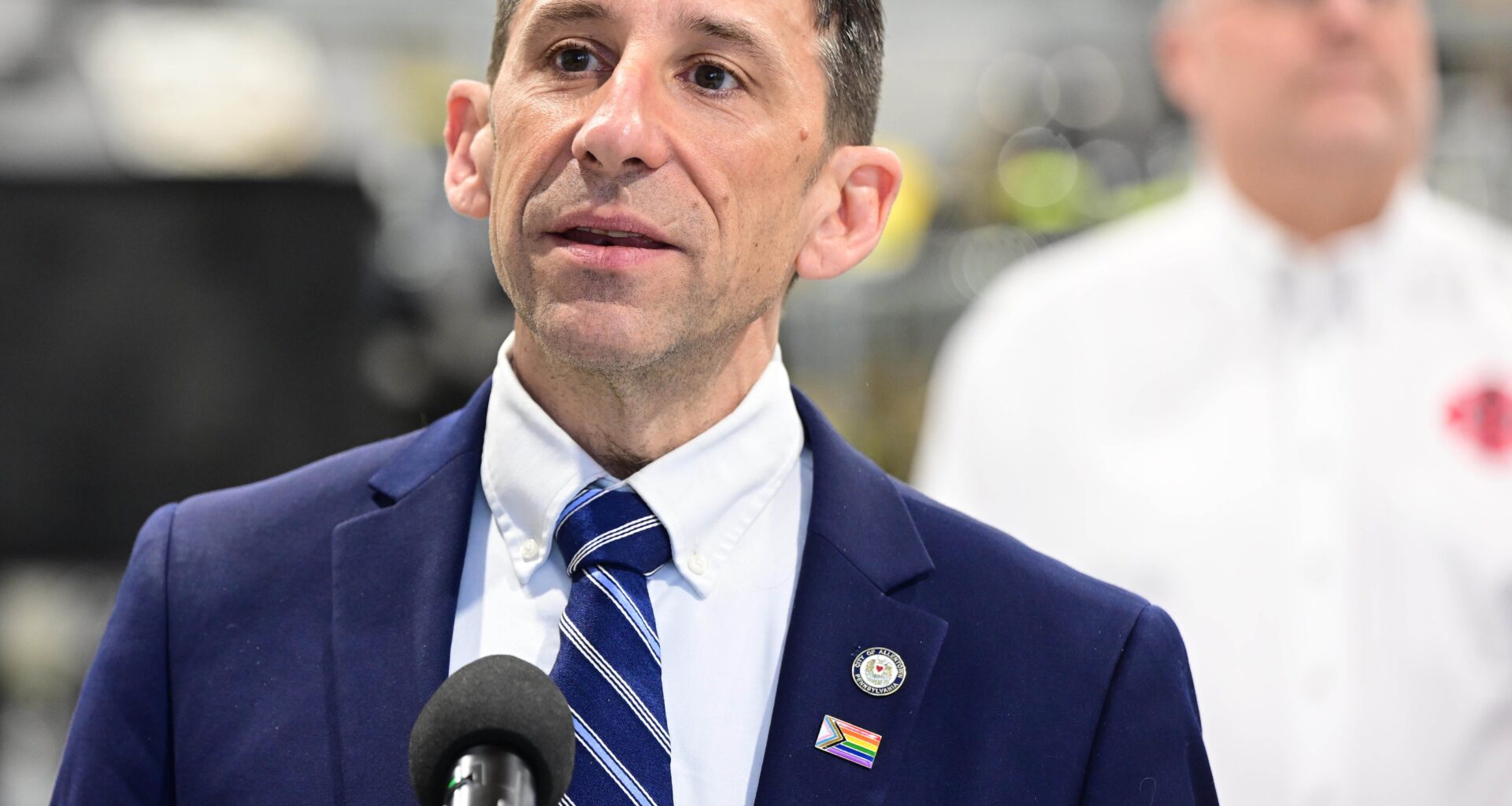
Allentown residents could see their taxes go up next year by around 4%, which Allentown Mayor Matt Tuerk said Thursday is necessary to keep city services operating.
The city, facing budget constraints, also cut all of its department budgets by 10% this year, scaled back some major projects and reduced some benefits for employees.
In a news conference, Tuerk said that the “small tax increase” will help keep vital city programs running, including police, EMS, fire and public works.
“We are asking our residents to take on this small tax increase to help us continue to deliver the city services that means so much to our residents,” Tuerk said. “Our residents deserve prompt attention to a pothole that they’ve reported at 311. Our residents deserve fire, police and paramedics that show up in an unbelievably low response time. … Our residents deserve safe places to live, where our code inspectors and our rental inspectors are holding landlords accountable. Our residents deserve high-quality public health. These are the things that our residents deserve, and we are going to continue to deliver them. In order to accomplish that, we asked our department heads and our employees to give something up, but we are asking our residents to give something as well.”
The city faces costs that are increasing more quickly than its revenue streams, which is why the budget cuts and tax increase are necessary, he said. The 3.81% tax increase will result in an average tax increase of $1.75 a month for residents, according to the city’s calculations; residents can view the proposed increase for their property at Allentownpa.gov/budget.
The cuts to the city budget did not result in employee layoffs. Rather, they included reduced spending on fuel for the Public Works Department, eliminating vacant positions from the Allentown Police Department, and postponing studies and analyses planned in the Community and Economic Development Department, city officials said.
Budget cuts also meant that plans for the police department renovations and a new Allentown Central Fire building will be scaled down, the mayor announced. Tuerk did not offer specifics about the changes to those plans, although he said that they are “pretty small changes.”
The city also will cut some employee benefits. Specifically, the city will no longer cover the cost of GLP-1 medication for its employees, which was projected to cost the city over $5 million annually, Tuerk said, and will no longer offer healthcare benefits to nonunion retired employees who join the city’s workforce after Jan. 1, 2027.
Despite the budget cuts, the city is continuing to spend on traffic safety improvements; it will carry out 18 traffic projects next year, including traffic signal upgrades, speed cushions and traffic intersection improvements, according to a news release. The safety improvements are part of the city’s stated goal of “Vision Zero,” which aims to eliminate all traffic fatalities by 2030.
Tuerk, during his budget address, acknowledged that the city’s budget process “did not go as smoothly as we always want it to” in the past; the city last year failed to pass a budget before the beginning of the year due to an impasse with some City Council members who opposed Tuerk’s proposed 3.96% tax increase. Council eventually approved a budget with the requested tax increase and a $135 increase to the annual trash collection fee in early January. (The 2027 budget will not increase the trash fee; it will remain level at $740 for the year.)
However, Tuerk said that this year, he and other city staff collaborated more closely with council members to make sure they were on board with the proposed budget.
“I’m very happy that today I can say we work closely with City Council, not alongside City Council, to bring you this budget today,” Tuerk said.
Allentown City Council President Santo Napoli concurred with Tuerk, and credited the city’s managing director, Frank Kane, for including council members in many budget discussions and meetings.
“[Kane] was being transparent and really making sure council understood all aspects of the budget whether it was the cuts the departments were making and what the increases were, and we had many meetings with departments to better understand their budgets,” Napoli said.
Napoli said, “We are going to need some time to really unpack the entire budget.” City Council will hold a series of budget hearings throughout October and November, with a final vote on the budget expected in December.
The $287 million budget is balanced and does not dip into the city’s cash reserves; last year, the city took $2.6 million from its reserves to fill a budget deficit.
The budget announcement comes as Lehigh County, where Allentown is located, faces a possible property tax increase of 17%.
Reporter Lindsay Weber can be reached at Liweber@mcall.com.