
By Steve Novak, Armchair Lehigh Valley
In the history of Pennsylvania, only five state House legislators have served longer than Robert Freeman, Pennsylvania House of Representatives Archives show. A political newcomer hopes to unseat him in the 136th House District in the Nov. 3 election.
Freeman, a Democrat, has represented Easton and its surroundings for 39 years, 1983 to 1994 and 1999 to now. Another term — which would be his 15th consecutive and 21st overall — would put Freeman two years closer to the record of 44 years, set by Berks County Democrat Thomas Caltagirone, who served 1977 to 2020.
Stepping in to challenge the longtime legislator is Pilar Cavallo-Campisi, a Republican from Williams Township, who owns Norwegian Spa and developed Tree Froggy organic skin care products.
The 136th in southeastern Northampton County covers all of Easton, Freemansburg, Glendon, Hellertown, West Easton, Williams Township and Wilson Borough, and parts of the townships of Palmer (East, South and Southeast districts) and Lower Saucon (3rd, 5th and 6th districts).
Freeman, 70, of Easton, didn’t mention longevity when asked why he’s running again, but he did tout “experience, institutional knowledge of the legislative process, and a proven track record” on public policy and procuring grants for local projects.
Freeman, who chairs the House Local Government Committee, presented himself as a practical local advocate who promotes “constructive debate” among members of both parties to “advance pragmatic proposals that provide real solutions for the issues we need to address.”
Among the accomplishments he listed were several bills he authored or co-sponsored: the Elm Street program for revitalizing older residential areas; legislation providing municipalities with tools for “better land use planning” and “smart growth”; protections for the Appalachian Trail; protections for residents of manufactured home communities, including a requirement that they be notified if the community is pending sale; and an act allowing flashing blue lights on emergency roadside assistance vehicles.
He said his top issues in this election are affordable housing, healthcare and data centers. Freeman wants to adopt Gov. Josh Shapiro’s Housing Action Plan and champions his own legislation helping renters get homes through a lease-to-purchase program. He wants to implement Shapiro’s proposed $50 million health insurance subsidies program to offset the Trump administration’s cuts to the Affordable Care Act, and proposes a public health insurance option. To control data center development, Freeman supports moratoriums, regulations on electricity costs, environmental protections and moves for transparency, such as banning nondisclosure agreements between developers and local governments.
“I have always believed that it is the role of a legislator to look out for the needs and interests of everyday people who don’t have some powerful moneyed lobby to look out for their interests,” Freeman said. “That’s the kind of State Representative I have been and will continue to be as an advocate for working families, consumers, senior citizens, and the need to protect our environment, revitalize our communities, and preserve farmland and open space.”
Cavallo-Campisi, who will turn 63 next week, told Armchair Lehigh Valley that she believes four decades is long enough for a legislator and called for term limits. She called Freeman “a career politician that always has the right thing to say but takes no action, he is a pretender.”
Cavallo-Campisi said her top priorities are in education: bringing back “school normalcy” and implementing school nutrition programs. For the latter, she cited Health and Human Services Secretary Robert F. Kennedy Jr.’s MAHA food pyramid as a guiding factor. She said she wants to see state and federal partnerships that procure fresh ingredients, pilot programs that refine food offerings and new nutrition education opportunities.
She also emphasized a desire to develop “practical and career-oriented curricula” with courses in agriculture, skills and trades, technology, digital literacy, civics and “TRUE history,” which she said should not be altered “to misrepresent a ‘suppressed’ group.” (She cited critical race theory and “a focus on systemic racism” as examples of “distorted” history.)
“I believe this approach ensures that children in Northampton County receive a balanced education that prepares them for healthy living and future success while restoring a sense of normalcy in our schools and in their lives,” Cavallo-Campisi said.
Democrats have an edge in voter registration over Republicans with 20,617 (47%) to 12,998 (29.6%); independent and minor-party voters total 10,233 (23.4%).
State representatives serve two-year terms and receive a base salary of $113,000. The House has 103 Democrats and 100 Republicans.
The candidates each responded to Armchair Lehigh Valley’s questions about their stances on various topics. Their summarized responses are presented here.
Affordability
Freeman: Said wages have not kept pace with inflation, which raises prices. Federal action is needed, but the state can pass Shapiro’s Housing Action Plan to build and preserve housing stock, expand opportunities through stabilization and sustainability, and modernize development regulations. Co-sponsored bills to curb rising utility rates through new economic risk standards, and that would require data centers — not consumers — to bear the cost of their electricity use. Voted to eliminate gross receipts tax on electricity and establish tax credits for earned income and child care.
Cavallo-Campisi: Said reducing unnecessary regulations could lower housing and energy costs. Supports “private-sector solutions” and workforce development to boost potential earnings.
Minimum wage
Freeman: Said raising the hourly minimum wage from $7.25 to $15 (proposed to happen by 2029) is “long overdue.” Said, “Pennsylvania has not raised its minimum wage in over 17 years. That’s a disgrace.”
Cavallo-Campisi: Generally supports a minimum wage increase, but favors “gradual marketing adjustments” rather than the proposed set increase to $15 by 2029, to “avoid potential job losses and preserve small business viability.”
Healthcare
Freeman: Supports Shapiro’s $50 million healthcare program, which would independently subsidize insurance premiums and cut average plan costs 9% to 12%. Proposes his own legislation for a health insurance “public option” that would allow the State Workers Insurance Fund to sell plans; he said it “would go a long way toward providing an affordable health insurance option” that’s cheaper than private plans through lower administrative costs while creating market competition and serving as a “yardstick” to compare “fairness” of charged rates.
Cavallo-Campisi: Opposes Shapiro’s subsidization program, which she said would increase taxes and discourage “personal responsibility.” Proposes reducing regulations and promoting competition rather than “government dependency.” “More government, less freedom,” she said.
Data centers
Freeman: Said he was “one of the few legislators who voted against the sales tax exemption for data centers” five years ago and co-sponsored House Bill 2198 to repeal it. In June, voted in favor of House Bill 2650, which would require data center developers seeking state tax benefits to meet strict standards protecting energy affordability, supporting local communities, creating jobs, and strengthening environmental protections. Voted in favor of House Bill 2150 to mandate annual reporting of energy and water consumption by data centers, and House Bill 2151 to develop a model data center ordinance for municipalities. In March, voted for House Bill 1834, which would require the Public Utility Commission to develop data center regulations that would include banning electric companies from passing on costs of infrastructure updates and energy demands from data centers onto customers. Voted in favor of House Bill 2496, which would allow a six-month pause on data center development.
Cavallo-Campisi: Supports “limited ability” for municipalities to pause data center projects, but said “moratoriums must not stall economic growth or job creation.” Would maintain data centers’ tax exemption to “attract investment.” Supports “balanced” legislation regulating energy costs and job creation, as long as regulations are not “so burdensome that they drive projects away.” Said communities should have their say and that project impacts should be presented “in honest format … not some made up scare tactic.”
Immigration detention
Freeman: Opposes ICE agents wearing masks and the use of privately owned detention facilities. Supports use of body cameras. “Immigration enforcement like all law enforcement must be conducted within the standards of proper conduct and due process,” he said, and not be “disruptive” to legal, educational or medical institutions. Said local law enforcement has “obligation” to participate in some immigration matters — such as criminal investigations and serving legal warrants — as long as it falls within their jurisdiction.
Cavallo-Campisi: Opposes restrictions that “tie the hands of ICE and local enforcement”; supports ICE’s use of “necessary security measures” and local partnerships. Opposes bans on private detention centers. “We need to make sure all [the] media tells the truth about how mass immigration negatively impacts societies,” she said. “But we also need to show a positive side of legal immigration.”
Education
Freeman: Supports cellphone bans in schools and limited use of technology in the classroom to improve “critical thinking.” Opposes a proposed constitutional amendment eliminating school property taxes, saying it is “not realistic” — that sales and income taxes would increase, shifting the burden to families, seniors and others paying for “basic necessities.” Rather, he has proposed an amendment for “property tax circuit breakers” that would exempt residential property taxpayers from paying a portion of property tax beyond a set percentage of household income, “building fairness into the system,” especially for fixed- or limited-income individuals.
Cavallo-Campisi: Supports cellphone bans and says the state should support local decisions on the use of technology in schools, “but avoid heavy-handed mandates” that limit input and flexibility. Said an amendment eliminating school property taxes is “a bold step toward fair funding,” which should be “a balanced mix of state resources and local control.”
Skill games
Freeman: Said the Legislature must comply with a state Supreme Court ruling requiring regulations and taxes on skill games, likely with a compromise between the governor’s plan (a 52% tax) and the Republican-controlled Senate’s (35%-36% tax). “I am open to any proposal that is reasonable and will generate a decent stream of revenue” with proper regulation and oversight.
Cavallo-Campisi: Wants a “fair, balanced tax that protects small businesses and respect[s] taxpayers.” Said Senate Republicans’ 35%-36% tax on skill games “strikes the right balance.”
Voting
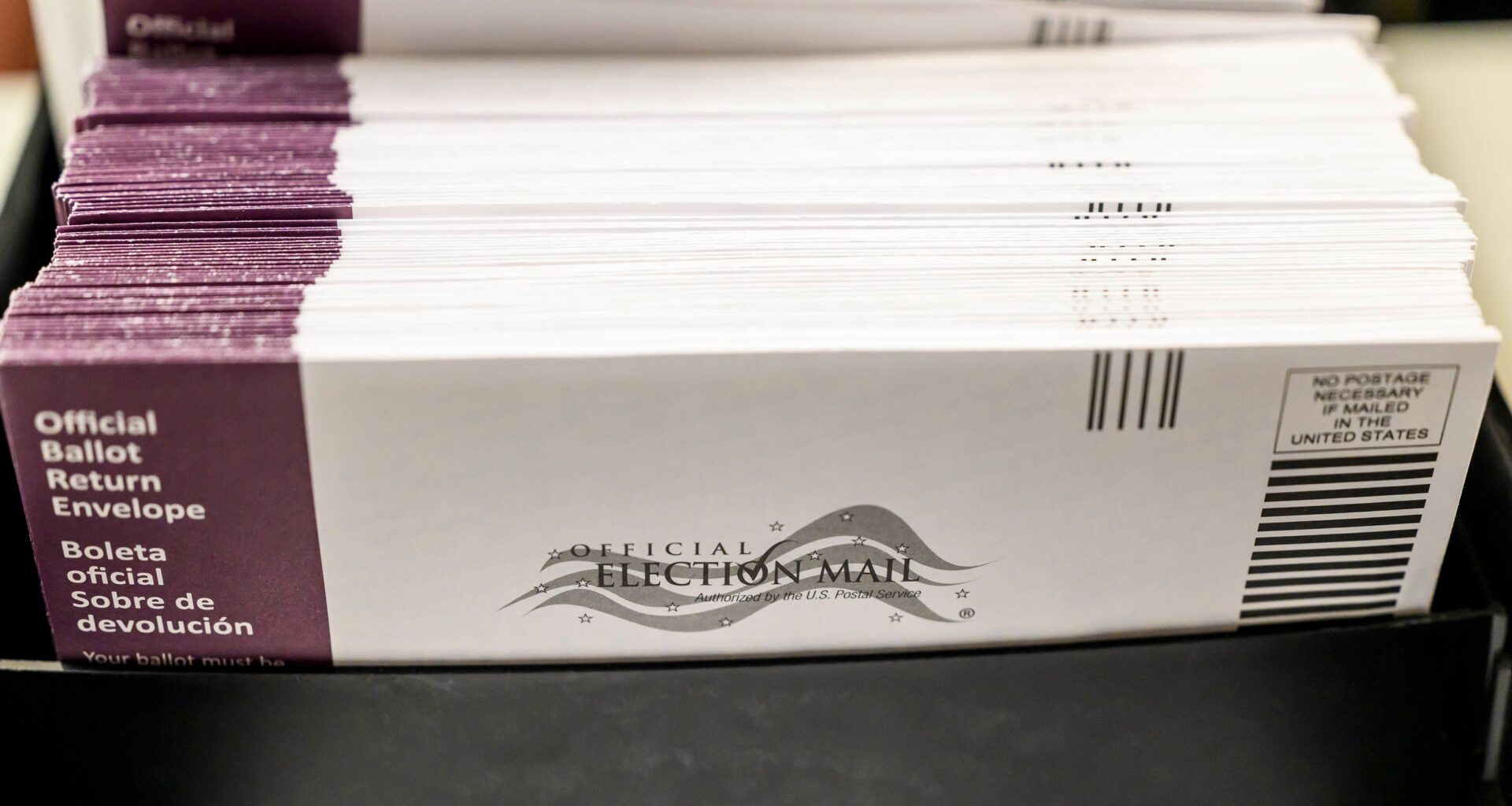
Freeman: Opposes voter ID requirements, wants to maintain satellite election offices and voted in favor of early mail-in ballot canvassing. Said voter ID laws could suppress valid voters, such as seniors or low-income people without passports and who don’t drive. Properly monitored satellite offices are “convenient” for voters, he said. Pre-canvassing mail ballots up to a week before Election Day would help counties process and release results on election night.
Cavallo-Campisi: Supports voter ID requirements, pre-canvassing mail in ballots and maintaining satellite voting offices. Voter ID makes sure “nobody’s voting in our elections that shouldn’t be. Only American citizens should be voting in our elections.” Said pre-canvassing allows quicker, accurate results while satellite voting provides voter access and convenience: “Every eligible voter deserves multiple essential options to cast their ballot securely.”
Reproductive rights
Freeman: Co-sponsored a proposed state constitutional amendment “enshrining reproductive autonomy.” Called it a “safeguard” to “a woman’s right to choose” after the U.S. Supreme Court overturned Roe v. Wade.
Cavallo-Campisi: Opposes an amendment on reproductive autonomy. “We should support women with real alternatives and healthcare not guarantee unrestricted abortion rights.”
Gun rights
Freeman: Supports universal background checks (they “pose no threat to law-abiding citizens”), banning violators of abuse-protection orders from ownership (“a common-sense safeguard”), and maintaining concealed-carry licenses (“relatively easy to obtain” and “no hardship to law-abiding citizens”). Also said municipalities could pass legislation stricter than state law if warranted, though he would “prefer Pennsylvania adheres to uniform standards.”
Cavallo-Campisi: Said the Second Amendment should be protected “without compromise.” Opposes universal background checks, would support concealed carry without a license if “crime keeps going down.” Said people who violate protection-from-abuse orders should be restricted, but municipalities mustn’t impose gun laws stricter than the state’s. “We trust law-enforcement to handle criminals, not restrict freedoms. Our gun rights are sacred and must never be weakened. PERIOD.”
Editor’s Note: This story first appeared on Armchair Lehigh Valley and is being published on themorningcall.com as part of a partnership with the website, which aims to give voters factual information in a nonpartisan way to help them make informed decisions at the polls. Armchair Lehigh Valley is run by Publisher Katherine Reinhard and editor Robert H. Orenstein, two former Morning Call employees. Learn more about Armchair Lehigh Valley and subscribe at armchairlehighvalley.substack.com.