
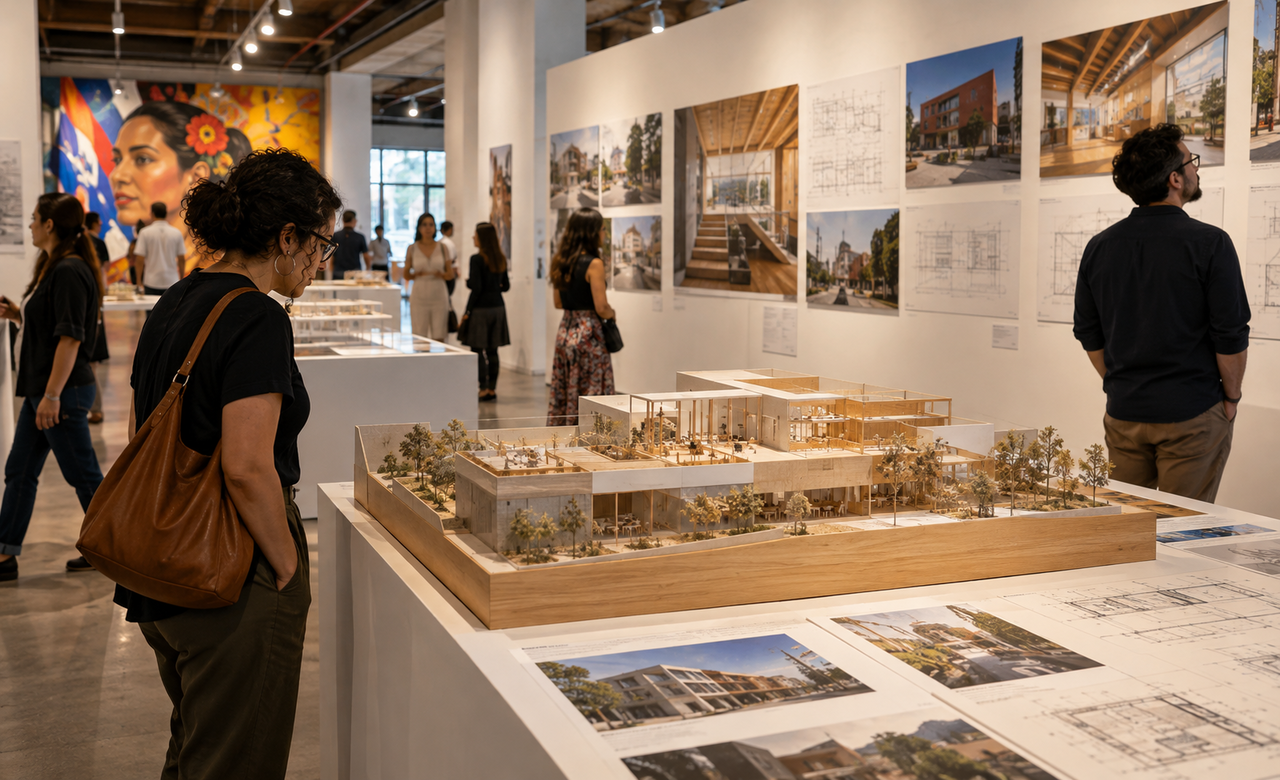
A building can be much more than a structure made of concrete, steel, and glass. It can become a place where a community preserves its memories, passes down its traditions, and finds ways to make itself visible in the city. These are among the central questions explored in En Su Sitio / In Its Place, an exhibition by architect Antonio Fiol-Silva that remains open to the public at Taller Puertorriqueño in North Philadelphia through November 14.
The exhibition is presented at El Corazón Cultural Center, home to one of Philadelphia’s leading Latino cultural institutions. Through drawings, models, research, and completed projects, the exhibition examines the relationship between architecture, identity, and collective life. Its argument extends beyond aesthetics: the design of physical spaces can also influence how people come together, participate in public life, and develop a sense of belonging.
When a Building Becomes a Gathering Place
The exhibition coincides with the 10th anniversary of SITIO architecture + urbanism, the firm founded by Fiol-Silva, as well as the 10th anniversary of the building that houses Taller Puertorriqueño. The timing carries particular significance: the architect is presenting his work in the very space whose design he helped shape.
Fiol-Silva, who previously served as director of urban planning in San Juan before establishing his professional career in Philadelphia, has worked at the intersection of architectural design and urban planning. His practice is grounded in a fundamental premise: projects should respond to the social, cultural, economic, and environmental conditions of the places where they are built.
At Taller Puertorriqueño, that relationship takes on a distinctly community-centered dimension. The institution combines arts programming, education, and cultural activities, meaning its headquarters functions as more than a gallery or event venue. It also serves as a gathering place for people interested in preserving and developing Latino cultural expression.
The exhibition offers an opportunity to examine how architectural decisions can support that mission. A building’s layout, its relationship to its surroundings, and the ways its spaces can be used all help determine who can gather there and what activities can take place.
Public Space Tells a Story, Too
The significance of En Su Sitio extends beyond the anniversary of a building. The representation of historically underrepresented communities has become an important part of the cultural conversation. Taller Puertorriqueño contributes to that discussion through its annual initiative, We Will Not Hide: Hidden Histories, Collective Voices and Creative Futures, which highlights Latino and Afro-Latino histories, voices, and perspectives.
In this context, architecture emerges as both a form of cultural expression and a question of access and participation. A space designed to bring a community together can help strengthen its networks and keep its stories alive. Its impact, however, also depends on the availability of programs, resources, and opportunities that allow people to use it.
The exhibition will be open this Friday, October 16, from 10 a.m. to 6 p.m., with free admission, at 2600 N. 5th Street in Philadelphia. The program also includes a conversation between Fiol-Silva and Maurice D. Cox, a professor at Harvard Graduate School of Design, scheduled for November 7.
Ultimately, En Su Sitio invites audiences to consider a question that reaches beyond architectural plans and models: cities are not built with buildings alone. They are also shaped by the relationships those spaces make possible and the stories they help preserve. For Philadelphia’s Latino communities, that distinction can determine whether a place remains simply part of the urban landscape or becomes a cultural home.