
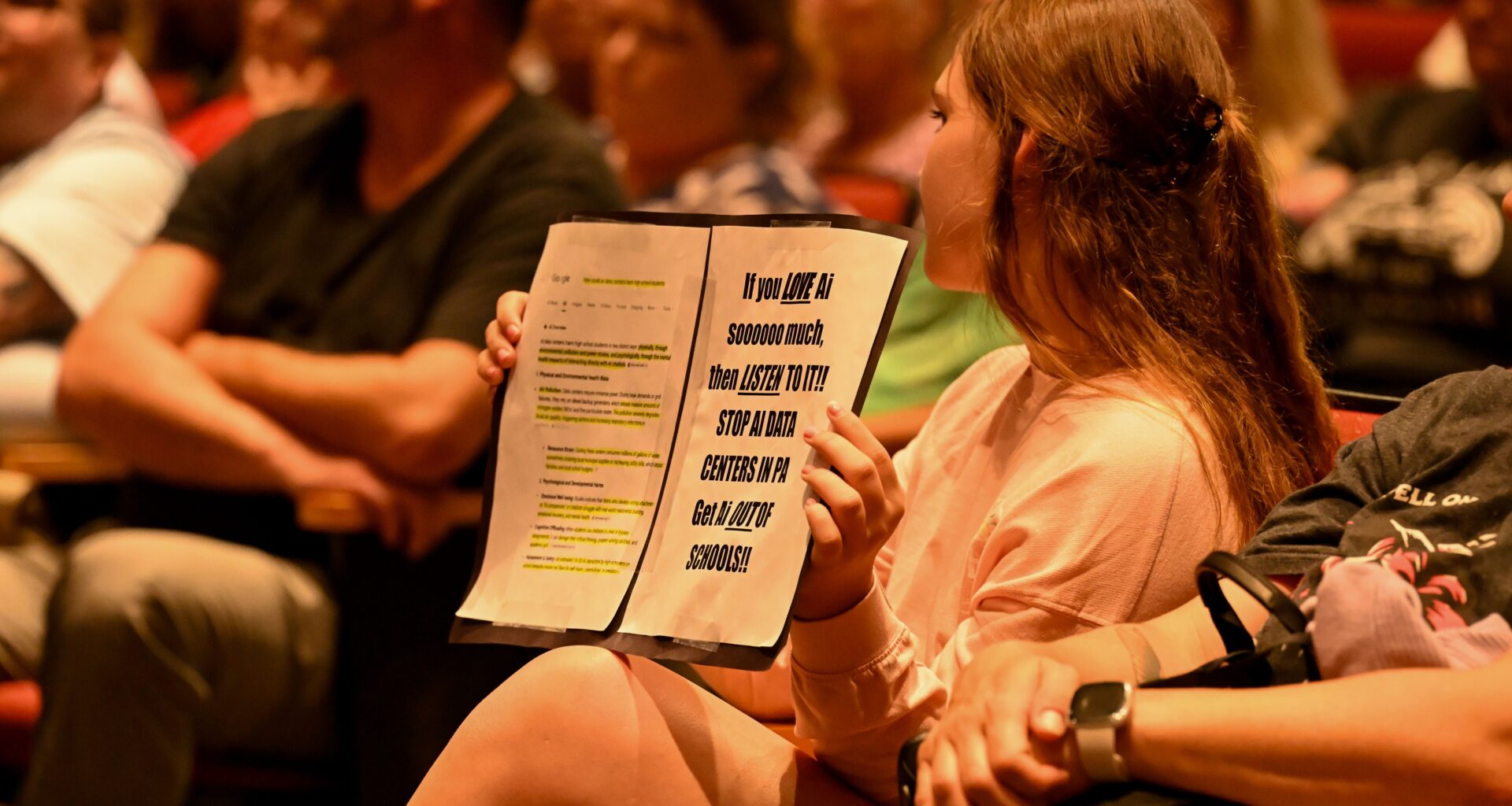
The Parkland School Board unanimously approved a resolution opposing the Project Atlas data center campus, voting Tuesday to urge South Whitehall officials to consider the school community’s health and safety concerns as they review a hyperscale proposal for land across the street from Parkland High School.
Although the board does not have authority over what gets built across from Parkland High, members have a responsibility to speak up, school board Vice President Chris Pirrotta said.
“The idea of this ticking time bomb next door to our crown jewel is just shocking to me,” Pirrotta said.
The Atlas plan includes three data center buildings totaling approximately 1.48 million square feet along with a 40,680-square-foot administration building and a 39,167-square-foot warehouse building, for a total of approximately 1.56 million square feet. Opponents have expressed concerns about environmental impacts, including how noise and vibration could affect students and staff at Parkland High School.
The well-being of the school community should outweigh any consideration of what revenue from a data center development might do to address the district’s budget shortfall, Pirrotta said.
“Even if this is some wonderful financial windfall for the district, you know, the budget exists to support education,” Pirrotta said. “And we would not sacrifice the quality of this education to support the budget.”
Starting with the 2027-28 budget, Parkland is beginning a five-year plan to cut costs and bring the district’s budget back into structural balance. Preliminary budget discussions conducted during the board’s Tuesday workshop meeting show that plan would mean a proposed millage increase of 3.6% to raise an additional $6 million in tax revenue and the use of $7 million in reserve funds to make up for a projected $13 million shortfall.
Tax revenue from the data center development could fill the district’s budget gap “in a couple years,” school board President David Hein said, but added that the board must “maintain the integrity of our school district, of the learning environment, of the safety and security of our students and our staff.”
Hein’s sentiments were echoed in a comment read into the record by Pirrotta on behalf of school board member Jay Rohatgi, who could not attend the meeting but wanted to express his support for the resolution against Project Atlas.
“My opposition is rooted in concerns about the health, safety and well-being of our students, which must always remain our highest priority,” Rohatgi said.
Hearing from the community regarding the potential risks and benefits of a data center helped the board figure out what local experts to consult and what action to take, school board member Alyssa Beckwith said.
“Thank you for your continued passion and commitment — for voicing your concerns, for voicing your commitment to our student safety,” Beckwith said.
One community member’s perspective in particular stuck with school board member Carol Facchiano, who said she’s been contemplating whether the district, which broke ground on a $68 million high school expansion in March, ever would have considered building a high school at that location if a data center had been built first.
“Would we be building across the street from a data center?” Facchiano asked. “Well, we wouldn’t be.”