
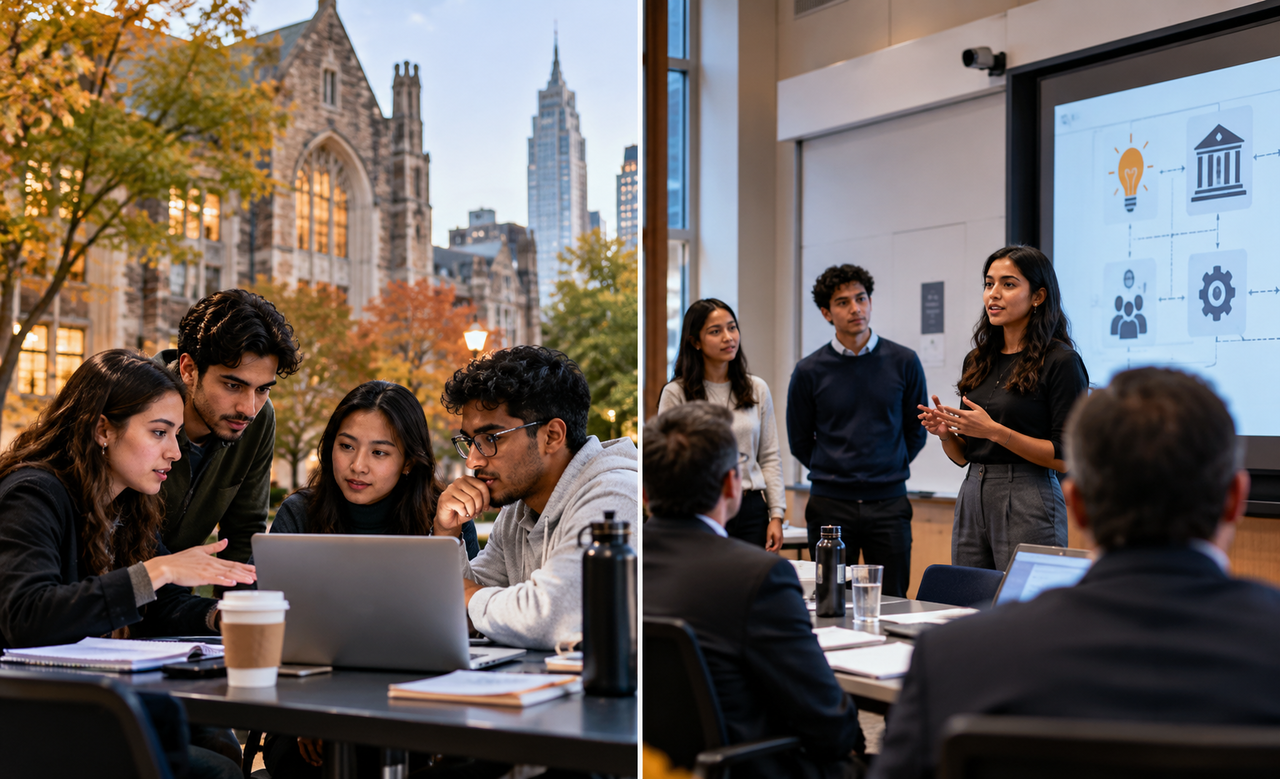
In public administration, identifying a problem is only the beginning. The real challenge is finding a solution that works, can be funded, and addresses the needs of the community. That gap between recognizing a problem and solving it will be at the heart of 1776 Labs at Penn: 24-Hour Challenge, an initiative that will bring public officials together with people interested in innovation, entrepreneurship, and technology.
The event will begin virtually on Thursday, October 22, and conclude on Friday, October 23, with in-person presentations at Tangen Hall, home to the University of Pennsylvania’s Venture Lab. During that period, teams will develop proposals based on real-world challenges presented by representatives from the City of Philadelphia, Montgomery County, and The Connect, an organization focused on workforce development. According to the event announcement, participants can organize their work around their own schedules; staying awake all night is not required. The event’s Eventbrite listing provides details about the schedule and participation requirements.
From Bureaucracy to Experimentation
The initiative starts with a question that matters to public institutions across the United States: What would happen if problems typically discussed in government offices became open challenges for entrepreneurs, students, and technology specialists?
The format seeks to bring together two sectors that do not always move at the same pace. Public agencies understand their communities’ needs but must operate within budget constraints, administrative procedures, and regulatory frameworks. Entrepreneurs, meanwhile, often rely on rapid experimentation, prototyping, and opportunity assessment. The competition aims to create a space where these complementary capabilities can work together.
Speed, however, does not guarantee quality. An idea developed in a single day may offer a fresh perspective, but its feasibility will depend on factors that a presentation alone cannot always demonstrate: costs, data protection, accessibility, technical capacity, and implementation prospects. The initiative’s value should not be measured solely by the creativity of the teams, but also by the usefulness of their proposals to the institutions and the people they serve.
Public Officials Meet New Partners
The event announcement identifies four key participants. Omar Sabir, chair of the Philadelphia City Commissioners, will bring the perspective of an institution responsible for election administration and voter registration. His participation is particularly relevant to examining how innovation might strengthen civic engagement and access to democratic processes, although the organizers have not specified the particular challenge he will present.
Senzwa Ntshepe, president and CEO of The Connect, will also participate. The organization focuses on workforce development, adding an economic dimension to the event: the connection between people’s skills, employment opportunities, and employers’ needs.
Jeannette Bruno, director of transformation for Montgomery County, represents another institutional priority: modernizing government processes. Meanwhile, Renee Chenault-Fattah, executive director of the Philadelphia Commission on Human Relations and the Philadelphia Fair Housing Commission, brings a perspective in which solutions must account for equity, housing access, and protection against discrimination.
The event announcement does not specify which problem each participant will assign to the teams. It is therefore not yet possible to determine whether participants will work on digital tools, citizen service models, workforce training proposals, or other approaches. What has been confirmed is that the challenges will come from the institutions and organizations identified above.
Innovation Must Also Be Accountable
Collaboration between the public sector and the entrepreneurial ecosystem creates opportunities, but it also brings responsibilities. When a technological solution is proposed for a public service, it is not enough to demonstrate that it can work under ideal conditions. It must also address the needs of people with varying levels of digital access, protect the information it uses, and deliver measurable results.
This is particularly important in communities where economic, language, or administrative barriers can make accessing services more difficult. An app may streamline a process for some users while excluding others who lack a reliable internet connection or need in-person assistance. Public-sector innovation must therefore combine efficiency with inclusion and measurable evaluation.
The competition could serve as a starting point for exploring these challenges. Its ultimate impact will depend on what happens after the presentations: whether institutions evaluate the proposals, whether funding is available to test them, and whether teams receive the support needed to turn their ideas into viable projects.
From Philadelphia to a National Competition
The virtual kickoff is scheduled for Thursday, October 22, from 5 to 6 p.m. Eastern Time. Final presentations will take place on Friday, October 23, from 4 to 6 p.m. at Colloquium Hall, on the second floor of Tangen Hall, located at 115 S. 40th Street in Philadelphia. According to the event announcement, the winning team will advance to a national competition at Amazon HQ2 in the Washington, D.C., area.
The event is presented by OnGov, the University of Pennsylvania’s Venture Lab, the Fels Institute of Government, WIBEC, and Polis. Its format combines entrepreneurship, public administration, and technological experimentation within a deliberately short time frame.
Twenty-four hours will not, by themselves, solve the structural problems facing a city or county. But they can push participants to ask specific questions, weigh competing priorities, and propose alternatives worthy of further evaluation. Ultimately, the success of 1776 Labs will depend not only on who wins the competition, but also on whether any of the ideas move beyond the initial presentation and demonstrate that they can measurably improve the relationship between public institutions and the communities they serve.