
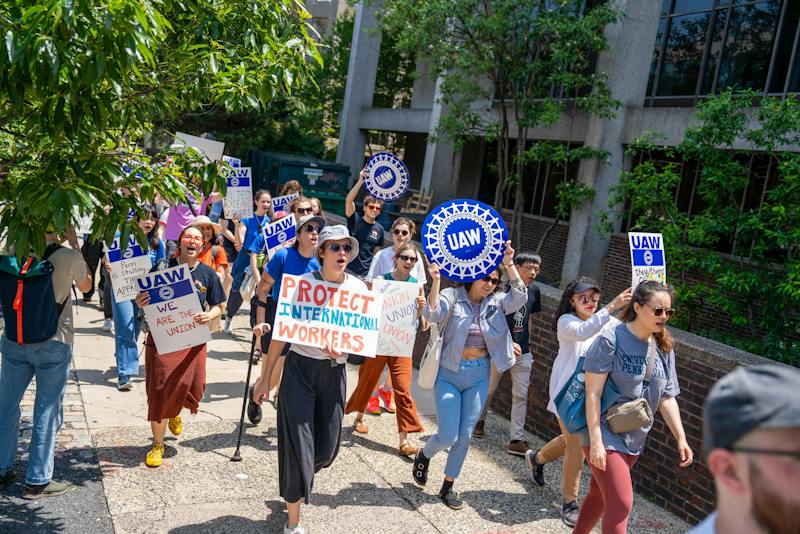
Research Associates and Postdocs United at Penn continued negotiating with the University over retirement benefits earlier this month.
At a bargaining session on Oct. 8, RAPUP introduced new proposals on retirement, an emergency support fund, layoffs, and recreation and wellness. The union has been working toward its first contract since December 2025 and has reached tentative agreements with Penn on 16 articles.
Administrators put forward counterproposals on intellectual property, holidays, and recreation and wellness. A request for comment was left with the University.
Psychology postdoctoral fellow and RAPUP member Patrick Monari wrote in a statement that it is “past time for management to come to the table with meaningful and substantial proposals.”
“Our proposals include improving our compensation to meet the rising cost of living; healthcare benefits that provide care without financial burden; and greater protections for international workers who face increasing threats to their visas from the federal administration,” Monari wrote. “We are fighting not only for ourselves but for the dignity of all workers who generate the innovation and prestige that defines Penn.”
Get the DP delivered straight to your inbox.
In a social media post, RAPUP described its retirement proposal as an attempt to provide “highly credentialed and experienced researchers” with the same retirement plan that “other staff and faculty” at the University are covered by.
The union’s proposal would allow postdoctoral workers and research associates to automatically enroll in Penn’s basic retirement savings plan, in which the University makes age-based contributions with no employee action needed. The provision would also give workers the ability to opt into the matching retirement plan, which allows employees to contribute up to 5% of their standard pay to be matched by Penn dollar for dollar.
The University’s Sept. 22 counterproposal includes only the supplemental retirement plan, which is also in RAPUP’s proposal. That plan allows employees to make unmatched contributions toward retirement. RAPUP alleged that Penn’s bargaining team described the union’s latest proposal as requiring a substantial cost but still possible to afford.
An emergency support fund is another site of active negotiations between RAPUP and the University.
The union’s proposal earlier this month would ask Penn to contribute $150,000 per year to a fund that postdocs and research associates could draw from “for severe financial hardship.” The University declined to provide an emergency fund in its counterproposal last month.
Penn has not yet issued counterproposals on childcare and compensation, among other articles. The union’s compensation proposal would set a minimum salary of $85,000 for postdocs and $103,210 for research associates.
RAPUP reached tentative agreements with the University on protections against workplace harassment and discrimination during bargaining sessions in May. Since then, the two parties have also reached tentative agreements on union access rights, training, workload, and grievance and arbitration.
In June, RAPUP gathered outside College Hall to deliver a petition calling on Provost John Jackson Jr. to negotiate over protections for international researchers and appointment lengths.
Staff reporter Emma Desmet covers administration and can be reached at desmet@thedp.com. At Penn, she studies history and political science.