
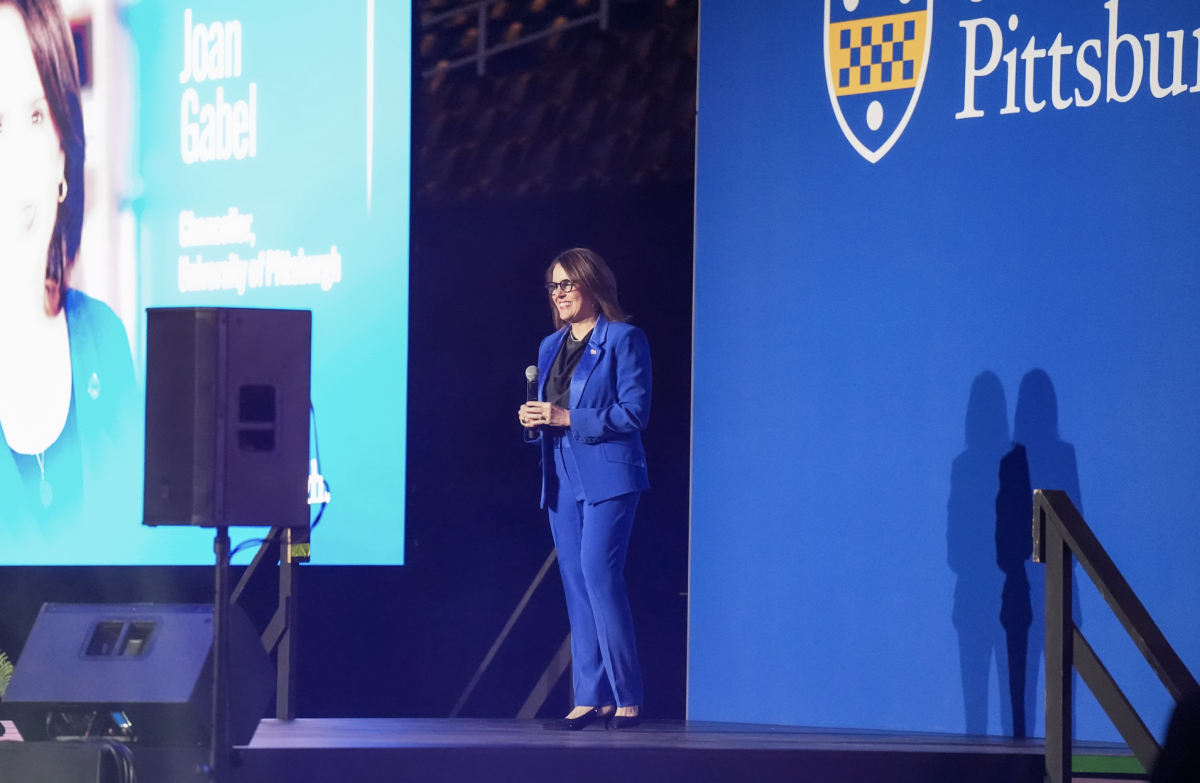
The Chancellor’s Office held a University-wide town hall on Oct. 21 to discuss current changes and issues facing the Pitt administration.
At the webinar, high-ranking Pitt officials addressed a new staff retirement program, aimed at cutting costs and federal research cuts.
Dwayne Pinkney, executive senior vice chancellor for administration and finance and chief financial officer, discussed the retirement program meant to address deficits in Pitt’s budget. Pinkney said next year, Pitt is expected to spend more money than it makes.
“Over the past several years, the University expenses have consistently grown at a faster rate than its revenue,” Pinkney said. “We anticipate that this trend will continue.”
The Voluntary Early Retirement Program will offer an early retirement option to Pitt staff members who fit certain criteria. The aim of the program is to downsize the number of Pitt employees, so less money will be spent on their salaries and accommodations, according to Pinkney.
Pinkney said the VERP program came about as a solution to Pitt’s financial issues.
“We are watching what’s happening at other institutions,” Pinkney said. “Many have offered voluntary programs, like this one, as a way to plan for a sustainable future, and Pitt is taking a similar approach.”
According to Pinkney, VERP is a solution that will help limit tuition raises.
“We’re committed to keeping a Pitt education affordable, which limits how much we can raise tuition and fees,” Pinkney said.
The town hall follows recent political action by the federal government surrounding research, such as cuts and freezes to research grants. Rob Rutenbar, senior vice chancellor for research, said the research enterprise at Pitt is “doing okay overall” amid federal cuts.
Pitt had 16 research awards cancelled during 2025 and 2026, which, according to Rutenbar, is not a substantive amount and is also occurring at other R1 universities.
“This is 16 out of roughly 6200 active awards. So about one quarter of one percent,” Rutenbar said. “Our research shrank by about 6% last year to this year. It could have been worse.”
Rutenbar said University representatives are advocating in favor of research funding at the federal level.
“My office has spent much of 2026 responding to these [Requests for Information], both individually with comments from Pitt, and in partnership with our advocacy organizations at the national level, like AAU and APLU,” Rutenbar said.
Chancellor Joan Gabel went over the annual report of the 2025-2026 school year. Gabel showcased Pitt successes such as the high post-graduate placement rate, at 96%, and more than half of undergraduate alumni graduating debt-free.
“Even amidst these very interesting times we’re in, Pitt education remains a great investment,” Gabel said.
Gabel also mentioned shortcomings that the annual report revealed.
“We have constraints on research funding and the ground continues to shift,” Gabel said.
The webinar concluded with a very brief Q&A section, where questions about VERP were directed to the official webpage.