
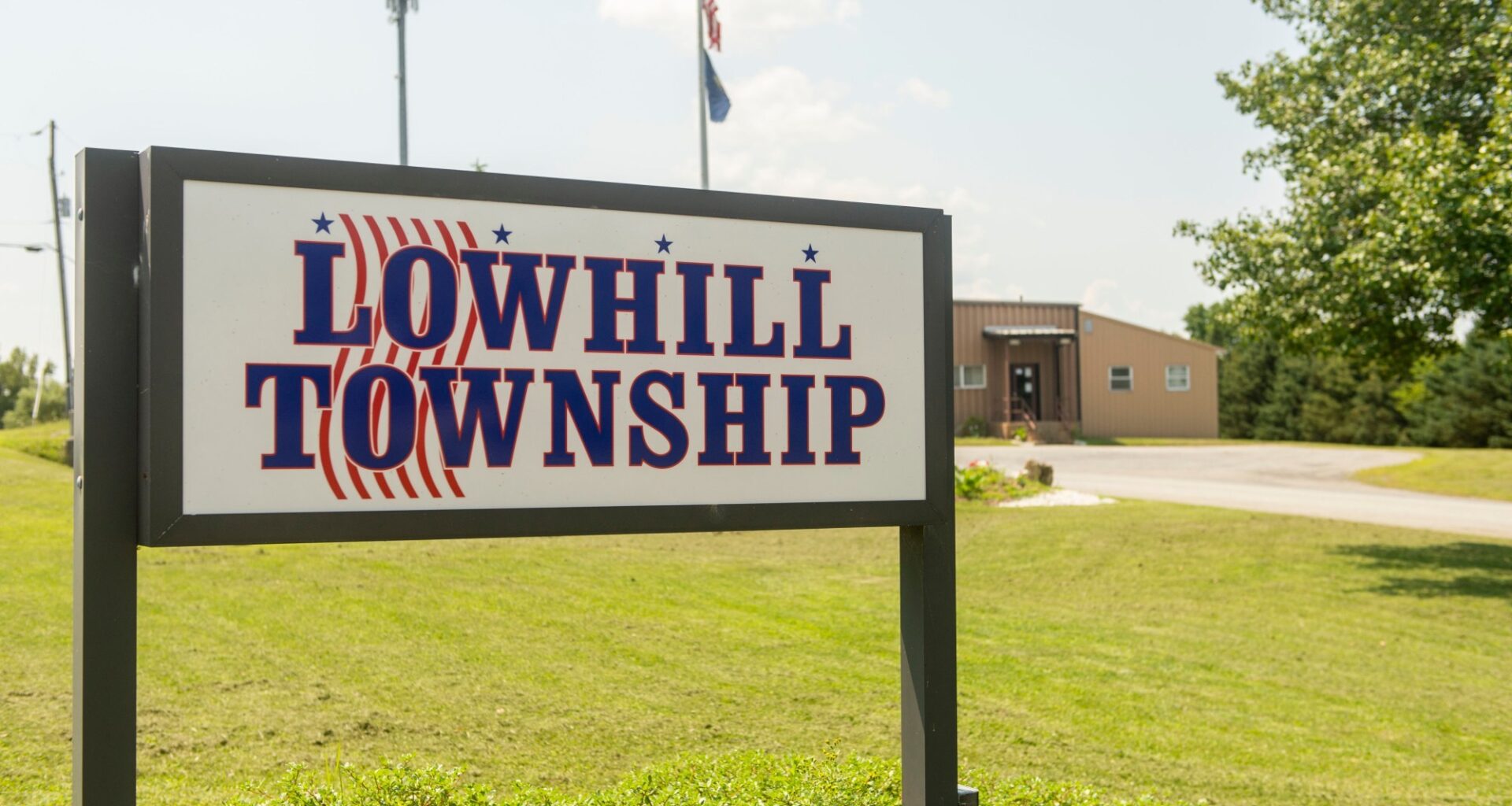
Lowhill Township’s data center ordinance has been cited by other Lehigh Valley communities as a model for how to protect rural communities from the environmental impacts of data center development. Now the township is working on an update officials say would better prepare the region for evolving technology.
A draft revised ordinance classifies data centers into four tiers based on their electrical demand. While larger facilities require conditional use review and are allowed only in a specified area, smaller systems accessory to commercial or residential facilities would be permitted by right.
“I don’t think that all the scales of uses fit exactly into the same box, so we thought it was important to differentiate,” Supervisor Curtis Dietrich said.
Performance standards and environmental protections exist for all tiers, but the simpler path to approval for smaller-scale digital infrastructure acknowledges that more businesses and households could seek to install their own data storage and processing as the use of artificial intelligence technology grows, township officials said.
“Lowhill Township doesn’t have its head in the sand like an ostrich,” Supervisor Jack Iannantuono said, adding that the revised ordinance aims to accommodate a future in which businesses and homes might need more computing power on site.
The revised ordinance, submitted to the Lehigh Valley Planning Commission for review in September and expected to come before the supervisors in November, preserves and strengthens environmental protections set in place in a data center ordinance passed in April.
Digital infrastructure that requires at least 50 megawatts of electricity would be under a higher level of regulation. Those standards are necessary to protect a township in which more than 60% of the land is in environmental protection zones that strictly regulate development, Iannantuono said.
“We’re going to promote residential and commercial development that fits the environment; we’re not going to have development that changes the environment,” he said.
Lowhill hasn’t faced a formal data center proposal yet, but it is part of a multimunicipal plan that seeks to proactively direct development in its largely rural sector of Lehigh County.
Lowhill’s tiered approach to data center regulation has echoes of what PennFuture recommended to municipalities when managing the warehouse boom was the region’s priority, said the environmental group’s staff attorney, Brigitte Meyer.
“You always want to do your best to tailor the regulations to the impacts that are reasonably anticipated from any type of land development,” Meyer said, adding that warehouse development taught municipalities that a 10,000-square-foot space needed to store excess goods didn’t need to be regulated in the same manner as a 1.5 million-square-foot distribution center.
Lowhill Township Manager Michael Siegel said he sees planning for the buildout of digital infrastructure in much the same way that municipalities plan out the expansion of their transportation infrastructure.
“You ever hear the term arterial roads and local roads and interstates? That’s kind of like how digital infrastructure is divided up — in different flows of traffic — rather than being in cars, you’re using digital as your flow of traffic,” Siegel said. “And that’s what I’m trying to control.”
See Lowhill Township’s draft revised data center ordinance below: