
A technique that recently won a Nobel Prize has been making an impact in multiple Pitt medical research labs.
The 2026 Nobel Prize in Physiology or Medicine was awarded to Karl Deisseroth, Peter Hegemann and Georg Nagel for their work in developing optogenetics, which combines genetic and optical techniques to control cells using light-sensitive proteins. Pitt researchers currently use optogenetic techniques to control cells of the nervous system to study causal roles of particular brain regions in different functions.
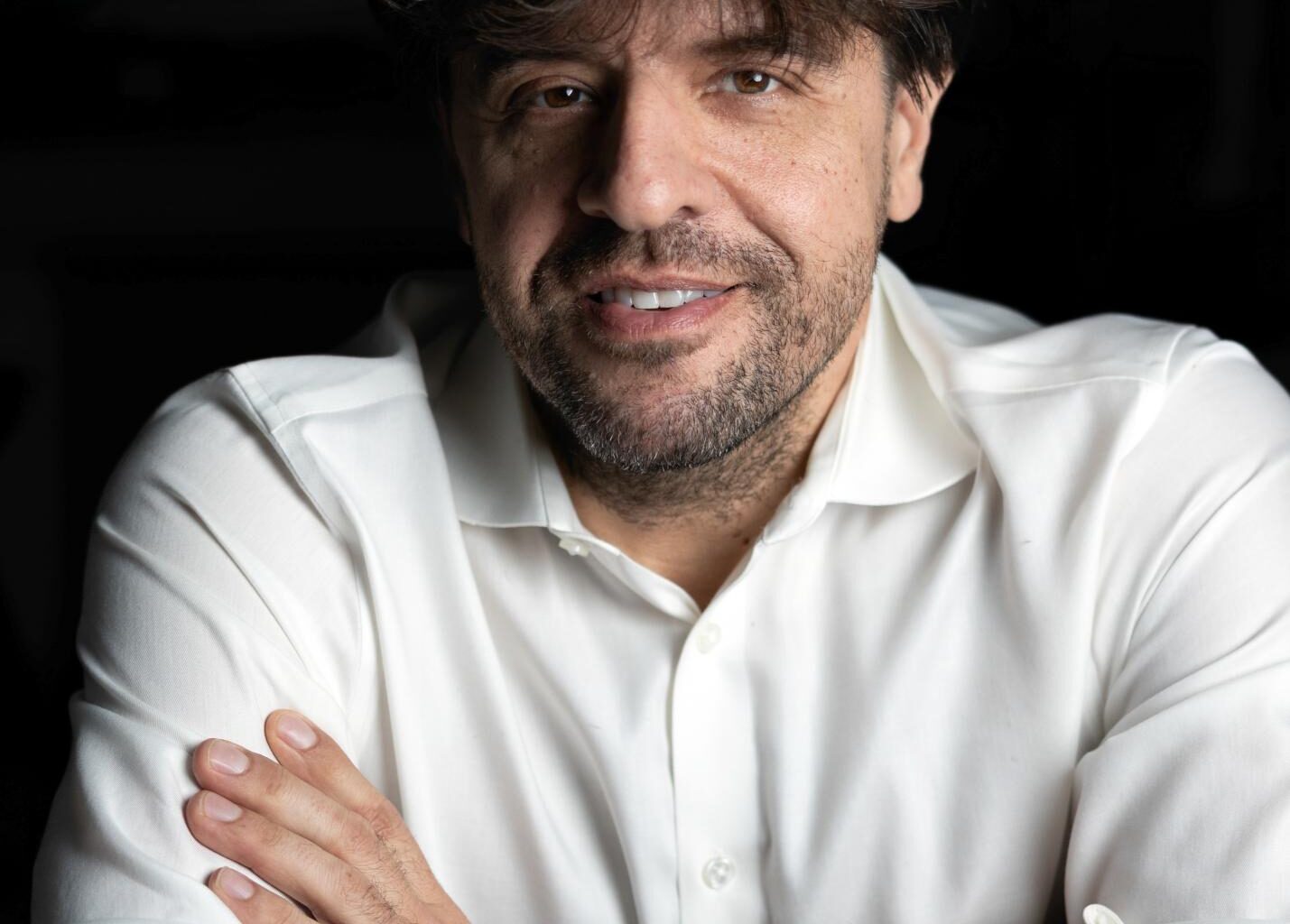
Deisseroth received the Pitt Dickson Prize in Medicine in 2015, the School of Medicine’s most prestigious award, marking him as the 18th Dickson Prize winner to earn a Nobel Prize.
Optogenetics is a combination of genetic and optical techniques involving the insertion of highly light-sensitive proteins into cells, so specific light frequencies can be used to activate cells. Optogenetic approaches enabled the ability to control entire cell populations with fast, specific and targeted effects, revolutionizing the study of biological and neurological systems.
Brian Davis, a professor of neurobiology who studies how the peripheral nervous system influences the progression of cancer, said optogenetic methods became widely used around 2011, and everyone continues to use them to this day.
“What [Deisseroth] did is brilliant,” Davis said. “What he did goes beyond just recognizing an important problem and working on it. He made all of these great tools, and he gave them away and shared them with people.”
Davis said his prior studies used optogenetic tools to demonstrate that activation of sensory cells increased tumor growth. He explained he is currently studying how these neurons support cancer growth by examining how their cellular activities influence cancer during optogenetic activation.
“We want to observe what the conversation is between the nervous system and how tumors look, and it’s led to this whole field of cancer neuroscience,” Davis said. “Optogenetics is another tool that allows us to stimulate the sensory neurons and increase their activity because we think there’s a couple of different ways that the neurons could be suppressing the immune system.”
Davis said he thinks there is research potential with optogenetics in human treatments, including vision repair, chronic pain treatments and possible restoration of movement.
“[Optogenetics] doesn’t even have to be limited to neurons. It can be used for any kind of cell,” Davis said. “[Researchers] are constantly making these things better.”
Diego Mendoza-Halliday, assistant professor of neuroscience studying the causal role of brain regions in working memory, said his work utilizes optogenetics to demonstrate a functional distinction between the storage and mental manipulation of information.
This work built on prior studies where Mendoza-Halliday demonstrated dissociation of attention and memory, cognitive activities previously thought to be the same function. Through precise optogenetic inactivation of a region in the prefrontal cortex, he found a decrease in performance of only attention-involving tasks that didn’t affect memory performance.
“By showing that a subregion has a differential involvement between the two cognitive functions, I can demonstrate that those two functions are not the same,” Mendoza-Halliday said. “With optogenetic techniques, I can inactivate or activate an entire functional area [of the brain] and ask these questions about causal involvement of areas of interest in cognitive functions.”
Prior optogenetic approaches were suited for small-scale animal models such as mice, which posed a challenge for larger animals such as macaque monkeys, which are a good model for human cognition, according to Mendoza-Halliday.
Mendoza-Halliday said his work used opsins developed from a project he worked on with collaborators who helped develop opsins that were extremely responsive to light, providing a permanent, noninvasive optogenetic approach for use in larger animal models.
“You can develop opsins of all sorts of flavors, like the one we developed, and continue improving on what we can do with optogenetics,” Mendoza-Halliday said. “What Deisseroth did [with optogenetics] was the beginning of a new field in neuroscience.”
Rachel Cassidy, a postdoctoral researcher studying how the auditory cortex controls behaviors driven by perception of sounds, uses optogenetic techniques on the auditory cortex, a brain region associated with sound processing, to determine its role in sound localization.
“I am working on expressing an inhibitory opsin [protein] in the auditory cortex of mice and turning the neurons in that area off at very specific times in behavior to see if it is involved in localization,” Cassidy said.
According to Cassidy, there are many tools that can be used to manipulate activity of the brain, such as drugs or lesioning, which is removing a particular brain area. However, these tools have certain limitations in specificity and practical application.
“The neurons making up the brain are not all identical,” Cassidy said. “Optogenetics gives us really selective access to specific cell types, which has been really revolutionary for the field.”
Cassidy said she believes there is great potential for optogenetics in therapeutic usage for psychiatric and neurological conditions. She emphasized that there is a wide range of possible applications and promising innovations for optogenetic technology.
“I’m always trying to keep up to date with new opsins and new uses for this technology because it’s always changing,” Cassidy said. “That change is continuing to bring a lot of opportunities for researchers.”
Davis said there is much more to be done with optogenetics, and many researchers are developing new directions to take the technology in.
“Imagine being able to make a cell do what you want by using light to take control of the cell,” Davis said. “It’s pretty crazy, and people are coming up with crazier breakthroughs. You’re only limited by your imagination.”