
It is a 5-year cooperative that ends in 2031.
SCRANTON, Pa. — The University of Scranton is celebrating a $5.5 million research grant and a new cooperative program with NASA.
That money will impact NASA’s space weather research. Not just here, but across the country.
Dr. Nathaniel Frissell is an associate professor of physics and engineering at the University of Scranton. He is also the founder of the “HamSCI” program at the university.
He is spearheading another research project to better understand space weather.
“It’s an enormous opportunity, and I do not take it lightly. It’s a huge responsibility to have these sorts of resources,” Dr. Frissell said.
We have previously reported on Newswatch 16 about grants to better understand how solar flares and geomagnetic storms affect GPS and radio signals. This grant expands that exploration.
Dr. Frissell will help set up 85 or so programs in high schools across America. Each will get resources to collect data for NASA research. This will be through AARL Teachers Institute. It is a program that will help the teachers get up to speed on how to teach the program.
They are receiving applications from schools right now to see which area works best.
“Some teachers might use it during say a physics class they already teach. Other teachers might use it in an after-school type of capacity,” Dr. Frissell said.
He wants the kids in these programs to get more interested in this radio wave science.
The HamSci club at the University of Scranton is actively researching and creating computer programs to help these studies.
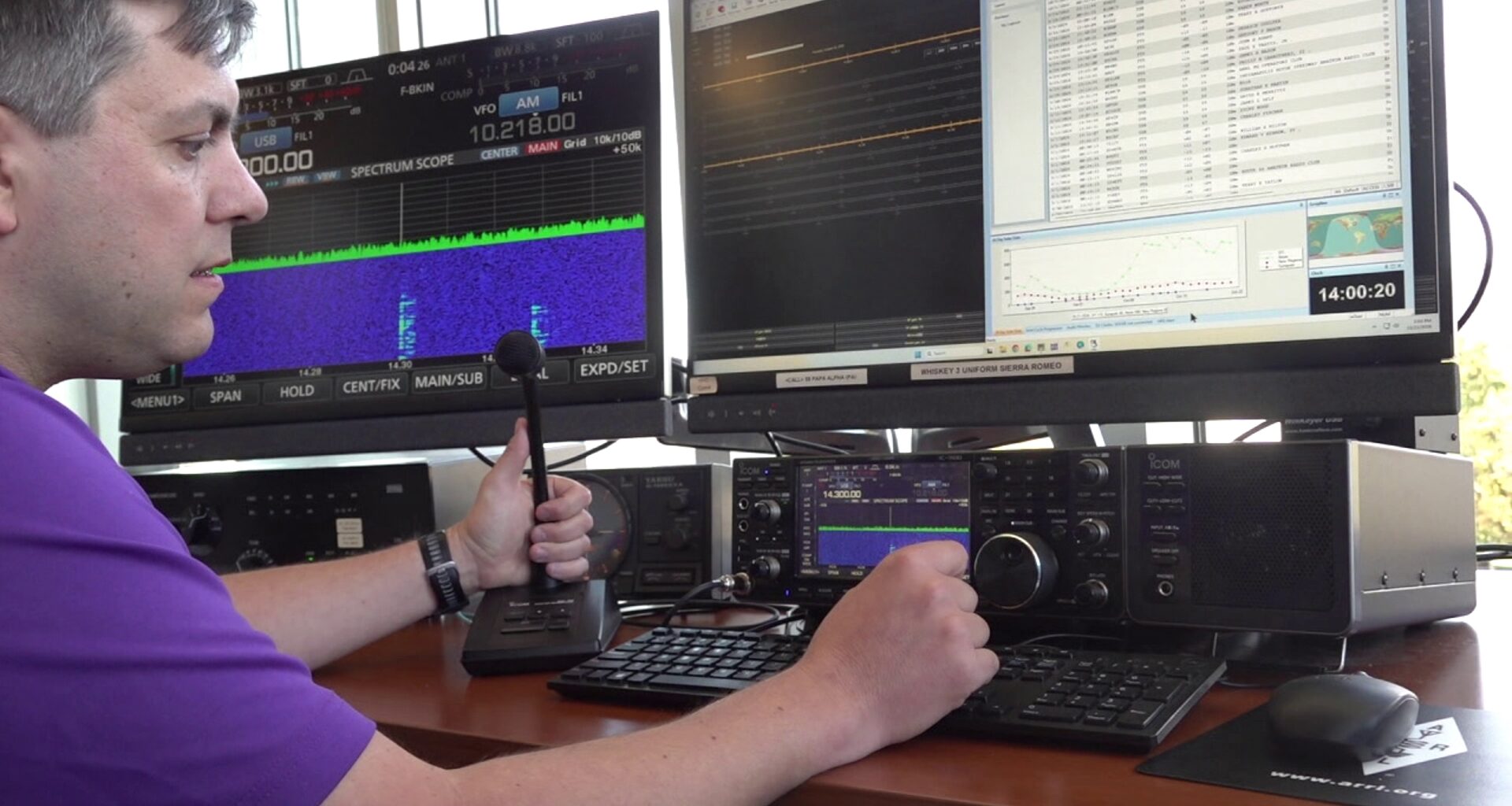
“This particular display we’re looking at was created by a student. He just brought it to me this morning. So we’ve been working on this for about a year. A year and a half,” Dr. Frissell said.
Dr. Frissell says getting more observations is key to better understanding the intricacies of radio wave travel.
“We are able to use this to listen to radio signals that either we are using for communications. Because they refract off of the upper atmosphere, we can use them for remote sensing the geospace environment around us. We are taking this data. We are archiving it. We are publishing peer-reviewed journals and journal articles to try to make new discoveries with the state as well,” Dr. Frissell said.
The program with NASA lasts for five years.
“I’m hoping that we continue that we have these distributed across the United States and around the world. I hope we have built good curriculum. I hope we have people actually using this in their schools, and I’m hoping that we can say, ‘Wow, we have all these systems out there and working’,” Dr. Frissell said.