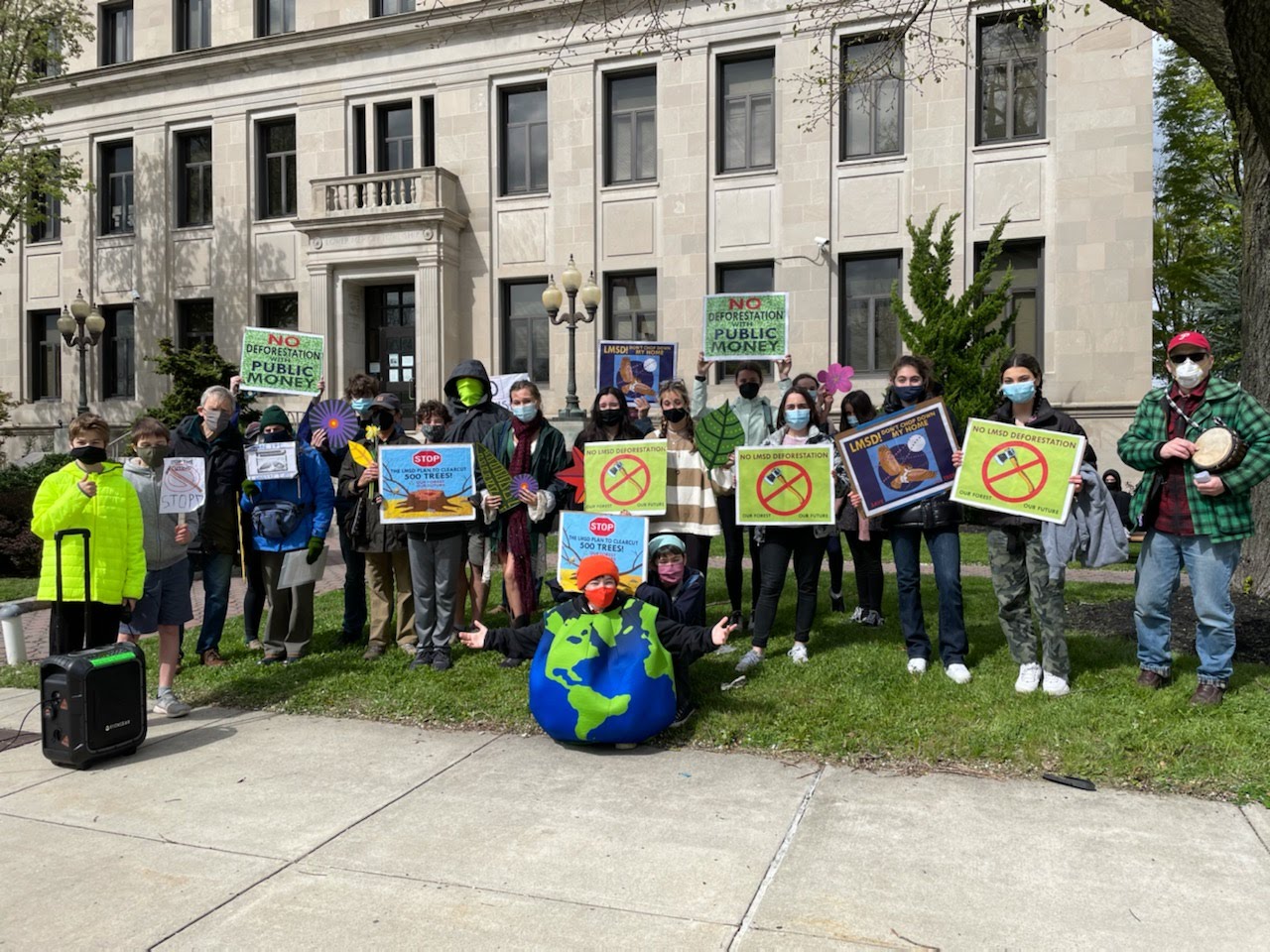
Eurhi Jones, a muralist and climate activist with CALM, said the site should be celebrated, not destroyed.
“We should be treating older trees like the Betsy Ross House or Independence Hall,” Jones said. “We shouldn’t even conceive of clear-cutting forests like this for playing fields.”
She said the district’s plan to cut down hundreds of mature trees in a forest setting to make a “monoculture of grass” would release harmful levels of carbon dioxide into the atmosphere, further harming the ozone layer and exacerbating the negative environmental effects of global warming.
Jones called the district’s plan “deforestation with public money in the name of children.”
Lower Merion School Board president Lucy Klain said the district has extensively considered other sites that are farther away.
“We all know its location isn’t ideal, but open space is limited in our inner-ring suburb,” Klain said. “We also know some of the alternate properties that have been suggested, none of which are available to the district.”
Previously, the district considered building onto existing middle schools and adding additional classroom space to best suit growing needs. But the district called those options short-term solutions that don’t address long-term needs for cafeterias, libraries, and gyms. The district also considered purchasing St. Charles Seminary, St. Justin’s, Ashbridge Park, Stoneleigh, Kaiserman JCC, and the Narberth School site. Ultimately, the district said, those sites had their own issues, including size, zoning codes, and opposition from community members.
The district proposed planting trees on new sites across the area, but some believe it purposely timed its proposal to avoid new deforestation regulations subsequently passed by Lower Merion Township. Those rules more strictly cap the number of trees legally allowed to be taken down and require developers to replace trees at a 1:6 ratio (If you knock down one, you must plant six to compensate.) At the time the district submitted its proposal, the ratio was 1:1.
CALM’S Nancy Winkler called the timing of the proposal an “outrage” in a letter to the school board, saying the plan is only proceeding because it got grandfathered into the old code.
“I understand how a single-focus, for-profit developer would elect to use such a maneuver,” she wrote, “but I am shocked that an elected body in Lower Merion would make this same move.”
Environmentalists, including Penn Valley Civic Association president Michelle Detwiler, argue that the district’s plan to plant new trees does not fully replace the ecological value of older ones.
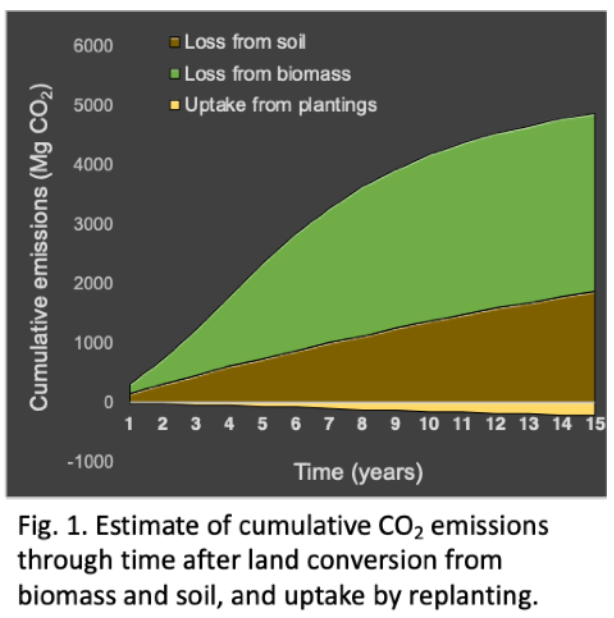
“The removal of those trees proposed would release almost 5,000 metric tons of carbon dioxide into the atmosphere over the next 15 years,” she said, adding that number would increase over 50 years as the soil continued to lose carbon. She said the compensatory trees would do “little in the next coming decades to make up for any loss of carbon in the above-ground biomass, and in the soil.”