
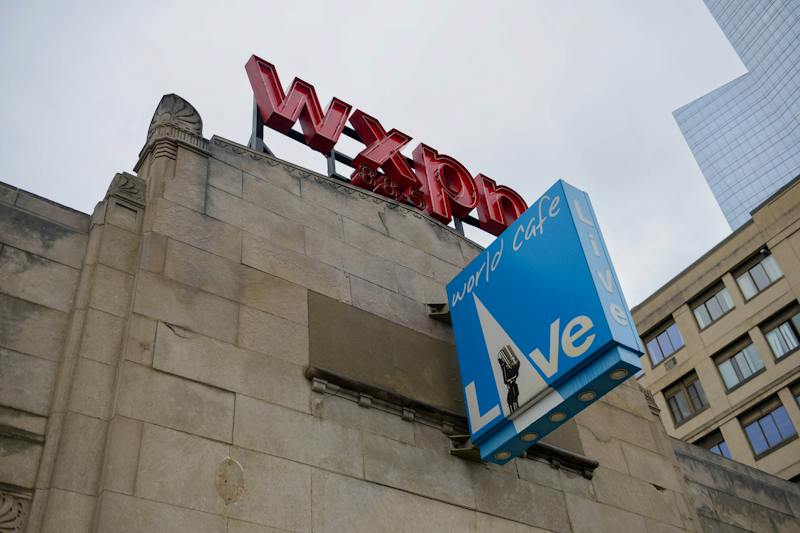
World Cafe Live opened in 2004 with high hopes: Penn administrators envisioned the renovated 3025 Walnut St. building would become an anchor for the eastern edge of campus and a catalyst for nearby development.
But even as the surrounding neighborhood flourished, the venue, now known as World Stage, struggled to stay afloat. After more than two decades, and having accumulated nearly $6 million in debt, it is preparing to shut down at the end of the month.
The building — which also houses WXPN, a Penn-owned radio station — was a $15 million joint venture between the station and Real Entertainment Group, Inc., built to replace a factory that had sat vacant for years. While the project did not directly receive University money, then-Penn President Judith Rodin helped fundraise for it.
“I think that we’re going to be a community center for music lovers for the whole region,” World Cafe Live founder Hal Real said in 2004. “In addition to attracting students, we’ll become a new attraction in University City to the non-student community.”
At the building’s ribbon-cutting ceremony in October 2004, Penn administrators said the project would draw more traffic to the area, in keeping with then-Mayor John Street’s vision of renewing the city along the Schuylkill River. Amy Gutmann, then Penn’s president, called the venture a “win-win-win.”
Get the DP delivered straight to your inbox.
A year in, World Cafe Live had succeeded in drawing a diverse slate of acts, though student turnout fell short of what Real had hoped. In the years that followed, Penn worked with Brandywine Realty Trust to redevelop United States Postal Service facilities into Cira Centre South, just east of World Cafe Live. Even a decade into the WXPN-World Cafe Live partnership, in 2014, Real signaled possible plans to expand.
But by 2025, World Cafe Live was in financial trouble — the venue had accumulated $6 million in debt “due to pandemic-related disruptions and systemic underfunding.” Real had stepped down as CEO and was succeeded by Joseph Callahan, who started a $10 million fundraising campaign for the venue.
That summer, workers walked out to protest Callahan’s management, leading to nearly a dozen terminations and threats of legal action. Callahan insisted at the time that there was “zero probability” of the venue closing.
Penn moved to evict World Cafe Live because of “nearly $1.3 million in past due rent and other costs,” in July of that year.
“Because we have enjoyed a longstanding and mutually beneficial relationship over the years with Tenant and its prior management, it was our hope to have found a resolution that worked for both parties,” the University wrote in a letter sent at the time. “Your failure to recognize your Lease obligations and our landlord/tenant relationship is totally unacceptable.”
The eviction notice was highlighted in a December petition from current and former World Cafe Live staff members asking Penn to protect the venue’s employees amid the turmoil. J. Sean Diaz, a 1990 College graduate who had become the venue’s chief executive months earlier, acknowledged that he had “inherited a mess” but expressed optimism.
A request for comment was left with Diaz.
In February, the City of Philadelphia ordered World Cafe Live to cease operations within the month due to “serious tax violations.” Just one day before the deadline, the venue declared bankruptcy and rebranded to World Stage.
According to the bankruptcy filing submitted by the venue’s parent company, the largest claims included $581,146 owed to the Philadelphia Industrial Development Corporation, $563,142 owed to the Delaware Valley Regional Economic Development Fund, and $205,496 owed to the Pennsylvania Department of Revenue. The venue owed a separate $154,195 to Penn.
World Stage was shut down again temporarily in April for serving alcohol without a valid license, which had expired at the end of October 2025. The venue is set to close permanently at the end of this month.
In a statement last week, Diaz wrote that World Stage’s struggles were not unique, connecting them to broader financial pressures on performance venues forced to compete with “larger ticketing and live entertainment conglomerates.”
Senior reporter James Wan leads administration reporting and can be reached at wan@thedp.com. At Penn, he studies communication and computer science. Follow him on X @JamesWan__.