
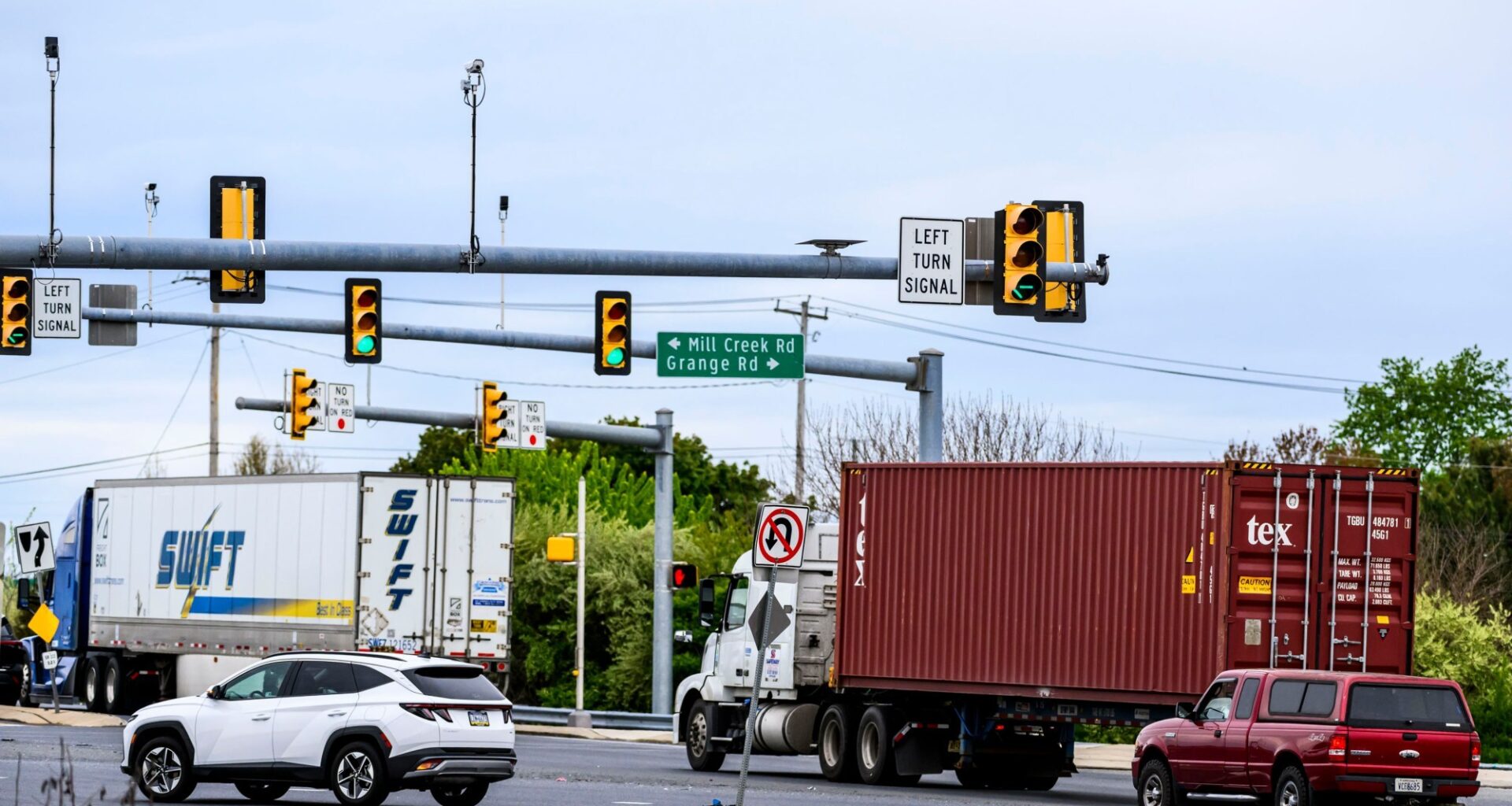
A motorist dangerously weaves around other vehicles on Route 22 or Interstate 78. A driver has to navigate around someone double-parked on a city street, blocking traffic and creating a hazard.
These common problems for drivers on the Lehigh Valley’s increasingly crowded highways and roads can easily turn a short errand to the store into an ordeal.
You’re not alone in imagining it: A New Jersey law firm recently found that the Valley has some of Pennsylvania’s “most entitled” drivers.
“Regional highways and busy shopping roads bring a steady mix of local and through-traffic to Allentown, and some drivers treat the rules loosely,” says the report from Brett Rosen Law, which surveyed more than 3,000 motorists nationwide to identify which region has America’s “most entitled drivers.”
“Rule-bending here is less about reckless speeding and more about illegal U-turns, or parking where it’s restricted because the errand seems too quick to find another space,” the report said about the Lehigh Valley. “The time saved is small. The disregard for the law is the point.”
The state’s third-largest metropolitan area, the Lehigh Valley was ranked behind the state’s top two, Philadelphia and Pittsburgh. Rounding out the top five were Erie and Reading.
Philly was noted as a place “where breaking the rules can look routine,” while Reading is small enough that bending the rules of the road “are easier to notice.”
PennDOT said that in 2025, there were 24,282 speeding-related crashes in Pennsylvania, resulting in 198 fatalities. Overall, there were almost 110,000 crashes with 979 deaths.
Brett Rosen, a partner at the firm, said drivers should take account of their own bad habits.
“Most drivers can give you a detailed account of everyone else’s bad habits. It’s harder to recognize the moment we start making excuses for ourselves,” Rosen said. “Being late, missing an exit, or struggling to find parking can be frustrating, but it doesn’t make another person’s safety less important.
“The most concerning answers here involve intimidation and leaving after a collision,” he said. “Those decisions can leave someone else dealing with consequences long after the original frustration has passed.”
The survey found that people behind the wheel respond to what they considered bad drivers by either repeated honking (22%) followed by an angry gesture or shouting (17%).
A separate question asked whether respondents had ever deliberately used their vehicle to make another driver, cyclist or pedestrian feel threatened during an argument or confrontation.
About 1 in 7 said they had, and roughly half of them had done it more than once. Another 17% considered it but didn’t act on it.
Specific bad habits included speeding (22%) or driving through a changing traffic light (17%).
However, in a specific scenario involving minor damage after hitting another vehicle, almost 90% said they would stop and attempt to exchange information with the other driver.
What should you do if you encounter an aggressive driver? PennDOT has these tips:
• Get out of their way and don’t challenge them.
• Stay relaxed, avoid eye contact and ignore rude gestures.
• Don’t block the passing lane if you are driving slower than most of the traffic.
• Do not attempt to follow the vehicle. You or a passenger may call the police. But, if you use a cellphone, pull over to a safe location.
PennDOT says that while many people associate aggressive driving with road rage, they are different behaviors. Road rage, which is a criminal offense, is often the result of aggressive driving behavior that escalates into an assault with a vehicle or other dangerous weapon.
Morning Call reporter Evan Jones can be reached at ejones@mcall.com.