
ALLENTOWN, Pa. – The Lehigh County Authority is launching a public outreach campaign informing customers on whether they have lead pipes.
In a news release Tuesday, the LCA says it is preparing to mail nearly 43,000 letters to customers to inform them if they have a water service line (pipe) made of lead, galvanized iron or steel, or unknown material.
The LCA says the campaign is intended to protect public health and notify customers they could be exposed to lead in drinking water.
The campaign is one of several new drinking water requirements issued by the U.S. Environmental Protection Agency in recent years, the LCA says.
A new EPA rule requires all lead pipes to be removed from the water system by the year 2037.
“Before LCA can remove all lead pipes, we need to work with our customers to build a database of all the lead pipes in the system,” said Liesel Gross, LCA’s CEO.
“This annual mailing helps to keep customers informed of our progress on this important project.”
About Service Lines:
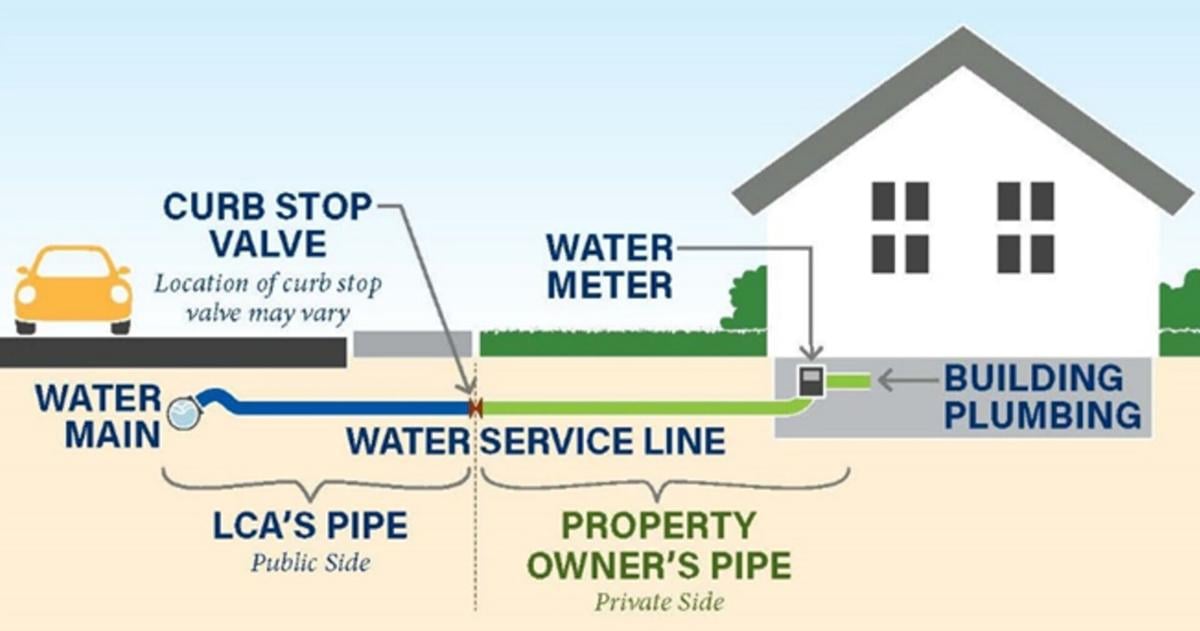
A “water service line” is the pipe that brings water into a home or business from the LCA water main in the street.
The LCA says it includes two sections of pipe, separated by a curb box or valve, usually found near the curb or in the sidewalk.
The LCA says the graphic below shows who owns what:

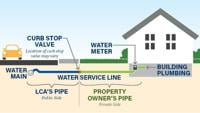
Image from Lehigh County Water Authority
1. Public side: LCA owns the pipe from the water main to the curb box.
2. Private side: The property owner owns the pipe from the curb box to the
home.
Service Lines and Lead in Drinking Water
LCA’s water sources (creeks, rivers, springs, and wells) are naturally lead free, according to the news release.
However, lead can get into your tap water when a home, business or school has pipes made of lead or galvanized material, the LCA says. Research has shown that lead is harmful to humans, especially children.
“LCA is committed to ensuring every family has access to safe drinking water,” Gross said.
“We want all customers to know about our efforts to remove lead pipes from the system. This is one of the largest and most important public health projects in our nation this century.”
LCA says it is actively pursuing grants to help pay for this work and lower the impact to water rates.
In January, a project is scheduled to kick off using more than $6 million in grant funding awarded to LCA to remove 1,000 lead pipes in Allentown, according to the news release.
What Customers Can Expect
Customers With Lead or Galvanized Pipes: LCA says customers will receive a letter confirming pipes are made of lead or galvanized material according to LCA records.
The letter will include tips to reduce exposure to lead in drinking water, such as flushing your water daily, cleaning faucet aerators, and using a certified pitcher and filter, LCA said in its news release. The tips can also be found on the website www.lehighcountyauthority.org/leadfree. LCA says to follow the tips until pipes are replaced.
Customers With Unknown Pipe Material: Customers will receive a letter informing them LCA does not have a record of the pipe material for their property, LCA says. Customers can schedule a free LCA inspection to determine the material.
Visit www.lehighcountyauthority.org/inspect or use the QR code provided in the letter.
LCA says inspections are only for customer-owned pipes where the material is not known. Until the pipes are confirmed as non-lead, LCA recommends following the same safety tips as homes with lead or galvanized pipes.
LCA says it is taking a systematic approach to replacing pipes by city blocks to help manage costs. Customers will be informed when there is a replacement project in their neighborhood, including details about what to expect before, during, and after construction, the LCA says.
Lead and galvanized pipes are being replaced with safe, durable copper piping, and all pipes will be replaced by 2037.