
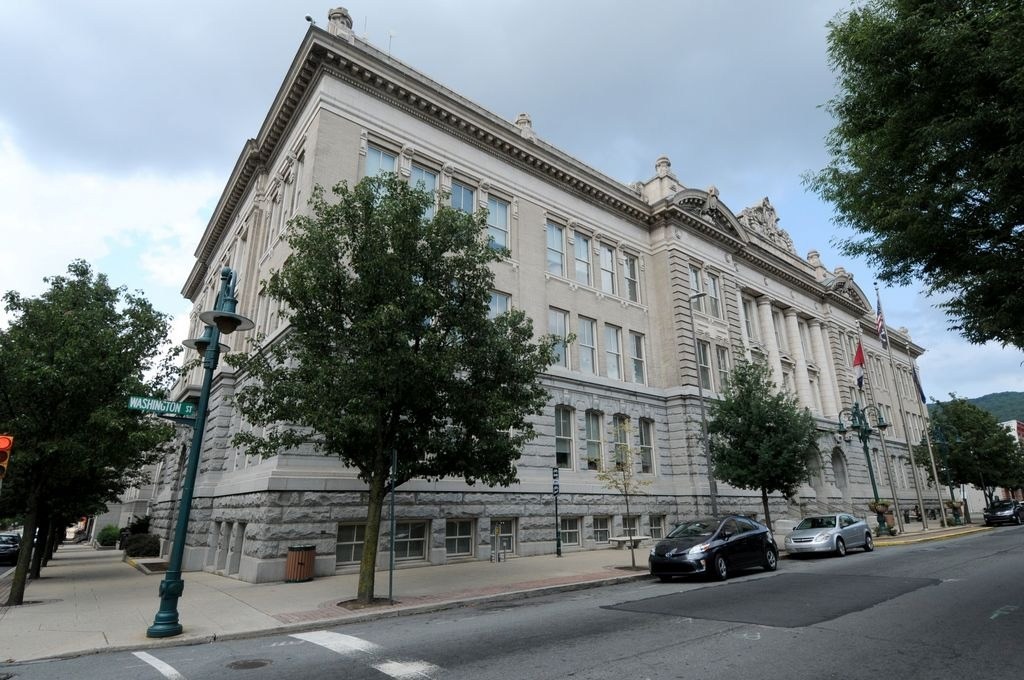
City Council voted Monday to pursue a $25,000 state grant to help improve Reading’s historic preservation program.
Council approved the grant application as part of its consent agenda following an extended public comment period during which preservation advocates expressed concern about proposed staffing reductions and deficiencies in the city’s preservation ordinance.
The grant, through the Pennsylvania Historical and Museum Commission’s Certified Local Government program, would pay for a consultant to help the city implement recommendations from a state evaluation conducted between April and August.
The funding would be reimbursable and require a $2,500 city match.
The evaluation’s recommendations, presented to council in July, identified seeking funding for professional assistance as a priority.
PA recommends overhaul of Reading’s historic preservation program
But speakers Monday cautioned that hiring a consultant would not resolve questions about the future of the city’s preservation office, particularly amid proposed budget reductions.
Michael Lauter, executive director of Centre Park Historic District Inc., a neighborhood association dedicated to preserving the district’s architecture, welcomed the grant proposal, describing historic preservation as a partnership between government and residents.
Lauter said Centre Park volunteers contribute approximately 2,500 hours annually to neighborhood activities. He urged officials not to abandon that investment because of shortcomings in the existing system.
Michael Wright, a resident and board member of the neighborhood group, also applauded the grant proposal, while emphasizing the importance of maintaining qualified staff.
City Council weighs future of historic preservation in Reading
“It suggests our concerns are being taken seriously,” he said, “but a consultant cannot replace consistent oversight, qualified city staff and a functioning historic preservation process.”
Wright urged officials to make preservation procedures clearer and more accessible without sacrificing protections that encourage homeowners to invest in historic properties.
“Historic preservation isn’t only about buildings,” he said. “It’s about the people who care and choose to make these neighborhoods whole, and the stories these neighborhoods tell about our city.”
Carolyn Bazik, another Centre Park resident, said preservation staffing is more than a budget consideration.
“Historic preservation is not simply a budget decision; it’s a legal responsibility,” she said.
Bazik cited Chapter 295 of the City Code, which establishes the preservation officer’s responsibilities, and urged council to obtain a legal opinion before making changes that could affect compliance with the ordinance.
“If the preservation program needs improvement, then improve it,” she said.
Andrew Boyd, also a Centre Park resident, said the proposed budget would reduce the preservation office from three full-time employees to one. He urged council to restore the endangered positions while updating the ordinance to comply with Pennsylvania’s Historic District Act.
Alexa Freyman, a local historian and president of the Foundation for the Reading Pagoda, said preserving the city’s architectural character is essential to its economic future.
“Reading will become an affordable, attractive destination for commuters from larger metropolitan areas, and affordability will bring them,” Freyman said, noting the prospect of restored passenger rail service. “But Reading’s uniqueness and charm will keep them here.”
Council members acknowledged the concerns and expressed support for preservation.
Councilman O. Christopher Miller said the speakers’ comments demonstrated that historic districts contribute to more than architectural character.
“When we have strong neighborhoods and communities, we have a stronger city,” he said. “So, the historic districts are a part of that puzzle of making the neighborhood stronger.”
Managing Director Jack Gombach said the administration was willing to involve preservation advocates in discussions about changes to the program, possibly through a joint city-community working group.
“Advocacy matters. Advocacy is important,” Gombach said. “I think we’re all on the same page of what we want. We understand the benefit. It’s just how we get there.”
Gombach said job descriptions throughout City Hall are under review, along with the support provided to municipal boards and commissions.
“I’m happy to discuss and involve the historic preservation community in our decision making as we go through this process,” he said.
Council President Donna Reed also voiced strong support for protecting the city’s historic neighborhoods.
“I want to see it thrive. I want it to continue for centuries to come,” she said of Centre Park.
Reed encouraged residents and the administration to work together on solutions.
Council’s grant approval authorizes the city to seek state funding but does not settle the staffing questions. Those decisions remain subject to the city’s ongoing 2027 budget deliberations.