
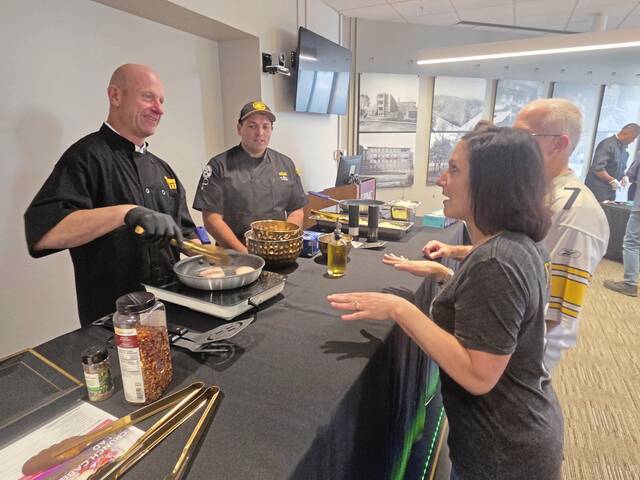
With a 5-2 record, the Pittsburgh Steelers are cooking so far this season, but the most important meal they serve this week won’t be cold revenge for their Oct. 1 loss to the Cleveland Browns.
In recognition of Breast Cancer Awareness Month, two Super Bowl-winning Steelers — nose tackle Chris Hoke and McKeesport native safety Mike Logan — joined team and UPMC chefs and nutritionists at Oakland’s UPMC Magee-Womens Hospital on Tuesday afternoon to demonstrate to breast cancer patients and survivors a few healthy go-to’s from their nutritional playbook.
Years of research broadly indicate maintaining proper nutritional priorities could help decrease the risk of developing breast cancer and help slow various cancers’ progression.
“There’s a lot of overlap,” said Hoke, comparing nutrition for athletes and cancer patients. “It’s all about recovery. It’s all about healing. One of the greatest things you can do is feed your body good food, healthy nutrition that helps promote healthy recovery and healing.”
As he spoke, Hoke helped grill the chicken for an angel hair pasta dish.
“It’s just a healthy, not-heavy-on-the-stomach recovery,” added Steelers executive chef Kevin Blinn, adding seasonings and cooking the pasta. “It’s something we would serve on the South Side for our players as well. We would call it a post-practice recovery meal.”
“Post-treatment recovery!” interjected Hoke.
According to a 2025 American Cancer Society report, roughly 30% of postmenopausal breast cancer diagnoses could be linked in part to lifestyle-related risk factors like diet, physical inactivity and alcohol consumption. It also estimates that 50-70% of invasive breast cancers might potentially be prevented with timely lifestyle modifications. Additionally, a study published in JAMA found that cancer survivors carrying excess weight had a 40% higher risk of developing a second obesity-related cancer such as breast cancer. That mark rose to 78% for people with obesity.
“I can’t stress the importance enough of (nutrition),” said UPMC registered dietitian Angela Fullerton. “It’s something that’s within (patients’) control. A lot of the other things are not within their control, unfortunately. So if we can focus on diet, exercise and stress management, you’re doing good things.”
As Logan explained, the event was also about support for the handful of gathered patients and survivors.
“When we’re cooking, emotion comes out,” said Logan. “We’re going to take all of this emotion and food and love and put it into combination of dishes. And hopefully what we come out serving is good and takes their minds off of anything else that they’re dealing with and just enjoy.”
Logan understands that need well. His cousin battled through a breast cancer diagnosis to become an advocate.
“We talk about warriors. We talk about the warriors on the field. We talk about the guys that are playing football on the gridiron, but today we’ve got a couple of Super Bowl champions here really to focus on the real warriors,” said Chris Vista, vice president of operations at the hospital. “That’s everyone in this room.”
Cancer is a personal subject for Hoke as well.
“I know what each and every one of you are going through … the treatment and the struggle, mental, emotional and physical,” said Hoke.
In January 2025, Hoke announced his wife Jaimee had passed away from breast cancer. She’d been diagnosed at age 36, shortly after Hoke’s retirement from the NFL in 2012. She received a lumpectomy and radiation, only for her cancer to return five years after being cleared.
“That’s why I’m so grateful to be here, because I’ve sat in this chair where you’re sitting right now. She battled for five years … My wife Jaimee fought hard, but she lost her battle with cancer,” said Hoke. “She’s just the greatest woman I’ve ever known. I am so blessed because I have five children with her and I get to see her every day of their lives. My baby girl is 15 and looks just like her, acts just like her.”
While there is no one specific miracle cancer-battling diet directly proven to consistently help patients like Jaimee, according to University of California San Francisco’s Helen Diller Family Comprehensive Cancer Center, those looking to reduce their risk of breast cancer, limit its progression or reduce chance of reoccurrence should take up a low-to-moderate fat, plant-based diet.
The recommendation includes eight to 10 servings of colorful fruits and vegetables a day; 30 to 45 grams of fiber via beans, legumes, seeds or whole grains; and protein with every meal. It also emphasizes healthy fats from cold-water fish, chia seeds, flaxseeds, walnuts, soybeans, olive oil or avocados and eschews fatty and processed meat and dairy products as well as alcohol and “white” foods like bread, pasta, rice, cream sauces and cakes.
The UPMC Hillman Cancer Center indicates those battling cancer should eat five or more servings of fruits and vegetables a day alongside whole grains and lean proteins to help rev up the immune system, boost strength and reduce fatigue. It further advises filling one-third of a plate with lean proteins and the rest with a mix of fruits, vegetables and whole grains. Then there’s decreasing fat intake to less than 30% of total calories and limiting red meat consumption to three, 3-ounce servings a week. Adherents should also avoid dairy products like butter, ice cream and cheese, eliminate trans fats and limit cured, pickled and smoked foods.
The day’s menu lived out a version of that ethos, complementing the grilled chicken angel hair dish with cabbage crunch salad with lots of fiber, stuffed mushrooms and a healthy dessert made with sugar-free options and fruit.
Since being diagnosed with metastatic breast cancer at age 27 in 2018, Keena Pettiford, 36, of South Park, has taken control of her body with food options like those.
“Since then I have changed a lot of my eating habits to a lot of green … I had to adapt to my new normal,” she said. “I gained 100 pounds because of the different hormones and stuff that I was put on. I wasn’t eating properly because my diagnosis was more so just being comfortable at first, instead of focusing on the health part. And then we realized that I can strive through it … I lost 80 to 100 pounds in the last year and a half from just eating different and watching the things that I consume.”
She hoped to gain some new knowledge at the event.
“I just hope that I can learn a way to make a good meal, but also be an advocate so I can push on to other young women my age that are going through what I’m going through,” said Pettiford.
She listened alongside people like Marcie Newman, 48, of West Newton, who was diagnosed with ovarian cancer in 2021. While eventually cleared, Newman’s cancer returned in metastatic form this year.
“I think that with being diagnosed this time and with being older, I wanted to learn how to eat healthier and make better decisions on how to keep my strength up,” said Newman. “I definitely notice the better I eat, the better I feel. And if I eat junk food or if I have a high soda type of day, that I definitely don’t feel as good. And right now it’s important to feel as best I can.”