
Over the past year, I’ve broadly noted the widespread notoriety and influence of Archbald’s fight against industrialized annihilation, but lacked a dramatic example to cite as living, organizing, protesting proof.
I found one in Maritime Canada.
Actually, it found me. On antisocial media, no less.
After Archbald Borough Council unanimously made the sane, solidly reasoned decision to reject the Wildcat Ridge Data Center Campus application last Wednesday, I filmed a 33-second reel of the crowd’s jubilant reaction and posted it to my Chris Kelly, The Times-Tribune Facebook page. It immediately drew likes and shares, some from people in the room.
Then Archbald went viral.
As of Tuesday, the reel was viewed more than 51,000 times and widely shared as a victory for communities rallying against the AI hyperscale data center invasion. How widely shared? How about Nova Scotia?
The Archbald victory was celebrated by members of Nova Scotia Against Data Centres, a fledgling grassroots resistance group almost identical to Stop Archbald Data Centers when it began as a pact between co-founders Tamara Misewicz-Healey and her husband Justin Healey.
I reached out to Nova Scotia Against Data Centres (how it’s spelled up there) and was connected with organizer Benjamin F. Lauzon. We chatted on the phone Tuesday like gossiping neighbors in the small world the global data center invasion has made of the planet.
“We don’t allow a lot of things on our group (page) because it just gets too overwhelmed with information and misinformation and comments,” Lauzon said. “Yours got in there because people needed to see (Archbald neighbors) cheer when they were actually able to beat the data center that was coming to their community. It is inspiring and people need to see that it is possible.”
A lack of aggressive, local accountability journalism combined with government and corporate pro-data center propaganda were driving forces in the founding of Nova Scotia Against Data Centres, Lauzon said.
“It’s been really hard here, because the community is not aware that these things are happening,” he said. “They don’t know about these billion-dollar companies and the million-dollar lobbyists that they have… and just getting information out has been hard.
“That’s why I was up until three o’clock in the morning last night (making an informational video) even though I have full-time employment and I’m here at work today at 8:30 in the morning.”
Lauzon, 45, declined to disclose his profession. It’s a union position and his anti-data center activism is personal. I don’t have the space to share all the details of the project Lauzon and his neighbors are fighting. Suffice it to say the Canadian government is backing it with sweet talk and taxpayer subsidies, it was birthed in political and business backrooms, it keeps changing in scope and size and the profiteers pushing it are holding everyday Nova Scotians hostage while the process plays out.
Sound familiar?
It did to Misewicz-Healey, who was happy to hear Archbald is inspiring its neighbors far north, but not surprised.
“When we got involved in this, you’re so in survival mode that you’re really not looking at the bigger picture of influence,” she said Tuesday. “You’re kind of just trying to see what you have to do next …
“And you’re so busy in the now that we didn’t really notice how important our fight was not only to our local region, but we’ve had people from across the state, across the country, we’ve had people from other countries message us (for advice), Canada being one, Australia being another.”
She said Stop Archbald Data Centers has received useful advice, too, notably from distressed residents of Loudoun County, Virginia, now known as “Data Center Alley.”
“We’ve had people from Loudoun County reach out and tell us, ‘Don’t let this get started there,’ you know, warning us,” she said. “So, yeah, I think an unexpected surprise that kind of came with our movement was realizing the impact it was going to have across our country and the globe, really.”
She said she’s grateful for the support of Nova Scotia Against Data Centres, which is a heartwarming but also sobering reminder that the hyperscale data center invasion is a worldwide fight. She pointed to the news that Google illegally felled 400,000 trees in Finland to make way for hyperscale data centers. For billion-dollar corporations, it’s easier and cheaper to pay the fines than follow the law.
“It was super sad, because as I’m reading quotes from (Finnish) citizens, it could have been us,” she said. “They sounded like people of our community speaking out, because that is how completely human all of this is. It transcends languages and borders and countries …
“It just shows you that there’s something connecting all of us, reminding us of the most important things in life and having a healthy, sustainable world to live on. This battle is larger than Archbald.”
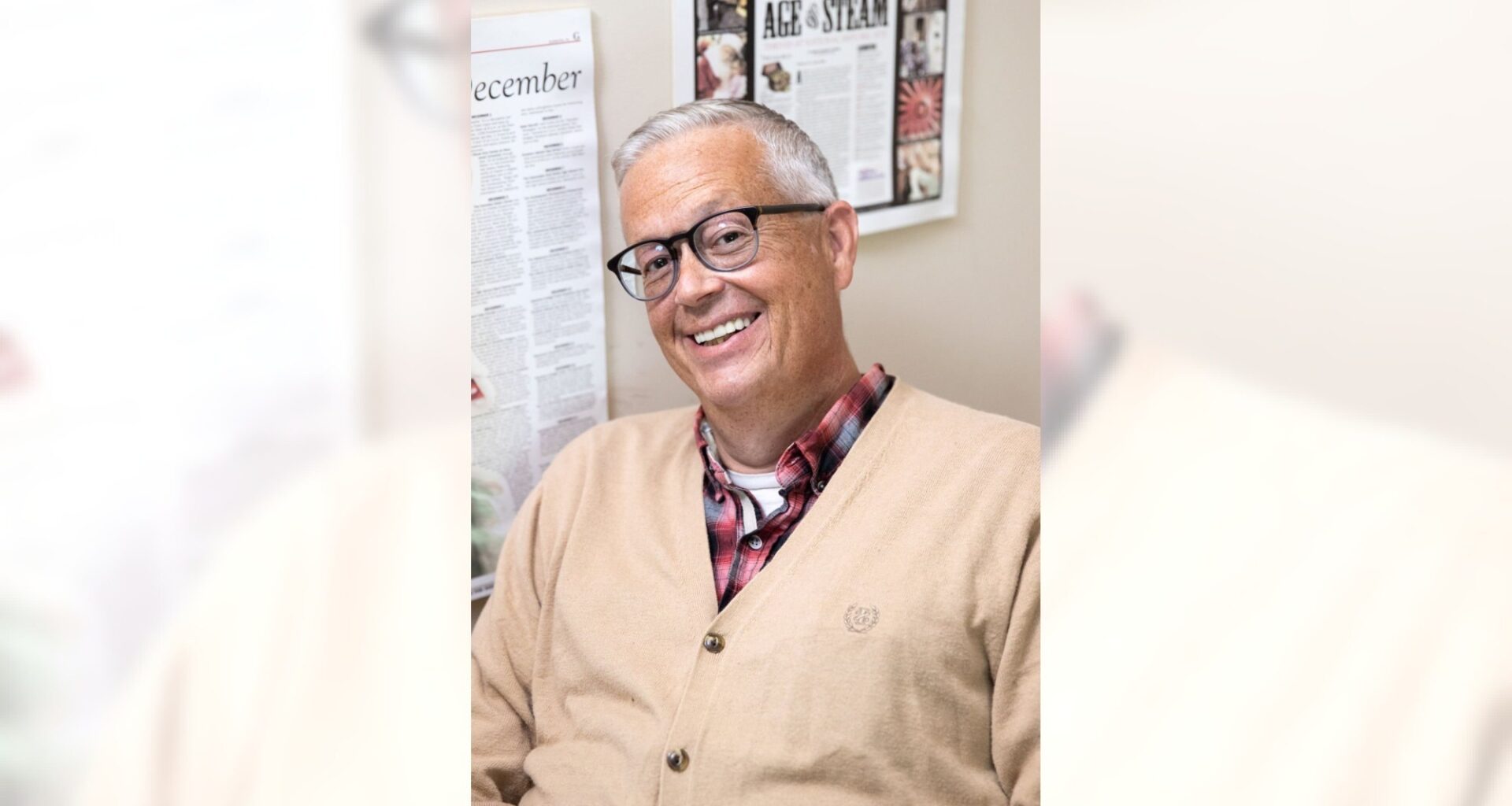
CHRIS KELLY, the Times-Tribune columnist, couldn’t agree more. Contact the writer: ckelly@scrantontimes.com; @cjkink on X; Chris Kelly, The Times-Tribune on Facebook; and @chriskellyink on Bluesky.