
As the Lehigh Valley dealt with the growth of warehouses and the potential for large data centers, a constant worry has been the effects they would have on waterways.
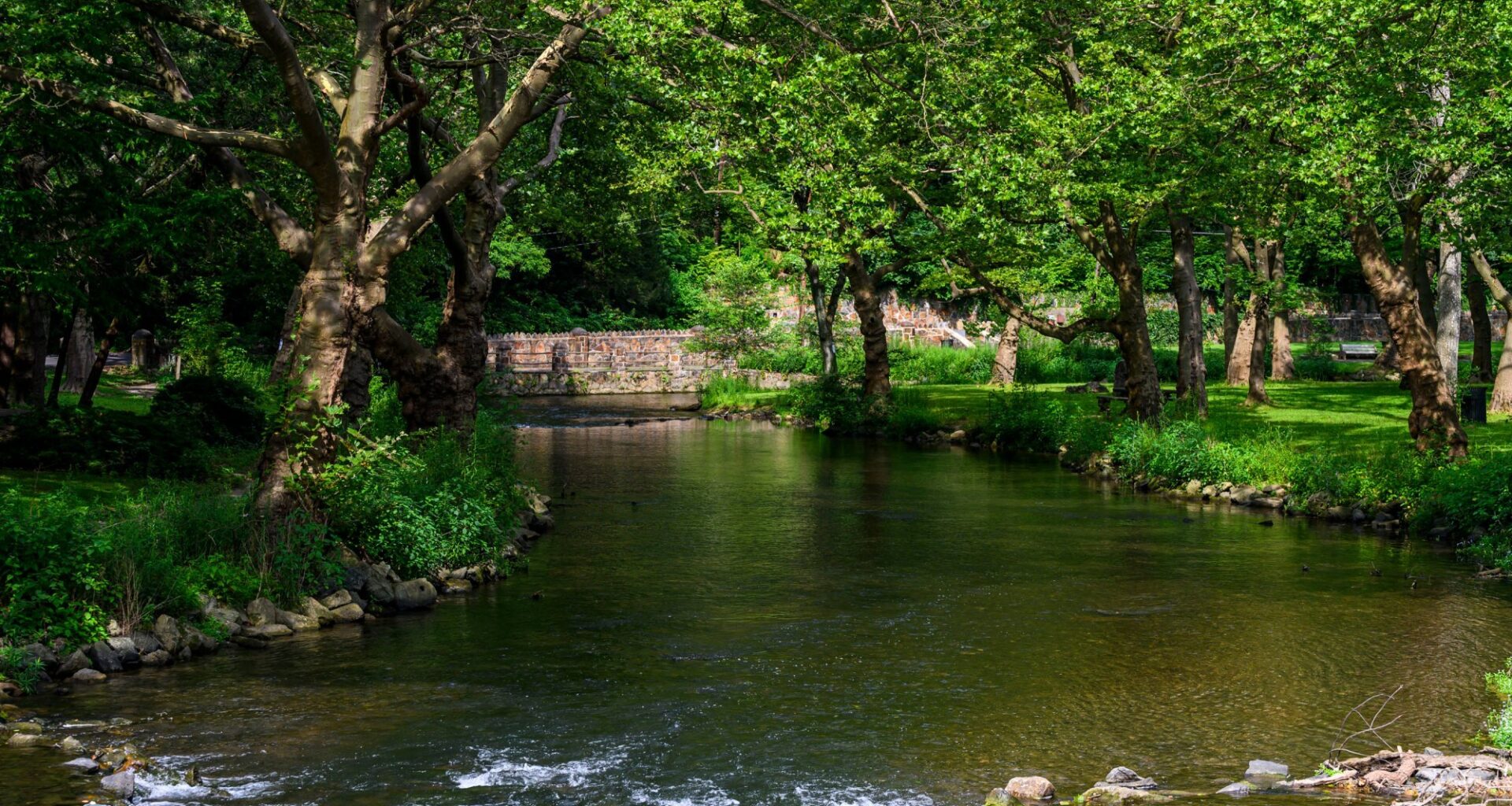
With municipalities rushing to write their own ordinances to regulate data centers, the PennFuture environmental organization has created a model ordinance and guidebook for riparian buffers, a strip of native trees, shrubs, and grasses planted alongside streams, rivers, lakes or wetlands to act as a natural transition and protection zone.
“Riparian buffers are important components of a healthy stream ecosystem. With municipalities rushing to write their own ordinances to regulate data centers, the PennFuture environmental organization has created a model ordinance and guidebook for riparian buffers,” says the Penn State Extension. “They provide pollution reduction, erosion control, flood protection, and wildlife value. Trees are the last line of defense for streams.”
The resource is intended to help Pennsylvania municipalities learn about the benefits of riparian buffers and craft local regulations that leverage these benefits while balancing private property interests. It’s designed as an all-purpose tool so local governments don’t have to write new specific ordinances every time a new massive land development emerges.
It’s a vital part of development policy and the Lehigh Valley Planning Commission routinely recommends riparian barriers when it reviews projects that are near waterways.
PennFuture Staff Attorney Brigitte Meyer, who authored the ordinance, said riparian buffers not only protect the environment, they also bring down costs for municipalities.
“It’s letting nature do a lot of the work for us, because, believe it or not, if you just let nature alone to do the things that nature does, it actually is pretty good and it doesn’t charge us for it,” Meyer said.
The idea is to help protect surface and groundwater resources by letting nature handle filtration and flood mitigation.
“By making that water cleaner to begin with, we don’t have to spend as much money to treat it,” Meyer said.
She added that flooding remains a constant threat. As recently as July, a storm dumped 4 to 7 inches of rain in the Lehigh Valley, causing flash floods and a mudslide.
“Flooding is already the most frequent and most serious kind of natural disaster that affects Pennsylvania,” Meyer said. “Allowing these buffers really mitigates those impacts, so you are not dealing as much with those potentially catastrophic consequences of unmitigated flooding.”
How do large buildings add to the problem?
Large buildings such as warehouses and data centers increase stormwater runoff primarily through vast impermeable surfaces, which include parking lots, and industrial site activity.
During a symposium on warehouses presented by Green Building United in 2023 at Penn State Lehigh Valley, Easton Conservation Manager Rob Christopher gave examples of how effective natural barriers can cut down on stormwater runoff.
He said native plants are a key piece of that puzzle.
“[Invasive plants] disrupt natural ecosystems, healthy soil biomes,” he said. “They increase stormwater runoff and erosion. There’s a sharp decrease in diversity and local temperatures start to increase. There’s threats to pollinators, wildlife habitat and natural plant species.”
When it rains, Christopher said, gallons of water will return to the streams unfiltered by natural resources. Christopher used a warehouse with a 349,000-square-foot roof as an example.
He estimated that with 1½ inches of rainfall in an hour, it produces 5,440 gallons of water in a minute, and 163,208 gallons in a half hour. To mitigate that, a native swamp white oak tree on the perimeter can consume 782 gallons of rainwater per year, which takes out 117 gallons of runoff.
Filling the gaps
Meyer said that the state Department of Environmental Protection regulations only mandate a 150-foot buffer for special protection streams that make up about 31% waterways in the state.
“The other 69% don’t have that protection,” she said. “[The model ordinance] would essentially create that protection at the local level for those streams that don’t get the protection at the state level.”
While DEP permits direct impacts inside a wetland, state law does not protect the immediately adjacent buffer zone, which is critical for wildlife habitat and wetland ecosystem function.
“There are no state level protections for the area immediately adjacent to the wetland, and that area is just as important as the wetland itself.”
Property rights
As for property owners, Meyer said the model ordinance is written to prevent claims of illegal property “takings” or overly burdensome restrictions; municipalities can issue waivers if a property is disproportionately impacted.
Existing structures are exempt and will not be required to move.
“The thing we’re really trying to do throughout this ordinance is to balance these important protections with private property interest,” Meyer said. “Telling somebody you cannot develop a certain portion of their land is not an inconsequential thing.”
The ordinance has buffer sizes that scale up with the project size. Also, activities governed by specific state laws are exempt.
Meyer said the model ordinance serves the purpose of letting municipalities have something on the books as land use changes.
“It kind of came out of the warehouse situation, and then, coming right on the heels of that, we saw data centers,” she said. “We need something so we’re not trying to play whack-a-mole with every new land use that comes along.”
Morning Call reporter Evan Jones can be reached at ejones@mcall.com.