
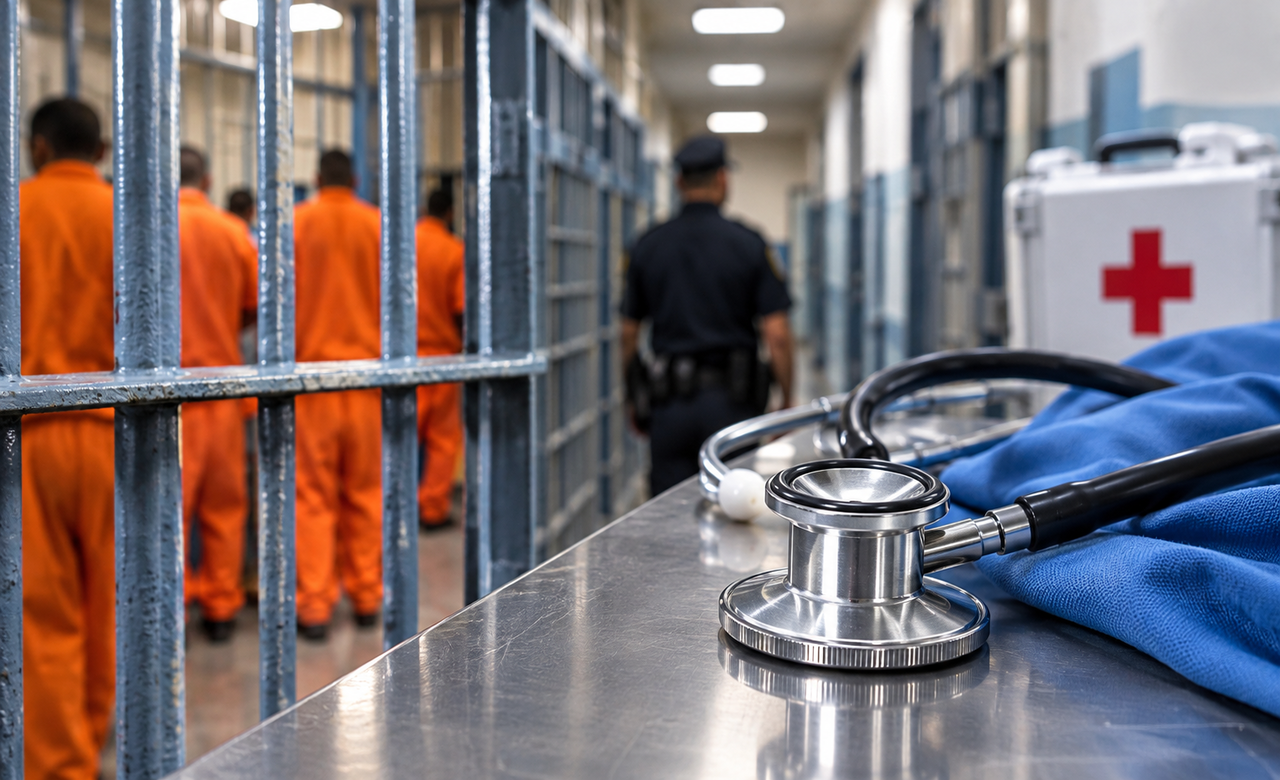
Healthcare in Philadelphia’s jails faces a test that goes beyond the ability of medical professionals to respond to patients’ needs. The issue also raises questions about the responsibility of city officials who delegate essential services to private companies and must ensure that public contracts do not become a vulnerability for the health of people in custody. This Wednesday, October 28, the City Council’s Legislative Oversight Committee is scheduled to hold a hearing to examine the circumstances that led to disruptions in correctional healthcare and determine how the city’s contracted providers were monitored.
The investigation follows the financial crisis at YesCare, the company that had been involved in providing medical services in Philadelphia’s jails for decades. Resolution 260778, adopted by City Council on September 24, formally authorizes the hearings and raises questions about how contractors’ financial and operational capacity was evaluated, what oversight mechanisms were in place, and what steps the administration could have taken to prevent corporate problems from affecting the care of incarcerated people. The issue, therefore, is not simply about reviewing a failed contract, but about examining the effectiveness of public oversight of a service on which human lives depend.
When a Corporate Crisis Reaches the Jails
In May 2026, YesCare filed for bankruptcy after failing to meet its payment obligations to healthcare workers. According to court documents cited by The Philadelphia Inquirer, hundreds of correctional healthcare workers went weeks without receiving their expected wages. The uncertainty led to widespread staff absences and disrupted the availability of professionals responsible for caring for the incarcerated population.
One of the most concerning incidents occurred at Curran-Fromhold Correctional Facility, the city’s largest detention center, where, according to records cited in news coverage, no nurses reported for a night shift. Such a situation exposes the fragility of a system in which continuity of care depends on a private company remaining financially solvent and meeting its employment obligations on time.
The potential impact is considerable. In recent years, between 3,000 and 4,000 people have been incarcerated in Philadelphia on a daily basis. The correctional system requires services ranging from primary care and dentistry to psychiatry and treatment for preexisting conditions. Staffing disruptions can delay clinical evaluations, patient follow-ups, and emergency responses.
The bankruptcy also did not emerge in a business environment without a history of concerns. The city resolution cites a $307.5 million federal verdict against YesCare and the termination of an approximately $1 billion correctional healthcare contract in Alabama. These developments are among the reasons City Council is seeking to clarify how risks were evaluated before the crisis affected Philadelphia.
Changing Providers Does Not Resolve Every Question
As YesCare’s financial condition deteriorated, the city accelerated the transition to CFG Health, a New Jersey-based company. The one-year agreement, valued at up to $80 million, was scheduled to begin in July 2026, but the previous provider’s collapse forced the transition to take place sooner. The change ended a contractual relationship that had continued, through different corporate structures, for more than three decades.
The Philadelphia Department of Prisons reported at the time that the transition of medical and behavioral health services had been completed without operational problems. However, replacing one company does not, by itself, answer questions about how the crisis could have been prevented: When did the administration become aware of YesCare’s financial difficulties? What indicators did officials use to evaluate the company’s performance? And what protocols were in place to maintain care if the contractor ceased operations?
The hearing offers an opportunity to demand documented answers and determine whether existing oversight tools were sufficient. It also provides a chance to assess what safeguards the city needs to prevent payroll problems, staff shortages, or a contractor’s insolvency from once again jeopardizing medical services.
Accountability as a Public Obligation
The debate comes as Philadelphia develops new mechanisms for correctional oversight. In September, the city’s Office of the Inspector General outlined the functions of the Philadelphia Prison Community Oversight Board, a nine-member community body established to review jail conditions, oversee investigations, and promote transparency. The structure aims to incorporate the experiences of people affected by the correctional system and facilitate public participation.
Institutional transparency, however, must translate into verifiable results. The city needs mechanisms to identify financial problems early, require contingency plans, verify staffing coverage, and respond quickly when essential services fail.
The issue has a human dimension that must not be lost among case files, budgets, and contractual clauses. Incarcerated people cannot freely choose their doctors or independently travel to a hospital when they need medical attention. That dependence makes continuity of healthcare a central responsibility of the authorities operating the jails.
The October 28 hearing does not, in itself, establish individual liability or prove that every service disruption caused specific clinical harm. Its significance lies in the opportunity to clarify decisions, establish institutional accountability, and propose concrete measures.
For Philadelphia, the decisive question will be whether the legislative findings lead to meaningful changes in contracting, oversight, and emergency response. The quality of a correctional system is measured not only by the number of people it holds in custody, but also by its ability to protect the health of those who depend entirely on it.