
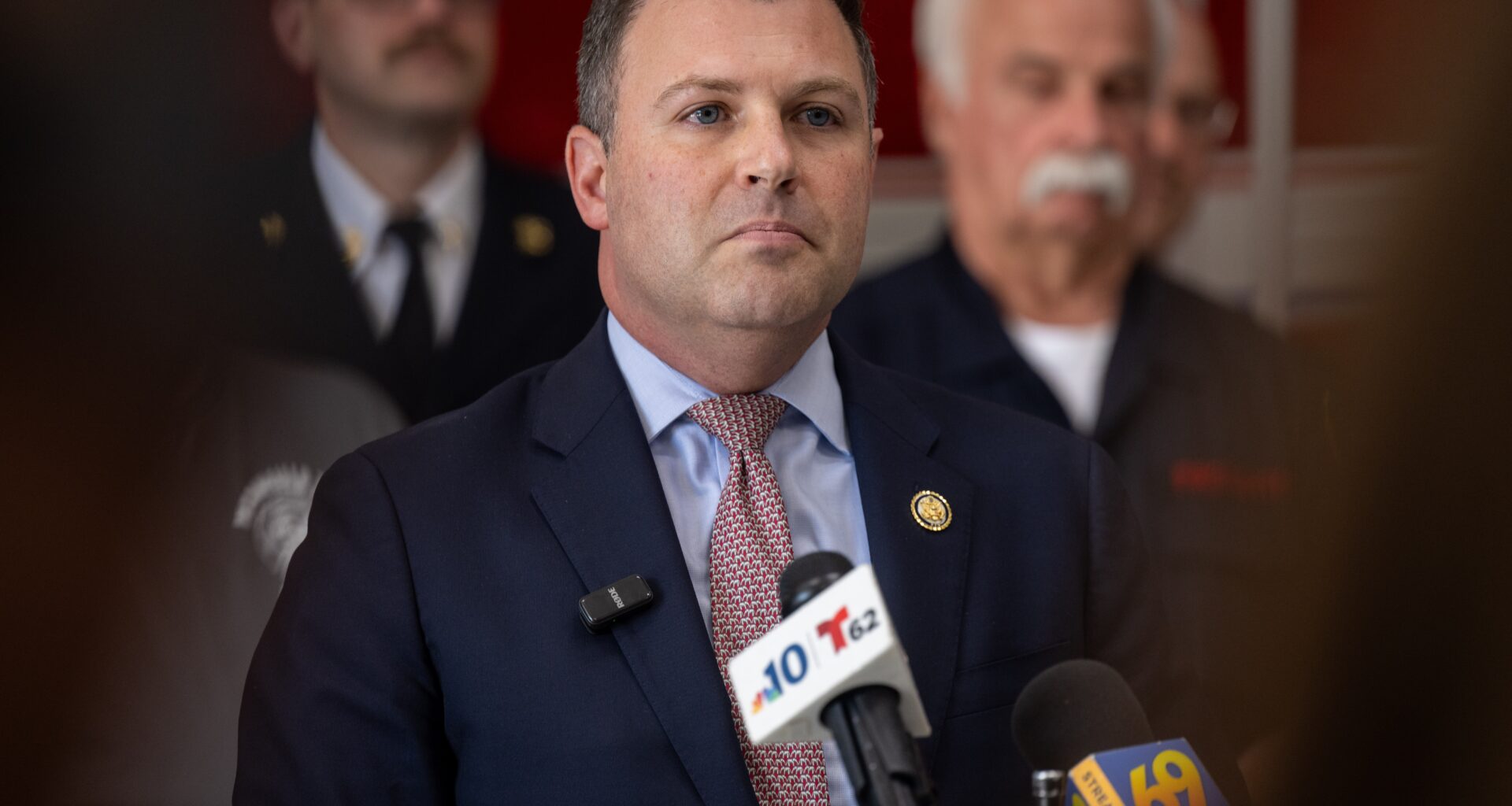
An anti-Ryan Mackenzie ad claims he “voted to raise energy costs on Pennsylvanians” while accepting hundreds of thousands from oil, natural gas and public utility political action committees.
The Morning Call’s Ad Watch examined the claims made in the ad. Here is what we found.
The race
Republican Mackenzie, running for a second term representing the Lehigh Valley, faces a challenge from Democrat and former firefighter Brooks, in what is expected to be one of the closest races in the country, which could determine which party controls the House of Representatives.
The margins of elections have been razor thin in recent years; Mackenzie ousted Democratic Rep. Susan Wild by just one percentage point, or 4,000 votes, in 2024, and Wild, in 2022, was reelected to a third term by a slim two-percentage-point margin, or around 6,000 votes.
Because of those high stakes, both Republicans and Democrats have spent millions on advertising and voter outreach in the Lehigh Valley, leading to a barrage of political ads leading up to election day.
The ad
An unnamed narrator then claims that “Ryan Mackenzie voted to raise energy costs on Pennsylvanians after Mackenzie took tens of thousands from utility company PACs and the oil and gas industry.” As the narrator says this, the ad features a cash number ticking up into the tens and thousands.
With a graphic of Mackenzie surrounded by stacks of cash, the narrator says “Mackenzie cashes in. We pay the price.”
The ad is funded by the League of Conservation Voters Victory Fund, a pro-environment super PAC that supports Democratic nominees.
Analysis
With inflation polling as the top issue for voters this election cycle, Democrats are trying to point the finger at Republicans for high prices of everyday goods and utilities.
According to the Consumer Price Index, energy costs have increased significantly year-over-year: Americans have faced a 75% increase in fuel oil costs, 34% increase in gasoline costs, 4.4% increase in electricity costs and 5% increase in utility gas costs.
Electricity costs in the United States have outpaced the rate of inflation since 2022, according to an analysis from the U.S. Energy Information Administration.
In Pennsylvania specifically, the Pennsylvania Public Utility Commission has announced a series of price increases, most recently on June 1, in preparation for a spike in use for summer air conditioning and cooling.
According to the University of Pennsylvania’s Kleinman Center for Energy Policy, Pennsylvania consumers are seeing electric rate increases due to a surge demand for electricity, which is due in part to the proliferation of data centers which require massive amounts of energy; costly investments in energy transmissions infrastructure to meet that increasing demand; and federal energy policies that have stymied wind and solar energy projects.
A source document provided by the League of Conservation Voters Victory Fund cites Mackenzie’s vote for the “Big Beautiful Bill” as evidence he voted to raise energy costs.
The Big Beautiful Bill, a $3 trillion spending package, has thus far been the most significant piece of legislation passed during Trump’s second term. Among the many provisions of the 870-page bill were repeals of green energy tax credits, and increases in spending on oil and gas leasing. Specifically, the bill eliminates the “Production Tax Credit” for wind and solar projects placed in service after Dec. 31, 2027.
According to an analysis from the clean energy think tank Energy Innovation, household energy costs will increase by $170 annually by 2035 as a result of the bill’s disinvestment in clean energy production.
However, Republicans, including Mackenzie, have blamed the rising cost of energy on Democratic policies that subsidized wind and solar energy (which Republicans have since repealed), the Biden administrations’ canceled permit for the Keystone XL Pipeline, and its pause on new oil and gas leasing.
The Trump administration has also announced plans to invest hundreds of millions in domestic oil and gas production to meet energy demands. Such investments will not bring down energy costs in the short term because they will take years to complete.
Mackenzie has made some legislative efforts to lower energy and utility costs.
He co-sponsored a bipartisan bill called the “Ratepayer Protection Act” which would require data centers and other large energy consumers to shoulder the cost of new energy infrastructure needed for their own operations, and helped secure a $71 million federal grant that would modernize Pennsylvania’s electric grid.
“Congressman Mackenzie has embraced an all-of-the-above energy policy which unleashes American energy, holds data centers accountable, completes in-progress green projects, and invests directly in local energy infrastructure,” Mackenzie spokesperson Arnaud Armstrong said in a statement.
Per the ad’s claim about Mackenzie’s PAC donations, his campaign has accepted $49,500 in donations from oil and gas company PACs and utility company PACs since launching his re-election campaign in January 2025, according to Federal Election Commission data filed by Open Secrets. That sum represents around 0.01% of his total campaign fundraising.
Corporate and utility PACs are political organizations affiliated with a specific company that pool donations from company employees and distribute them to political candidates. Corporate PACs are not funded by corporate money or profits, but by voluntary employee contributions.
Verdict
The ad needs additional context and could be misleading.
Mackenzie voted in favor of the Big Beautiful Bill, which is projected to increase energy costs in the long term, according to some analyses.
However, the reason that energy are high currently is disputed, and is likely due to a number of factors including surging demand for electricity.
Mackenzie has also made separate legislative efforts to bring down energy costs.
Ad Watch is a series examining claims made in political ads. In the column, which The Morning Call revives during major election years, reporter Lindsay Weber researches the claims, puts them into context and reaches a “verdict” on their accuracy. If you have an ad for us to factcheck, email liweber@mcall.com with Ad Watch in the subject line. View all our election coverage at themorningcall.com/election.