
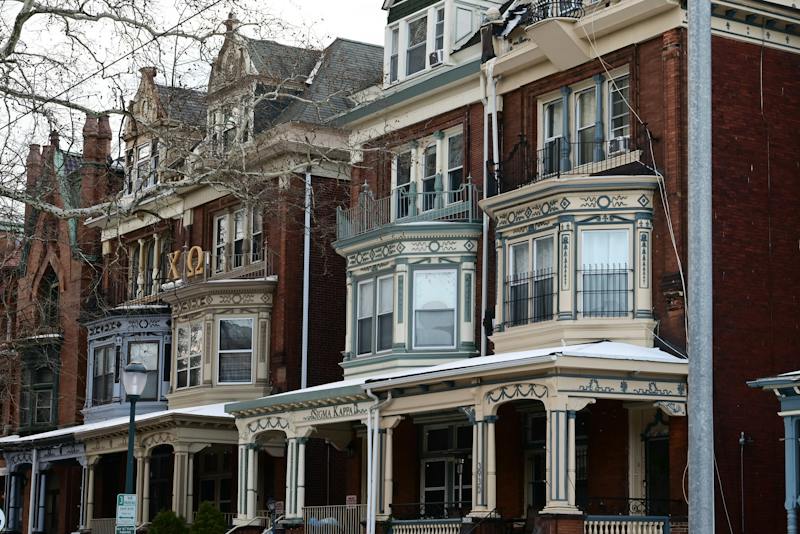
Every spring semester at Penn, hundreds of young women step out into the freezing Philadelphia air, excited and full of anticipation for formal recruitment. They spend weeks discussing their favorite sorority and perfecting their introductions, searching for the community that best fits them. For many women, rush represents an exciting milestone: a doorway to mentorship, leadership, and lifelong friendships in a high-pressure academic environment.
Yet, almost immediately, campus criticism sinks its teeth into that excitement. The moment women express enthusiasm about entering greek life, they are met with a bombardment of condescension. Peers across campus love to casually dismiss prospective and current sorority members as superficial, shallow, or fundamentally “dumb,” disregarding the significance of sororities completely.
Panhellenic sororities are routinely reduced to stereotypes of curated personalities and mindless conformity. This is not because they actually embody any of those critiques, but because they are female-dominated groups and are therefore devalued and minimized by the very society that created these double standards.
This dismissal is rarely a serious critique of greek life. Rather, it is commentary deeply rooted in misogyny. When people label sororities as trivial, they are usually reacting to the structural limitations imposed on women’s organizations, such as “dry house” policies. The reality is simple: Sororities aren’t dumb, you just refuse to recognize how gendered power dynamics shape social life at Penn.
To understand why sororities operate the way they do, you have to look at the physical and structural layout on Penn’s campus. Penn’s Office of Fraternity and Sorority Life recognizes 36 greek organizations in total, but just six Panhellenic sororities. This massive disparity is not a reflection of student interest, but historical institutional design. Penn was founded as an all-male institution in 1740 and only began allowing women to fully enroll in 1933. This gap left campus sororities nearly two centuries behind when searching for real estate, creating limited options and structural disadvantages that still persist today.
Get the DP delivered straight to your inbox.
This imbalance creates an intense social scarcity for women. During recruitment season, hundreds of potential new sorority members compete for a drastically limited number of spots relative to their male peers. This shortage forces sororities to operate under immense pressure. Because demand is high and chapter opportunities are scarce, the council organizations must adhere strictly to national regulations and University guidelines to protect their charters. A single policy violation can lead to a chapter losing its house or being dissolved entirely, shrinking an already tiny pool of options. On the other hand, fraternities, backed by extensive alumni networks, larger property holdings, and sheer numbers, absorb operational risk with far greater resilience.
A common insult leveled against sororities is that they “don’t throw real parties.” Detractors mock sorority houses for being boring or secondary to the weekend social scene, pointing out that female students only ever attend events hosted in fraternities rather than hosting themselves.
What critics conveniently ignore is that sororities don’t host alcohol fueled parties because they are legally and contractually forbidden from doing so. Under National Panhellenic Conference rules, all sorority chapter houses across the country are strictly dry. This mandate is driven by risk management and astronomical insurance costs.
This policy creates a clear, gendered power dynamic. By preventing sororities from hosting social events with alcohol in their own spaces, the current structure hands fraternities a complete monopoly over campus nightlife and social activity. Women are forced to navigate male-dominated spaces for weekend events, ceding control over environment and safety to fraternity members. Blaming sororities for this setup and labeling them as “dumb” for complying with safety regulations punishes women for a structural inequality that they didn’t create.
This double standard extends far beyond party cultures and directly into professional life. On a preprofessional campus like Penn, fraternity brotherhood is routinely praised as a vital career vector — an engine for corporate networking, recruitment, and lifelong ambition.
Yet, when women build identical structures of peer support, alumni outreach, and academic mentorship within sororities, those efforts are mocked as superficial or frivolous. Society naturally validates male bonding as strategic professional development, while trivializing female bonding as mere gossip or vanity. In reality, sororities provide the exact same social and academic benefits as fraternities, offering rigorous leadership roles, career connections, and grade point averages that often outpace the campus average. To value the fraternity network while dismissing the sorority network is pure misogyny.
It’s easy to look at Penn’s social hierarchy and conclude that strict rules and stereotypes make sororities inferior to fraternities. But that perspective mistakes patriarchal privilege for actual value. Penn’s six Panhellenic sororities navigate a campus environment heavily tilted against them, balancing massive demand with strict national oversight to build supportive, resilient communities. Dismissing these organizations as “dumb” ignores the structural barriers women face and reinforces the idea that female-dominated spaces are inherently less worthy of respect. It’s time to stop blaming sororities for the constraints placed upon them, and it’s time to start questioning the system that created them.
PEARL JOHNSON is a College first year studying psychology from Philadelphia. Her email is pearlspj@sas.upenn.edu.