
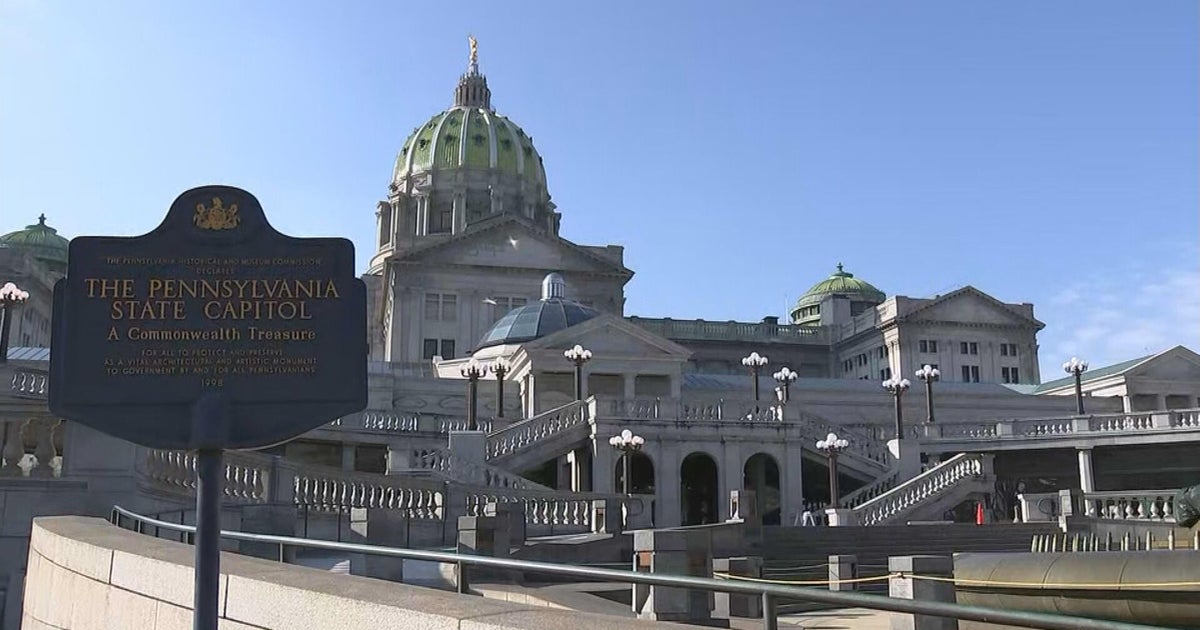
Pennsylvania state lawmakers are expected to pass a roughly $50 billion budget that will get money flowing to public schools and social services again after months of delay.
Democratic Gov. Josh Shapiro was expected to sign key budget bills by the end of the day, ending an impasse that has lasted since July.
The $50.09 billion budget is $2.27 billion higher, or 4.7% higher, than the previous fiscal year. Highlights include growth in funding for certain school districts as well as a 4.1% combined increase in the Pennsylvania State Police’s budget, documents provided by Democratic House Appropriations Committee Chairman Jordan Harris’ office show.
The budget also boosts funding for the State Food Purchase Program to $30.688 million, a 15% increase.
A key concession to help seal a deal meant Democrats agreeing to Republican demands to back off any effort to make Pennsylvania the only major fossil fuel-producing state to force power plant owners to pay for their planet-warming greenhouse gas emissions.
Democrats won’t get the amount of money that Shapiro originally sought in his initial budget proposal, but the deal — after weeks of closed-door negotiations — is expected to deliver substantial new sums to public schools and an earned income tax credit for lower earners, as Democrats had sought.
During the delay to get the budget passed, many schools have taken out revenue anticipation loans to stay afloat. Some school district leaders had said they would struggle to operate normally and would be in “uncharted territory” if the budget was not passed by January 2026.
In Harrisburg, the budget’s passage will bring relief that the stalemate is over.
“The win is that we’re going to, hopefully before the end of the day, have a funding plan for the commonwealth and that’s a win for everybody who’s been waiting on state resources,” Harris told reporters in a Capitol hallway Wednesday morning.
The advancing votes in the politically divided Legislature arrive weeks after counties, school districts and social service agencies are warning of mounting layoffs, borrowing costs and growing damage to the state’s safety net.
School districts, rape crisis agencies and county-run social services have gone without state aid since July 1, when the state lost some of its spending authority without a signed state budget in force.
The agreement to back off the carbon dioxide cap-and-trade program on power plants comes six years after then-Gov. Tom Wolf made joining the Regional Greenhouse Gas Initiative the centerpiece of his plan to fight climate change.
The plan made Pennsylvania — the nation’s second-largest natural gas producer — the only major fossil fuel-producing state to undertake a carbon cap-and-trade program. It has been held up in court and never went into effect.
It was popular with environmental groups and renewable energy advocates, but it was opposed by Republicans, fossil fuel interests and the labor unions that work on pipelines, refineries and power plants.
Under the $50.1 billion budget deal, new authorized spending would rise by about $2.5 billion, or 5%.
Practically all of the overall spending increase would go toward Medicaid and public schools. Billions in surplus cash will be required for the plan to balance, the second straight year that Pennsylvania is running a multibillion-dollar budget deficit.
More from CBS News