
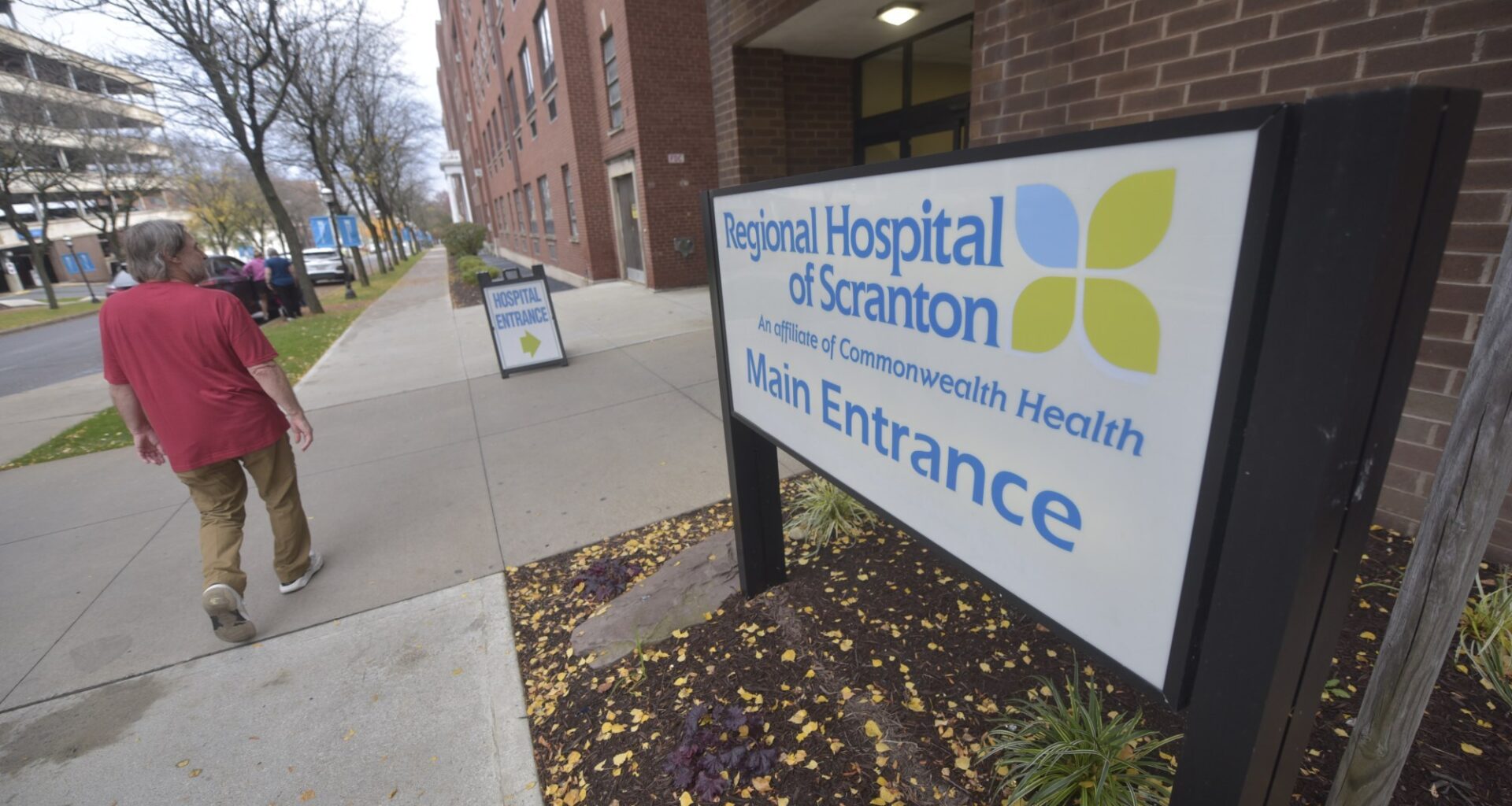
A western Pennsylvania hospital owned by Tenor Health Foundation — the nonprofit owner of Commonwealth Health and its hospitals in Scranton and Wilkes-Barre — suspended services after the state revoked its operating license amid pronounced fiscal challenges.
But Commonwealth Health said in a statement that it and the Sharon Regional Medical Center, the Mercer County hospital that lost its license, “operate completely independently from one another, and their financials are separate.”
“Commonwealth Health’s hospitals and physician practices remain fully operational and continue to serve the healthcare needs of Northeastern Pennsylvania,” per the statement.
Tenor completed its acquisition of Commonwealth early this year in a deal that included Regional Hospital of Scranton, its nearby Moses Taylor Hospital campus in the city and Wilkes-Barre General Hospital in Luzerne County, along with other Commonwealth healthcare assets.
The completed transaction — which Commonwealth and its now former parent company, for-profit Community Health Systems Inc., announced in early February — was widely celebrated as a lifeline that spared the financially struggling Scranton hospitals in particular from closure.
It followed Tenor’s earlier acquisition of the troubled Sharon Regional, which the nonprofit reopened last year. The Mercer County hospital had closed in early January 2025, creating a void in the healthcare landscape there, after its former for-profit owner, Steward Health Systems, filed for bankruptcy in 2024.
Following the recent license revocation and suspension of hospital services, Sharon Regional’s current patient census is zero, according to Gov. Josh Shapiro’s office.
“Tenor Health’s fiscal mismanagement is causing the Sharon community to lose a vital institution, stripping residents of local access to health care and leaving hundreds of hardworking employees without a job,” Shapiro spokesperson Rosie Lapowsky said in a statement. “The Shapiro Administration has worked for nearly two years directly with Tenor leadership and local officials to keep the doors open at Sharon Regional Medical Center (SRMC), spending hundreds of thousands of dollars in staff overtime for remote and onsite assistance and committing millions of dollars to maintain local health care services. Unfortunately, Tenor leaders have not lived up to their end of the deal, repeatedly choosing to not pay workers on time and allowing debt to skyrocket to unmanageable levels.”
Lapowsky’s statement notes the state Department of Health issued an order revoking the hospital’s operating license to ensure patient safety, “ordering them to stop seeing patients and begin an orderly closure.”
A notice of service suspension posted on the Sharon Regional Health System’s website says the system “will begin the process of suspending hospital services, as it undertakes a restructuring designed to establish a more sustainable, cost-effective clinical footprint focused on the services most needed by the community.”
The suspension includes “broader acute care and outpatient operations,” and emergency department services, per the notice.
“If inpatient care is needed, patients will be stabilized and transferred to an appropriate facility for continued treatment,” it says.
The state Department of Health will assist in those efforts as the hospital transitions into full closure, and Tenor must submit a final closure plan to the department, the governor’s office said.
Tenor said it invested about $1.2 million in physical plant improvements and about $1.3 million in IT infrastructure since acquiring Sharon Regional to support the hospital and its operations, and approximately $624,000 to support the hospital’s cardiology program. But it also said patient volumes and revenues generated by those services weren’t sufficient to cover the program’s costs.
“These investments demonstrate the resources committed to rebuilding Sharon, but restoring a hospital following a closure, particularly without its previous physician and referral network, proved more challenging than anticipated,” Tenor said.
The Sharon Regional situation is a stark contrast to the optimism Commonwealth and Tenor officials have expressed this year about the future of their hospitals in Lackawanna and Luzerne counties under Tenor’s nonprofit ownership. They did so last month at an event celebrating the grand opening of the Apothecary at Moses Taylor Hospital, which restored outpatient pharmacy services there and supports a “meds-to-beds” program allowing Regional and Moses Taylor patients to receive prescribed medications conveniently prior to discharge.
“This is really a big deal for us, not just that we’re opening a pharmacy, but we are reopening something that we lost a long time ago,” Regional and Moses Taylor CEO Dr. Patrick Conaboy said at that event. “And reopening this is not just something that we are doing for the community, but it’s all about recapturing who we were and what our dedication was like for years to this community and to our patients.”
Conaboy referred to the pharmacy’s restoration as an example of the broader “rebirth” of Regional and Moses Taylor, crediting Tenor with having stepped in “at our darkest moment.” A Commonwealth news release characterized the pharmacy’s opening as “part of Tenor Health Foundation’s broader commitment to investing in Moses Taylor Hospital and working alongside Commonwealth Health to revitalize the campus, enhance services and make healthcare more convenient and accessible for the communities it serves.”
Commonwealth said Friday that Sharon Regional will not be borrowing from Commonwealth, and Commonwealth is not providing financial support for Sharon Regional’s operations.
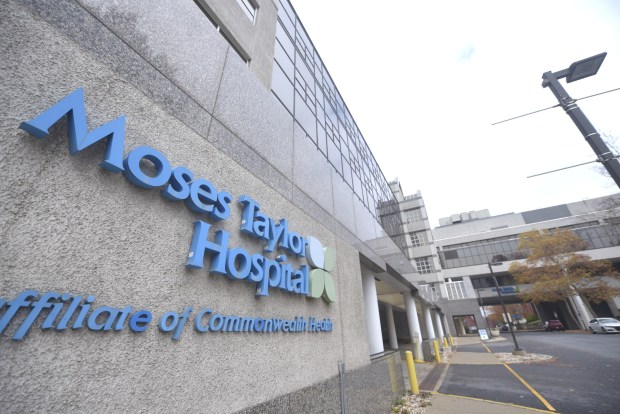 Moses Taylor Hospital in Scranton, an affiliate of Commonwealth Health. (CHAD SEBRING/STAFF PHOTO)
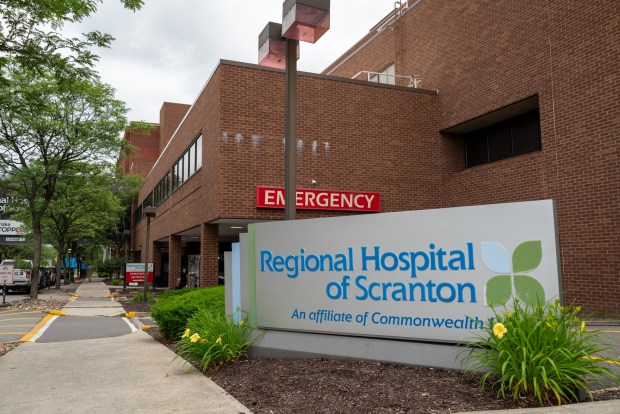 Wilkes-Barre General Hospital on River Street in Wilkes-Barre.
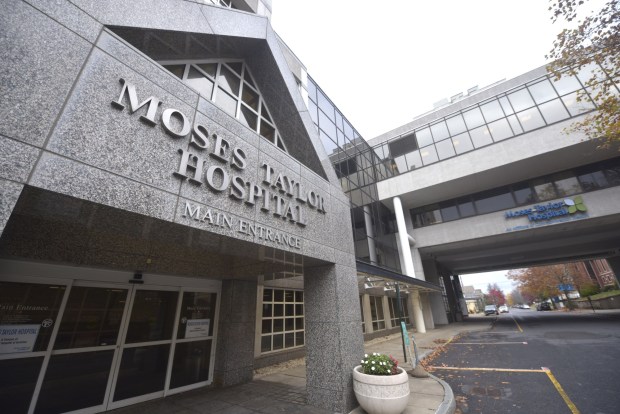 Moses Taylor Hospital in Scranton, an affiliate of Commonwealth Health. (CHAD SEBRING/STAFF PHOTO)
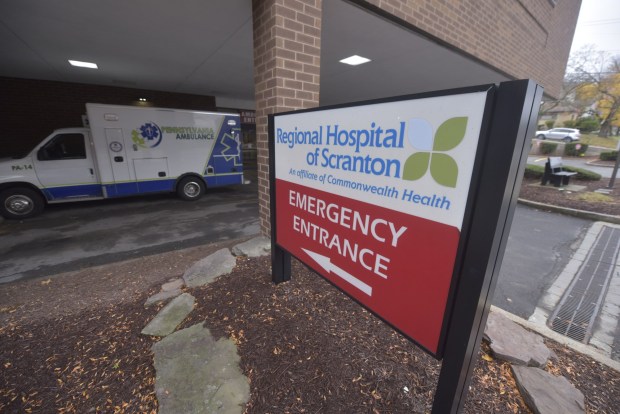 An ambulance waits in the emergency bay of Regional Hospital of Scranton on Friday, Nov.6, 2026. (CHAD SEBRING/STAFF PHOTO)