
This is another in a series of articles on life inside one of Philadelphia’s most challenged neighborhoods.
In late September when city officials announced a $21.7 million renovation at McPherson Square in Kensington, one of the community’s biggest boosters was nowhere to be found at the ceremony.
Dr. Bill McKinney, executive director of the New Kensington Community Development Corp. (NKCDC), a nonprofit that promotes social equity and economic empowerment in the Kensington, Fishtown, and Port Richmond neighborhoods, said he supports the renovation. However, he and many of his neighbors didn’t get an invite, he said.

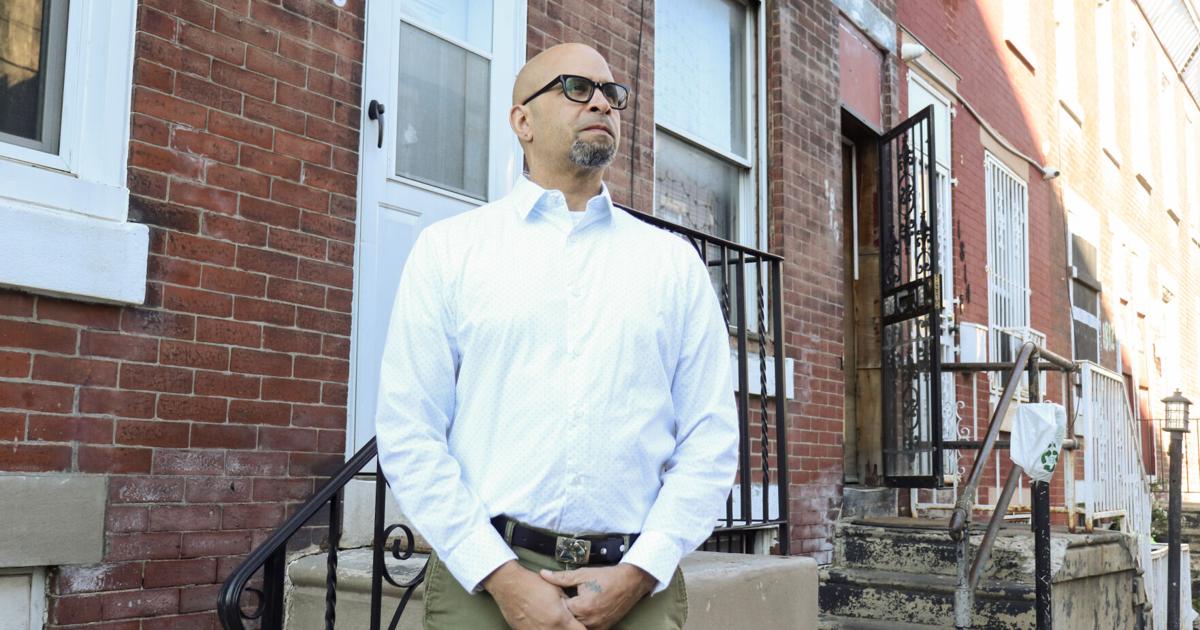
Dr. Bill McKinney, NKCDC executive director, walks down Kensington Avenue. —TRIBUNE PHOTO/KAYLA BROWN
Kayla Brown
TRIBUNE PHOTOGRAPHER
“My neighbors didn’t know what was going …,” he told the Tribune. “We didn’t receive notice that that was happening.”
Kensington has the greatest concentration of drug related crimes and overdose deaths in Philadelphia and 1/3 of all homeless people in the city while 1 in 8 unintentional overdose deaths citywide occurred there from 2018 to 2022, according to a 2024 report issued by kensingtonplan.org, a group which focuses on a resident-driven framework for change.
Late last month, Mayor Cherelle Parker arrived at McPherson Square Library and Park to celebrate her 1,000th day in office and to break ground on a $21.7 million renovation of the historic Carnegie library and its six-acre surrounding park, signs she said were evidence of the changes to improve the quality of life in Kensington.
McKinney credits officials who helped secure the investment but questions the public ceremonies held by elected officials touting how much better things are in Kensington. “Are things better or have things just changed?” he asked. “Because the core issues haven’t been addressed.”
“The real issues here aren’t just cleanliness and crime,” he added. “The problems are jobs and education. That’s what’s at the root”
Dr. Bill McKinney, NKCDC executive director, points to the Ruth Street Civic House, which is affordable housing available to rent. —TRIBUNE PHOTO/KAYLA BROWN
Kayla Brown
TRIBUNE PHOTOGRAPHER
He compared the city’s efforts to the way he tidies up his office before guests arrive. “I straightened up a little bit before you all came,” he said to a group of journalists. “All my trash is under my desk right now. It’s still here.”
McKinney sees a familiar approach across successive administrations. “Policing and sanitation,” he said.
The executive director acknowledges that some streets are cleaner, violence has declined, and fewer people are dying from overdoses. But he questions whether these changes have improved Kensington families’ financial circumstances.
McKinney worries that cleaner streets and new buildings will not be enough if poverty persists and long-time residents cannot afford to stay.
“This is a brutal job,” he said. “This is the most brutal job I’ve ever had.”
He added, “Are things better or have things changed? Kensington is still just as poor as it was.”
One Philly Kensington Blitz
City officials point to several areas where the community has improved.
First Deputy Managing Director Crystal Yates-Gale, who oversees Philadelphia’s health and human services departments, said the Parker administration is working to improve conditions through an intensive, coordinated effort across city agencies.
Dr. Bill McKinney, NKCDC executive director, stands in the Tusculum Gateway Garden in Kensington. —TRIBUNE PHOTO/KAYLA BROWN
Kayla Brown
TRIBUNE PHOTOGRAPHER
The effort, known as the One Philly Kensington Blitz, began on Sept. 5 under Managing Director Carlton Williams.
The city divided Kensington into three geographic zones and concentrated services in one zone each week. Workers clean and power-wash streets, remove trash and abandoned vehicles, address dangerous properties, collect discarded syringes, and connect people experiencing homelessness or substance use disorders to treatment and shelter.
The operations involve the Police and Fire Departments, Emergency Medical Services, the Department of Behavioral Health and Intellectual Disability Services, the Office of Homeless Services, the Health Department, Streets and Sanitation, Parks and Recreation, Licenses and Inspections, the Water Department, and the Philadelphia Parking Authority, said Yates-Gale.
“What we’re trying to do from the managing director’s perspective is more coordination and collaboration across many city departments,” Yates-Gale told the Tribune.
During the first six operations, she said, city crews collected more than 8,000 discarded syringes and cleaned 1,166 blocks. The city also reported 51 shelter placements through homelessness and behavioral health services and the distribution of 620 naloxone kits.
The Managing Director’s Office said the blitz builds on the Monday-through-Friday cleaning already done by the Sanitation Department and the Community Life Improvement Program by extending cleaning and outreach to people experiencing homelessness or substance use disorders to weekends and sometimes Fridays.
Dr. Bill McKinney is the executive director of the New Kensington Community Development Corporation. —TRIBUNE PHOTO/KAYLA BROWN
Kayla Brown
TRIBUNE PHOTOGRAPHER
Since Sept. 5, the office said, crews have also cleaned 751 graffiti sites, removed about 80 tons of debris, filled 126 potholes, and towed or impounded 296 abandoned vehicles. Those figures do not include the most recent blitz.
Yates-Gale also cited reductions in shootings, homicides, and fatal overdoses as evidence of progress, though she could not provide the specific figures during the interview.
McKinney and other neighborhood advocates believe that organizations already working with residents should play a greater role in shaping the city’s response.
Yates-Gale acknowledged that the government cannot achieve its goals alone.
“We know that the residents can’t solve it alone. And we know the nonprofit organizations can’t solve it alone. We have to all do it together,” she said.
Displacing residents
McKinney shared several challenges his group faces. For example, he pointed out that a nutrition education program tied to the Supplemental Nutrition Assistance Program ended on Sept. 30. The organization also lost a federal housing counseling contract and faced cuts that affected its Cure Violence work. McKinney estimated total funding losses to exceed $1 million.
NKCDC has spent years helping families avoid eviction, access housing assistance, and preserve affordable homes. McKinney estimated that its housing counseling programs prevented 700 to 800 evictions over a three-year period.
The organization has also acquired 24 single-family homes and two five-unit buildings to preserve affordable rental housing.
Additionally, NKCDC is building 17 single-family homes, each costing about $350,000 to construct. City subsidies and additional fundraising help reduce sale prices to about $180,000 to $190,000, and without that financial assistance, McKinney said many Kensington families could not afford the newly constructed properties.
Ta’Nika Thornton-Trice, a longtime Kensington resident and block captain, fears that rising real estate values could eventually displace residents who endured the neighborhood’s hardest years. She said she wants the neighborhood to improve and for longtime residents to share in its recovery.
The are some positive signs: She credits NKCDC with helping residents access housing counseling, rental assistance, and other services, while noting that her own housing experience has been difficult.
After her first child was born, Thornton-Trice considered leaving Kensington because she feared raising a family near the drug market. She said she sought help from a city-run housing assistance program but was told she did not qualify.
“I was told that I have to literally live on the street to get help,” she said.
Unable to find another place to live, she stayed.
Today, she is raising two children, expecting a third, and helping organize neighbors on the same streets she once wanted to leave.
The Economy Nobody Replaced
McKinney estimates that Kensington’s illegal drug economy now exceeds $1 billion annually, citing a 2021 figure by then-Pennsylvania Attorney General Josh Shapiro, who described the neighborhood’s open-air drug market as possibly the largest in the nation, with heroin sales generating as much as $60,000 a day on some blocks. McKinney said that estimate furthers his concern about the enormous financial power of trafficking.
He believes the city should invest more in job training, education, affordable housing, addiction treatment, and support for local businesses.
Yates-Gale agreed that lasting improvements require efforts beyond policing and sanitation. “It is really a comprehensive approach that’s needed here,” she said. “One single thing is not going to create a change.”
She cited the city’s work on behavioral health, homelessness, children’s services, and employment opportunities, but deferred questions about specific business-development initiatives to the Department of Commerce.
McKinney has participated in neighborhood planning efforts, including Co-Creating Kensington, which convenes residents to identify priorities and develop solutions.
“There are beautiful people that come through this space,” he said. “You’ll see their power.”
He is particularly troubled by the growing number of Black and Latino residents he has seen struggling with addiction in the neighborhood. “We should be ringing every alarm,” he said. “Because our folks are dying.”
For parents like Thornton-Trice, the hope is that their children will one day know McPherson Square as a playground rather than as the place where they first witnessed an overdose.
Still, he refuses to surrender Kensington to the drug trade or abandon the families who have endured its worst years.
“I’m grateful that I’m able to serve my community this way and do what I do, and I’ll fight,” McKinney said. “I’m willing to lose it all.”
Other articles in this series
Stay informed and connected — subscribe to The Philadelphia Tribune NOW! Click Here