
Get stories like this delivered straight to your inbox. Sign up for The 74 Newsletter
School counselors in Pennsylvania can have caseloads of more than 300 students. In high school, that means they’re not only responding to students’ mental health needs, but helping them meet all of their college application deadlines.
In Philadelphia, that’s where Kelsey Smith comes in. She’s a college access coordinator at Furness High School, where she organizes college tours, guides students through the financial aid process and helps them research post-secondary options.
But she’s not a district employee. Her position is funded by contributions from corporations and individuals who donate to the Philadelphia Education Fund in exchange for a tax credit. She recalls a girl in foster care she helped two years ago who was not only applying to college, but needed to complete paperwork and upload financial information to receive a tuition waiver.
“It’s not that any of these things are impossible, but she is 17 and does not live with her parents. The process is just unwieldy,” Smith said. “It’s nice to have us in the building because the only thing we do is college and career.”
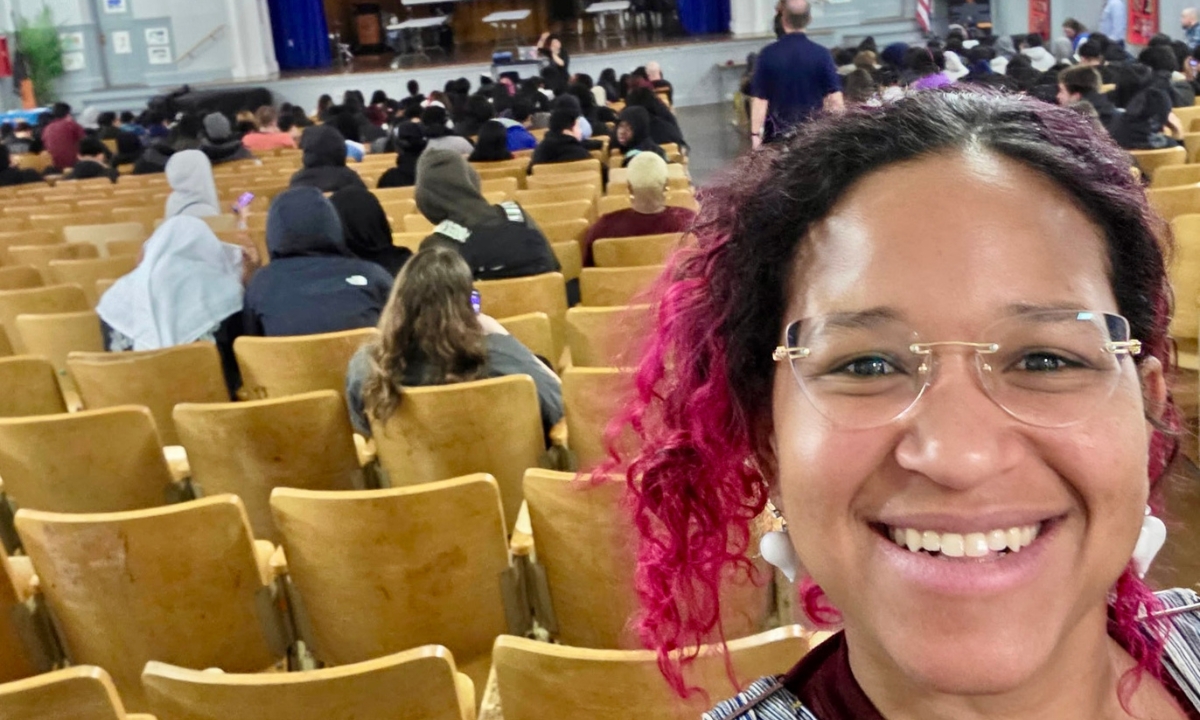 Kelsey Smith is a college access coordinator at Furness High School in Philadelphia. Her position is funded by donations from corporations and individuals who receive a tax credit from the state. (Courtesy of Kelsey Smith)
The Philadelphia Education Fund is one of more than 900 organizations that participate in Pennsylvania’s Educational Improvement Tax Credit and direct the funds they raise from donors toward students in public schools. There are clear differences between the state’s model and the upcoming Federal Scholarship Tax Credit, which starts Jan. 1. Under the federal program, for example, donations will only fund student scholarships, not staff positions. School choice advocates largely pushed for the federal program to give students more access to private schools, but the Treasury Department, which will run it, has confirmed that students in public school are also eligible. Pennsylvania could offer an example of how such programs fill gaps between what districts provide and the extra support some students need to stay on track.
In Pennsylvania, another participating group is Andrew’s Gift, a nonprofit that supports public school students with autism. Its Literacy Project equips classrooms with consultants who help with reading lessons, i-Pads and software, and sensory items, like squishy letters and a water table.
Those materials made a difference for one of Amy Anderson’s students at Susquenita Elementary School in southeastern Pennsylvania. As a first grader last year, he wouldn’t stop playing long enough to engage in any reading lessons.
“That transition was always really hard for him,” Anderson said. But with items that hold his attention, “he’s moved three skills up the science of reading ladder. We absolutely saw him blossom.”
‘A whole lot of hoops’
With Pennsylvania Gov. Josh Shapiro deciding whether to be the next Democrat to potentially opt his state into the federal program, existing providers are weighing what it might take to turn their current model of support for local schools into scholarships that would comply with the federal program. They would need to either form a scholarship granting organization or work with another SGO that meets the IRS criteria.
“If we could continue to accomplish what we’re doing right now without a whole lot of hoops to jump through, I would definitely do it,” said Andrew Ward, who founded Andrew’s Gift, named for his son, who has autism. “If there are 25 obstacles that we’re trying to climb over to fit this program into what we’re doing, it may not be worth it.”
During an October gubernatorial debate, Shapiro said his staff was “continuing to digest” the Treasury Department’s regulations for the federal program, but that he expected to announce soon whether he would opt in.
“I’m very open to this,” said the governor, who came close to supporting an education savings account bill in 2023. “I believe in giving parents an opportunity to put their kids in the best position for them to succeed.”
RelatedIn Long Awaited Rules for Tax Credit Scholarships, Feds Stress Neediest Students
More than once, Republicans have held events in the state to pressure him to opt in.
“Pennsylvania should not stand in the way of families seeking better educational opportunities for their children,” Rep. Tim Walberg, chair of the House education committee, told attendees at a field hearing in Bethlehem late last month. “The state should opt into the Education Freedom Tax Credit and provide a vital lifeline for these families.”
While Shapiro may be leaning in favor of the program, New Mexico Gov. Michelle Lujan Grisham, also a Democrat, opted in last week. Five other blue state governors, however, still have significant questions about the extent to which the federal program will benefit students in public schools. The governors of California, Connecticut, Massachusetts, Michigan and New Jersey sent Treasury Secretary Scott Bessent a letter late last month asking for more clarity on which expenses the program will cover for public school kids (the IRS still hasn’t released specifics) and how much authority they’ll have over SGOs.
They asked whether they could establish “financial-integrity and anti-fraud requirements” for SGOs above what the IRS will require and publish family income, geographic and other data on students who receive scholarships. Past evaluations of state tax credit programs, including Pennsylvania’s, point to a lack of adequate means to determine impact.
“The statute should be amended to allow for the collection of student performance and demographic data so that program effectiveness can be evaluated,” the state’s Independent Fiscal Office said in a 2022 report. “Across states, Pennsylvania has one of the largest tax credits, but collects and publishes the least amount of outcome data.”
A 2021 audit of Georgia’s Qualified Education Expense Tax Credit showed that the state didn’t always notify scholarship organizations when they were out of compliance with state reporting rules or remove them from the list of active groups.
Georgia also limits what data officials can collect on donors, scholarship amounts and the types of students receiving them, the Southern Education Foundation, a nonprofit research and advocacy organization, noted in 2011. Those restrictions make it impossible to determine whether the program is accomplishing its intended purpose — helping needy students in low-performing schools afford private school, the report said.
Those are the types of findings that have made civil rights and pro-public education groups skeptical of or outright opposed to the federal program.
“Up until recently, we still encouraged governors not to opt in,” said Fred Jones, senior director of public policy and advocacy at the Southern Education Foundation. But then 15 of the 17 governors in the region indicated that they would participate or were being forced to by Republican-led legislatures. That led the organization to shift its stance. It is now supporting states as they prepare for implementation. “We want to make sure public school students are prioritized as much as possible.”
RelatedDemocratic Debate Over Private School Choice Reveals Post-Election Tensions
‘Lack of transparency’
Colyn Ritter, a research analyst at EdChoice, a national research and advocacy group, shares some of the same frustrations over the lack of data on how students use funds from tax credit programs. He suggested it’s difficult to obtain because state revenue departments, instead of education agencies, often run the programs.
“The reporting is poor and it’s not just a Pennsylvania thing,” he said. As one who compiles an annual guidebook on school choice programs, he often has to file public records requests just for basic information. “Lack of transparency is one place where the critics and I are aligned.”
The tax credit label can also be confusing. Some states, like Idaho and Oklahoma, give parents a tax credit if they pay for private school tuition. States allocate funds directly to cover those costs. But Pennsylvania’s Educational Improvement Tax Credit, the larger of two such programs in the state, depends on donors’ contributions.
According to EdChoice, 21 states have a tax credit program funded by private donations. But only a few allow funds to support students who attend public schools. Alabama’s program, which serves about 4,000 students, includes those who switch from a D- or F-rated school to a higher performing one.
Oklahoma’s Equal Opportunity Education Scholarship is another one. The Foundation for Tulsa Schools has used donations to fund hybrid courses, like foreign languages and computer science, that the Tulsa Public Schools doesn’t offer because of teacher vacancies. But Moises Echeverria, president and CEO of the foundation, said he thinks the tax credit program has been “underutilized for public schools.”
Ritter, with EdChoice, said Pennsylvania is the strongest example of donors and nonprofits directing their contributions toward district students. Opponents of the new federal program, however, say they don’t want to see districts attach fees to services or supplies that they should be offering as part of an adequate education. Some states, like Tennessee, also ban districts from charging fees to students from low-income families.
“That is one of the risks of going down this road,” said Patrick Cremin, a staff attorney at the Education Law Center, which is urging states not to participate and warns that the program won’t benefit the students in public schools who need the most support.
But Ward, with Andrew’s Gift, said the resources his group provides go above and beyond what districts can afford for students with autism and aren’t necessarily required as part of a student’s special education plan.
Kimberly Dauksha, who teaches in the Central Dauphin School District, finds that the extra interactive e-books and literacy apps give her students additional ways to build reading skills. The funds also cover classroom furniture, like soft seating or swings, that allow students to move.
“For kids with autism, if they’re not regulated, they’re not learning anything,” said Kristen Arnold, who runs the Literacy Project. “If we can get them to sit in a chair that allows them to wiggle and rock while they learn, that’s huge.”
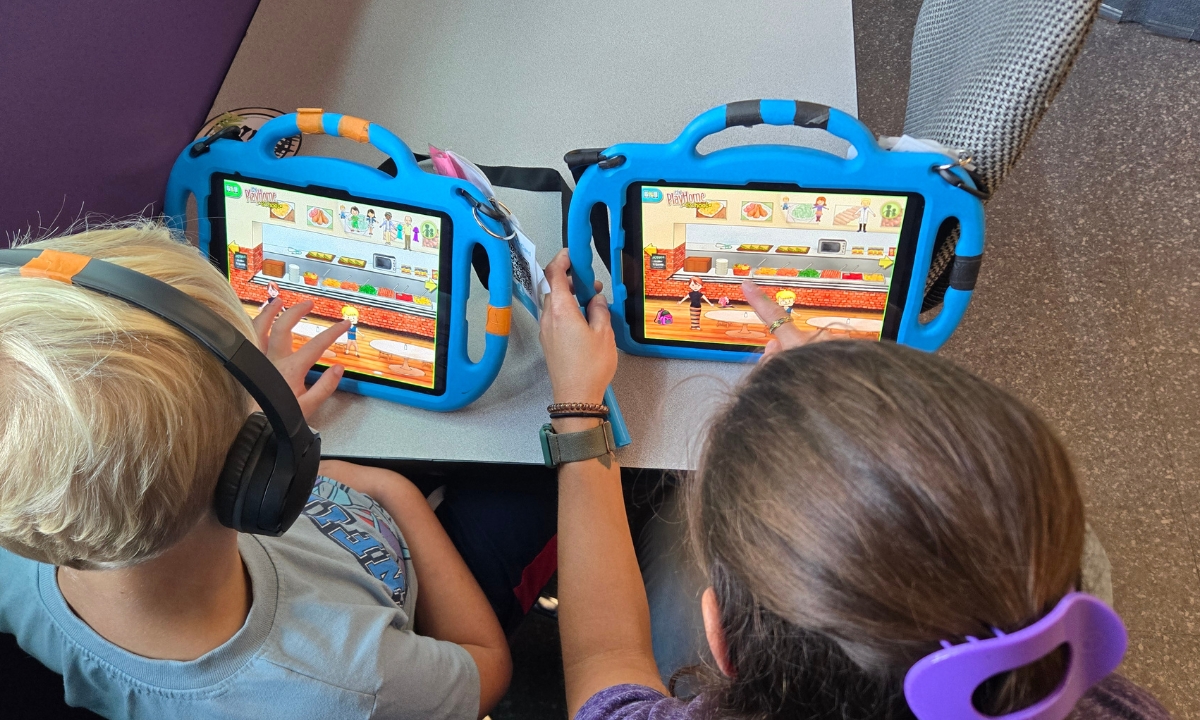 Andrew’s Gift, a nonprofit, provides technology and consulting support to classrooms serving students with autism in several Pennsylvania counties. (Andrew’s Gift)
A partner with PricewaterhouseCoopers, a financial services firm, Ward has tapped his network of business leader contacts to raise about $200,000 a year for Andrew’s Gift. The Philadelphia Education Fund, which has participated in the program for over 20 years, takes in about twice that much.
But the tax credit operates on a first-come, first-served basis. There’s also an annual, $590 million cap on how much corporations can claim. That means there’s stiff competition for the credits, and “the amount awarded is spread thin,” said Jackie Foor, executive director of the Consortium for Public Education.
The Pittsburgh-area nonprofit, which works to build connections between K-12 schools and the workforce, is among those exploring how the federal tax credit could support opportunities like pre-apprenticeships and afterschool STEM programs for kids whose parents can’t afford them.
The federal program has no limit on the number of taxpayers who will be able to claim up to $1,700 each year. An analysis from the American Federation for Children, a leading advocacy group behind the program, estimates that if Pennsylvania opts in — and 20% of taxpayers donate the full $1,700 — the program would raise over $2 billion in scholarships every year.
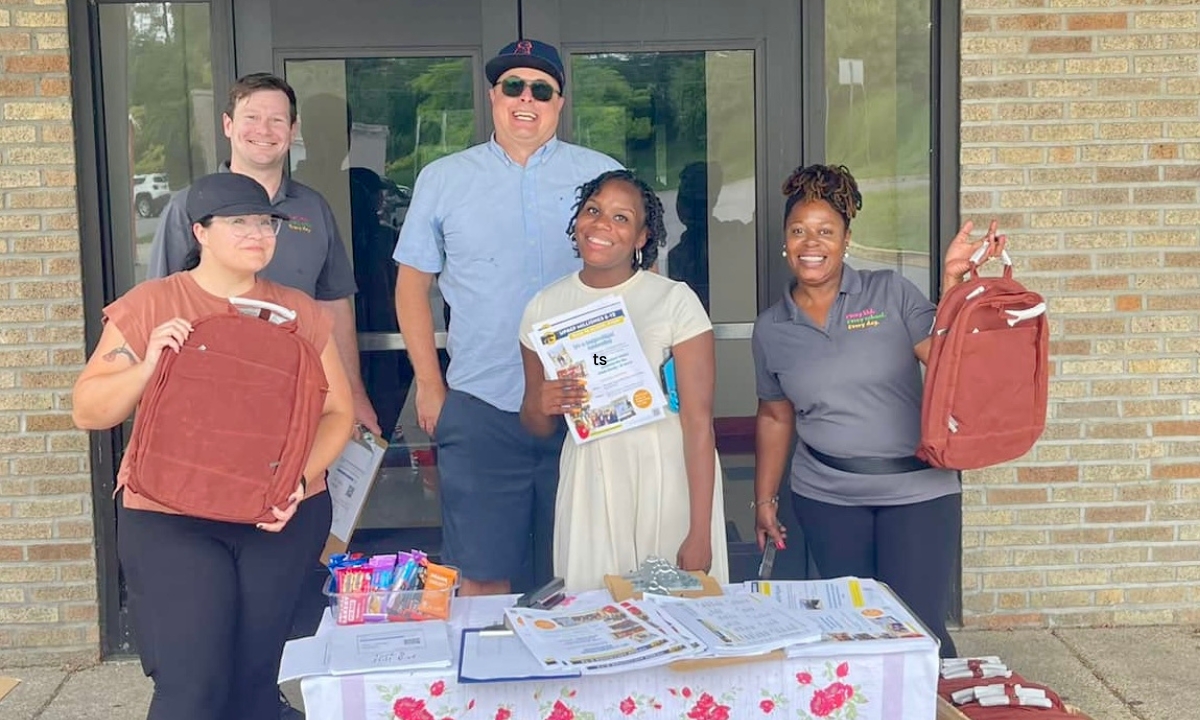 Distributing backpacks of school supplies to Pittsburgh students in high-poverty schools is one way A+ Schools uses donations from Pennsylvania’s Educational Improvement Tax Credit. (A+ Schools)
Donations to the program could make a big difference for nonprofits like A+ Schools, which supports Pittsburgh students in high-poverty schools. To help improve chronic absenteeism, the organization focuses on meeting students’ basic needs. Funds go toward resource rooms with washers and dryers, boxes of food for the weekend and gas money for parents who have extra room in their cars for kids who need transportation to school.
For a newer nonprofit in Pennsylvania’s program, it can be hard to “gain momentum” with donors, saidExecutive Director James Fogarty. Annually, A+ receives less than $10,000 from the tax credit program, but he would also like to offer tutoring, especially for students with dyslexia who need extra support.
“I would love to be able to give kids a scholarship for that,” he said.
Did you use this article in your work?
We’d love to hear how The 74’s reporting is helping educators, researchers, and policymakers. Tell us how