
Photo Kevin Barrett
Major League Soccer has announced the Philadelphia Union’s playoff schedule for its first round, a sixth seed versus third seed playoff series against the New England Revolution (click here). The key point is that all Union players called up for international matches during the November international break will have time, within reason, to recover from their efforts for their home countries’ senior teams.
Defensive midfielder Danley Jean Jacques has been called for Haiti’s two matches against the United States.
Goalkeeper Andre Blake has been called for Jamaica’s two matches against Mexico.
Center back Neil Pierre has been called for the United States’ two matches against Haiti.
Attacking midfielder Cavan Sullivan has been called for the United States’ two matches against Haiti.
During the break the Philadelphia Union will have 14 days between matches. Therefore it seems a good time to report some statistics from the just completed regular season. First, we mention the first the team as a whole. We then move to individual player achievements within the whole of Major League Soccer. We finish with statistics within the team itself.
Statistics: Philadelphia in the league
As far as we have been able to determine, the Philadelphia Union led the entire of Major League Soccer in the statistic called “expected goals.” We do not know how the statistic is calculated, and we only think we know what it may actually mean. Our best guess is the over-all quality of all its scoring chances aggregated together. Colloquially we would characterize XG as “should have scored ,” but that seems a bit unforgiving as a way to describe it.
League leaders
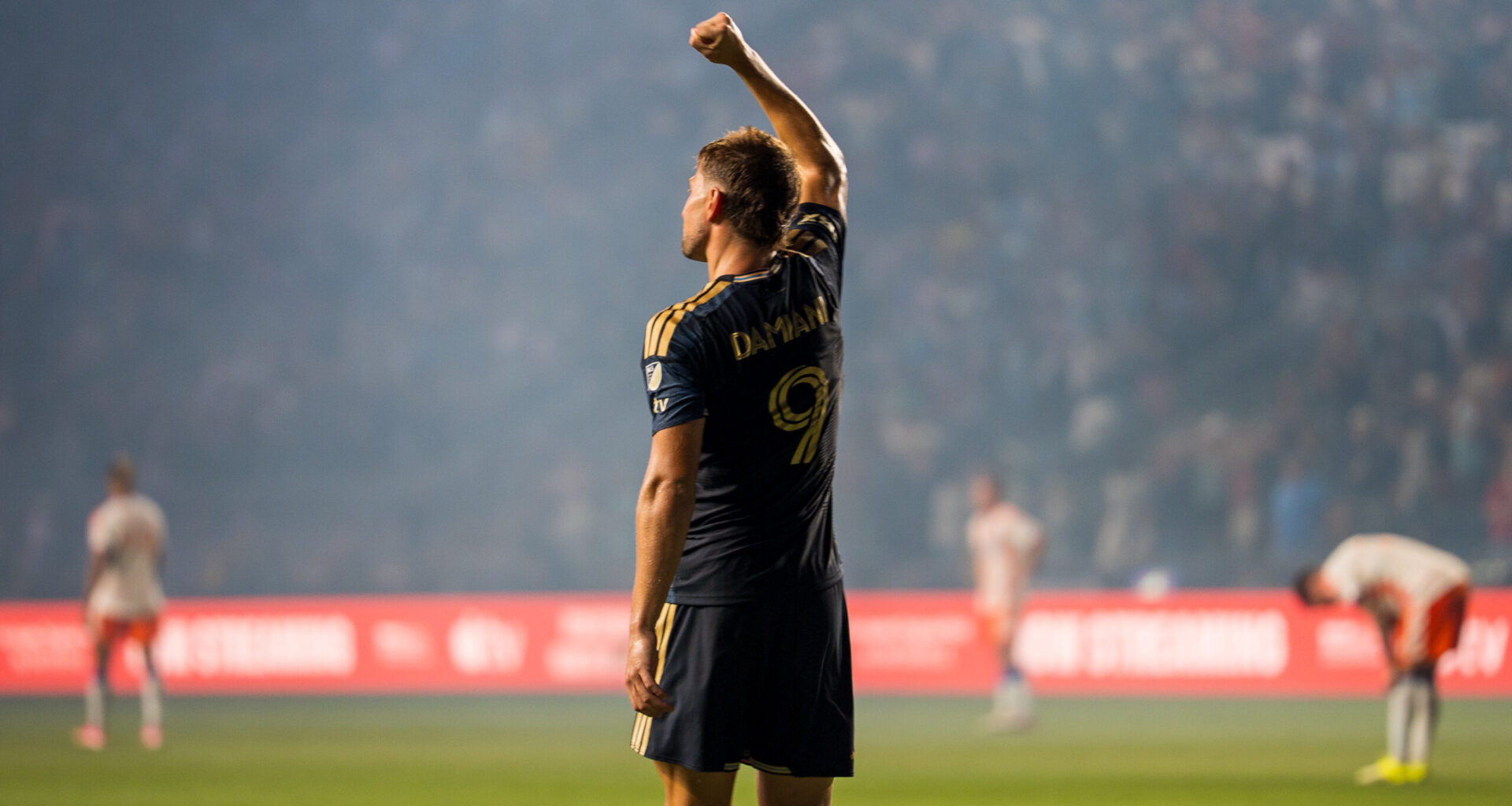
Three club players are among the league’s leaders. They are Bruno Damiani, Nathan Harriel, and Milan Iloski.
Damiani led the league in the raw number of aerial duels won with 219. His success rate in those duels was 48.4%.
Harriel is one of 28 players league-wide who started all 34 regular season matches. There are somewhere between 850 and 900 total players in the league at a rough estimate.
He is 10th in the league in total minutes played having not played only 27 of the 3,060 minutes available. (In theory stoppage time extra minutes make up minutes that were lost or unplayable during the match’s official 90 minutes, so only 90 minutes are credited per game.)
Iloski is fifth in the league in goals scored with 19.
He is second in the league in shots taken with 122.
He is fourth in the league in shots on target with 49.
We apologize that our statistical technique and computer skill do not allow us to isolate the two halves of the season into separate bodies of data. Such data sets would be useful to identify what might be called “the Richter effect,” both within the team for its overall season and against the rest of the league since it resumed play after the World Cup.
Season leaders within the club
We provide seven vertical charts below.
Goals
Assists
Key Passes
Shots on Target
Iloski — 19
C Sullivan — 14
Iloski — 53
Iloski — 49
Damiani — 13
Westfield — 11
Wagner — 50
C Sullivan — 31
C Sullivan — 9
Q Sullivan — 8
C Sullivan — 42
Damiani — 25
Pierre — 5
Iloski — 7
Westfield — 41
Q Sullivan — 15
Jean Jacques — 4
Vassilev — 7
Damiani — 35
Vassilev — 10
Vassilev — 4
Wagner — 6
Lukic — 31
Harriel — 8
Total Minutes
Appearances
Starts
Harriel — 3,033
Harriel — 34
Harriel — 34
Blake — 2,835
Damiani — 33
Blake — 32
Damiani — 2,595
Vassilev — 33
Damiani — 31
Jean Jacques — 2,574
Blake — 32
Iloski — 30
Iloski — 2,543
Lukic — 32
Lukic — 29
Lukic – 2,459`
Iloski – 31
Vassilev – 29
Jean Jacques – 29
Comments
Kai Wagner did what he did in literally half a season. Double his assists and key passes for the roughest of estimates of what he might have done had he played the full 34 games.
Neil Pierre did the same, but we doubt he would have doubled his goals as there was an element of surprise initially until warnings went around the league. Now he draws multiple defenders on set pieces.
Cavan Sullivan did most of what he did after the World Cup break, after Richter had “given him the keys” to run the offense to borrow a phrase Jim Curtin used long ago.
Had Milan Iloski not suffered injury at the end of the season he might have made 34 appearances with 32 or 33 starts.
Two non-statistical observations
First, it is extremely risky to set forth an hypothesis using a data set of two games. Were this paper one of mathematics, such behavior would be the height of intellectual irresponsibility.
That said, qualitatively by eyeball it seemed to us that Quinn Sullivan has established himself as the number three striker in coach Richter’s system of play. He integrates smoothly with Iloski and/or Damiani and provides more of an offensive threat than does Alladoh, Anello, or Jakupovic. And he defends from striker with great effectiveness.
The experiment needs further repetitions before conclusions can be drawn. But early results suggest the experiment should continue.
Second, Bruno Damiani is conforming to the pattern of many other players imported from foreign leagues to MLS in both the pattern and length of time it has taken him to realize success. The pattern has been especially true for players imported into Philadelphia. He has not become successful until 18 months after his arrival.
His example suggests that all must be patient with both Ezekiel Alladoh and Augustin Anello.
Usual professional conditioning levels are generally not sufficient upon arrival to enable success playing Philadelphia’s system particularly for attackers. Equally or perhaps more important, exploiting chaos faster than opponents require instant, instinctive recognition and adaptation to opportunities as they arise. Developing that takes time. Remember why Daniel Gazdag chose to arrive in Philly immediately after he had signed. He knew he needed to get started right away on the assimilation process.