
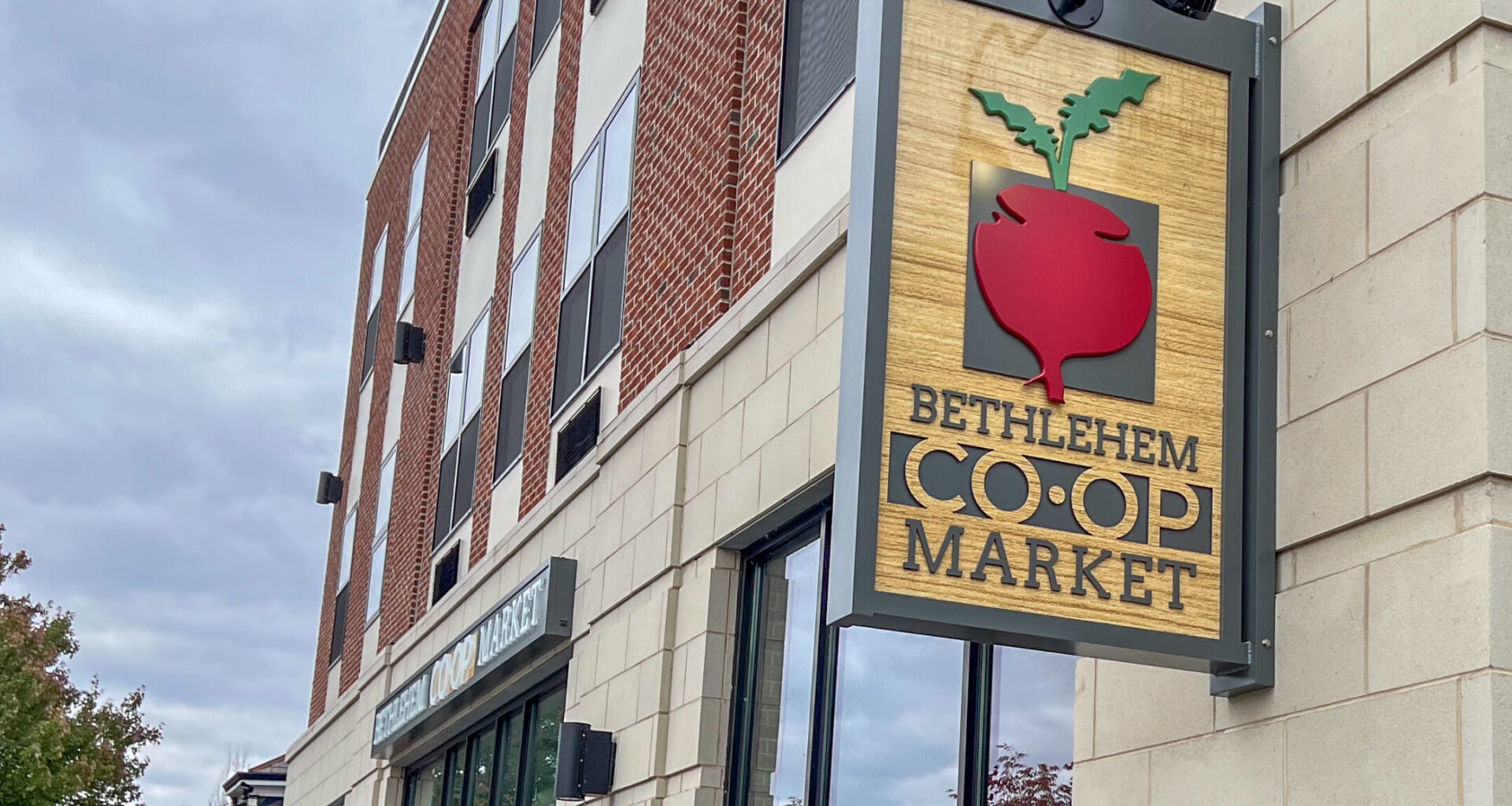
The Bethlehem Food Co-Op Market, a member-owned grocery store meant to bring locally-sourced food to the city, has yet to open despite it being a 14-year project.
Once scheduled to be complete in 2023, that date was pushed back to 2024 and then to October 2025. Construction and funding complications have prevented the store from opening, and its doors are still closed.
At a Bethlehem City Council meeting held on Oct. 21, Mayor J. William Reynolds said he believes the co-op has attained about 95% of its funding, but there have been moments of frustration with the market’s board seeking advice on how to complete the project without setting a final timeline.
Todd Mertz, the vice chair of the Bethlehem Co-Op Market’s board, said the delays reflect larger economic challenges facing similar community projects nationwide.
“Like many community-based projects, we’ve had to navigate significant cost increases and supply chain issues that began during the pandemic and were compounded by inflation,” Mertz said.
He also said the federal grant supporting the co-op is reimbursement-based, meaning contractors must be paid upfront before the store can get the money back. That repayment structure forced the organization to secure loans before construction work could begin, adding time and complexity.
The co-op’s final hurdle, Mertz said, is finding a specialized contractor to connect the store’s refrigeration system to its rooftop cooling unit — a niche task that few local contractors perform which has extended the timeline.
Despite the setbacks, Mertz said the co-op’s mission goes beyond logistics.
According to the co-op’s website, the market’s mission aims to build meaningful connections among suppliers, vendors and community members.
“Our mission is to enhance the physical, social and economic well being of our diverse community by providing as much access as we can to nutritious, affordable and locally sourced food, promoting community ownership and environmental stewardship,” Mertz said.
Board secretary Kali Gibson said the co-op’s four main goals are to increase access to fresh food, promote accessibility, support the local economy and serve the broader community.
Thawsif Chowdhury, ‘29, said limited off-campus options have made it difficult to shop for quality groceries.
Bethlehem contains neighborhoods considered “food deserts,” which includes much of the South Side where healthy and affordable food is limited.
Chowdhury said the store could help residents and students explore new foods and maintain healthy lifestyles.
“People need different choices,” Chowdhury said. “If there’s more suppliers, people will go to different shops.”
Gibson said the market also plans to make healthy food accessible by participating in federal and local food support programs, including the Supplemental Nutrition Assistance Program, Food Bucks and Food Rx, which helps people find healthy food options through prescription boxes and nutritional education.
However, she noted the market’s opening could coincide with potential disruptions to federal SNAP benefits. According to a 2023 American Community Survey, 10.3% of Northampton County households receive SNAP assistance.
Gibson also said research from the Centers for Disease Control and Prevention shows children with more access to nutritious food perform better academically and attend school consistently, which is something the co-op hopes to support.
Beyond food access, Gibson said the market aims to strengthen the local economy by creating jobs, supporting nearby farms and keeping money circulating within Bethlehem.
However, Mertz said the timeline for the market’s opening remains uncertain.
“Most co-op’s take, on average, 10 (plus) years from someone having an idea to turning it into a reality and opening a business,” he said. “We’ve been at it since 2011, and we’re now beyond that average”.