
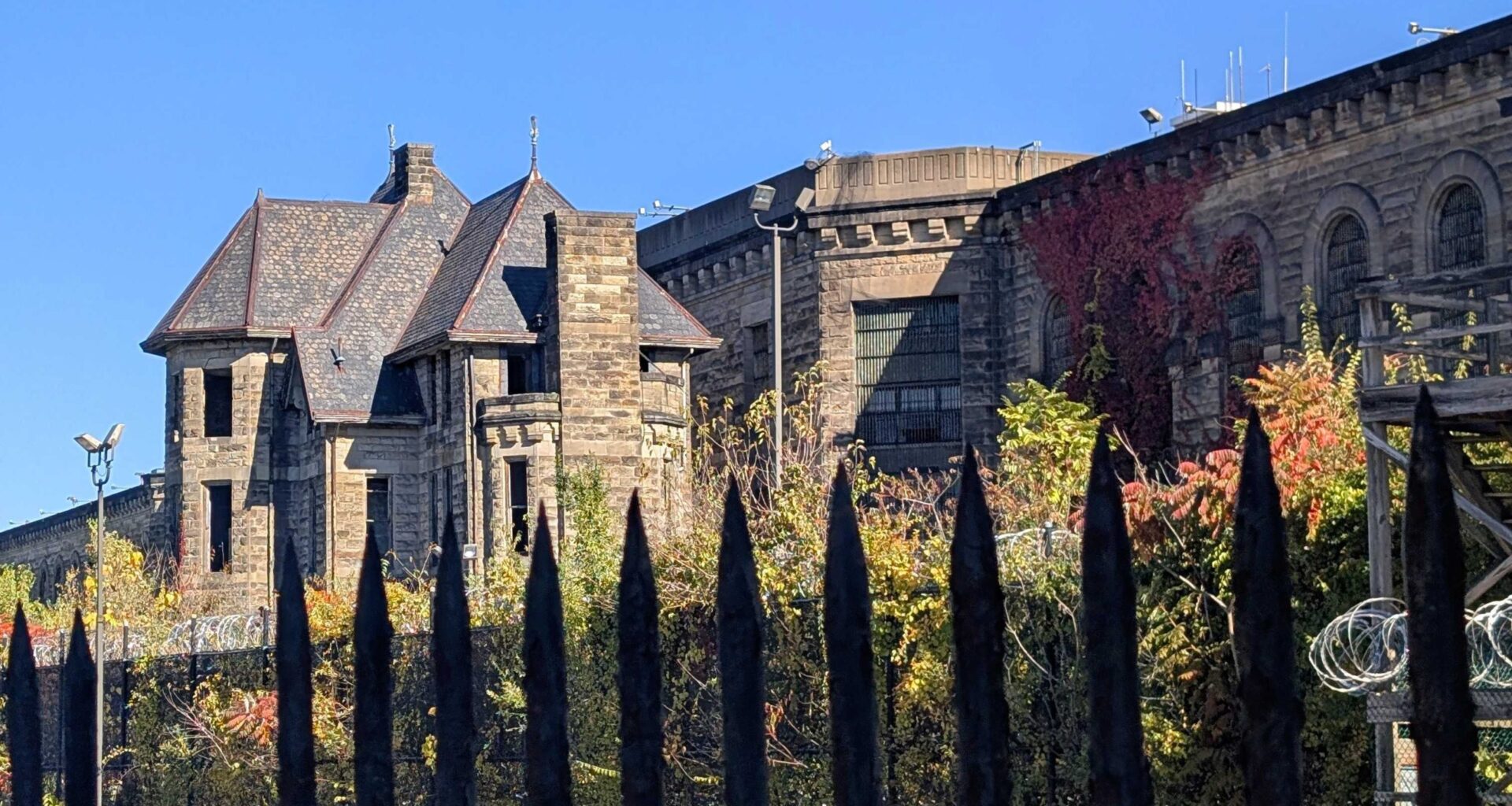
This is the final article in a series about Western Penitentiary’s history and impending demolition. Read the previous installments here.
Few Pittsburgh landmarks have as storied a history as Western State Penitentiary.
The North Side location’s 1827 opening was essentially an immediate failure. The prison would learn from its mistakes, become a global role model and move into “the most expensive and pretentious building” in America by the 1900s before entering a period of steady decline and inhumanity.
Amid it all, Pittsburghers called for the prison’s demolition. Their collective wish is set to be fulfilled by 2027.
In June 2022, the Pennsylvania Department of General Services (DGS) enlisted construction engineering company Michael Baker International to determine future uses for the site on Beaver Avenue in Woods Run.
A 2023 Land Use Feasibility Study, produced as part of the project, identified three potential site outcomes: keep the property as is, conduct a partial demolition to preserve key sites or fully demolish it.
“Based on their analysis, full demolition was recommended as the most viable approach to maximize the property’s development potential, marketability and value,” DGS spokesperson L. Paul Vezzetti writes in an email to NEXTpittsburgh. “This recommendation also reflected community feedback, which strongly favored removing all prison structures to enable a fresh start for redevelopment and job growth.”
Ahead of the Land Use study, Michael Baker collected feedback from local public and private sector leaders and community members. In one report, leaders of the Marshall-Shadeland Civic Group suggested the site should be razed since it is a traumatic symbol for many Black Pittsburghers. The group did not respond to multiple requests for comment.
Demolition is estimated to cost $43 million, Vezzetti writes. The 2023 Michael Baker study put it at nearly $50 million. According to the study, the annual cost for the property’s security is between $800,000 and $1 million.
The site’s imminent demolition is what spurred Doug MacGregor to write “Western State Penitentiary/SCI Pittsburgh: A History,” released in August.
MacGregor doesn’t like the idea of wiping the site clean; many other decommissioned prisons have been put to other uses, Philadelphia’s Eastern State Penitentiary among them.
“They’ve used that as a center for criminology studies, using it as a platform to promote human rights in prisons, as a forum for discussion about people and to talk about these kinds of things,” he says.
“Rather than being a symbol of pain and a horrible past, use it as a tool for the future.”
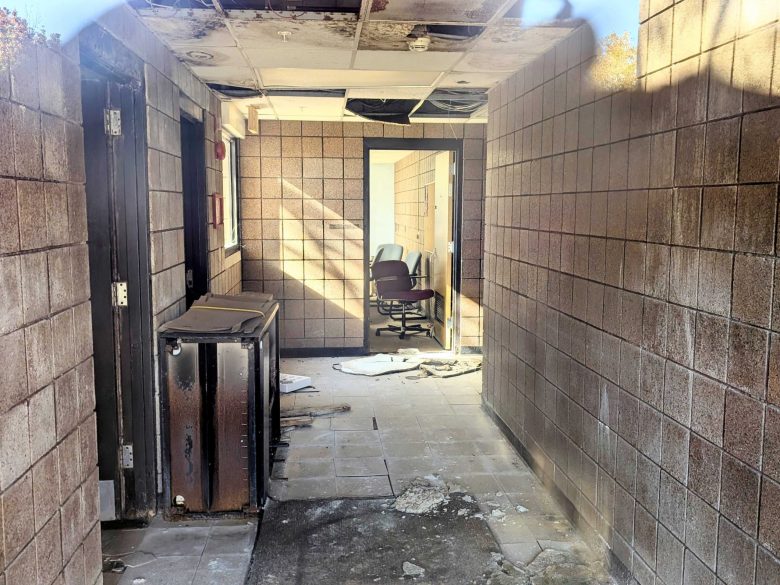 The interior of a modern portion of Western Pen seen through a glass door. This portion of the building was built throughout the 1970s and 1980s, and was abandoned in 2017. Photo by Roman Hladio.
Robert Faruq Wideman, who spent nearly 40 years in the stone prison blocks before his 2019 commutation, has previously spoken about its treacherous conditions.
He says it would be nice if it were a national landmark of sorts, but adds that it’s an odd question to ponder. In a few months, he’ll turn 75; he has never lived — nor will ever live — anywhere as long as he lived in Western Pen.
Realistically, it doesn’t make a difference to him.
“I’ve been expecting them to tear it down, but they haven’t done it yet,” he says.
While demolition has been on the table since 2023, the one thing currently holding it back is the film industry. Since Western Pen closed for the last time in 2017, it’s been used in various films and TV shows.
Chief among them is Paramount’s “Mayor of Kingstown.” Paramount has the site on lease through Dec. 31, 2025, according to DGS, meaning “The Wall” will stand for at least another month.
Show co-creator Hugh Dillon is a native of Kingstown, Ontario — a town with nine prisons — where the show’s first season was shot.
Several sites were considered when “Kingstown” left Kingstown, but after seeing Western Pen, the production team stopped looking.
“The architecture was stunning,” he says. “It’s so incredibly ominous. The structure of it was different than the ones that we had used for season one, and it was just bigger and meaner and darker and it had a great location by the water and the railway tracks.”
Paramount re-upping its contract would literally give the prison a new lease on life. Dillon wouldn’t give a firm answer one way or the other.
“They always upgrade the leases just depending on shooting and that’s just business, but right now, we have it, and that’s all that interests me,” he says.
“Things changed for us in Kingstown, and so we moved, and this institution is just exceptional for us. If things change, things change. You just pivot. That’s the nature of the business. But right now, everything’s rocking and I hope that it continues that way.”
Other local parties have more drastic reuse plans for the site.
Real estate developer Tom Tripoli envisions part of the restored penitentiary becoming a hotel, with space for an art gallery and museum. Then, by demolishing some of the newer structures in the middle of the property, he’d create Castle Courtyard RV Park — an amenity that currently can’t be found within city limits.
The 76-year-old South Side resident calls this plan “Save the Castle!” named for the castle-esque appearance of the penitentiary’s front house.
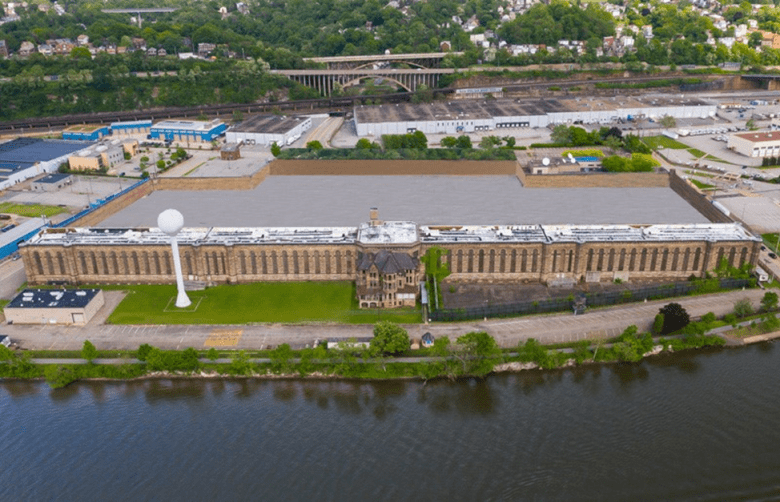 Tom Tripoli’s proposed plan for the Western State Penitentiary site would see many structures in the middle of the property demolished to make room for the Castle Courtyard RV Park. Image courtesy of Tom Tripoli via savethecastlepgh.org.
“My main mission was to save the property and have it redeveloped into something useful for the community,” Tripoli says. “I would be willing to do that, or if somebody else is willing to do it and has even a better plan, I would support that, but what’s hard to support is not getting any attention or consideration for a good plan.”
Tripoli is the force behind Angel’s Arms Condominiums — a project that turned the former St. Michael the Archangel Church into unique condos. He’s also a prominent property owner. Local institution The Beehive was in one of his storefronts.
To him, Western Pen’s rehabilitation would be a culmination of his life’s work.
Tripoli has sent five certified letters to Gov. Josh Shapiro, but none garnered a response. The governor’s press office says Shapiro “has been in contact with [Tripoli],” but deferred to DGS’ emails to NEXTpittsburgh for additional details.
He also says he’s spoken to current Mayor Ed Gainey, Mayor-Elect Corey O’Connor and state Sen. Wayne Fontana and Jay Costa about his plan, but none have provided letters of support.
Fontana was the only one to respond to multiple requests for comment. He’s in favor of the site sale as-is, since it would relieve the state of its annual operating costs and the demolition’s associated expenses.
Plus, even if the site were razed, its processing and sale would not occur quickly.
“You’ll be years down the road before anything happens there, and in the meantime, you spend all this money there, where these folks are going in and probably within a year to two years will have something going there,” Fontana says.
But Fontana says Tripoli’s proposal sought some state assistance for the project — something DGS has made clear they will not provide. Tripoli tells NEXTpittsburgh his project would be entirely privately funded.
The property has also drawn the attention of Anthony Jordan, the vice president of Morgantown-based demolition and asbestos abatement company SafeCo.
“Nobody has ever come up with a plan that creates jobs and creates their own revenue without any state assistance besides [the Jordan family],” he says. “And not only did I create a plan to do so, I already have done it.”
The Jordans are the force behind the Trans-Allegheny Lunatic Asylum in Weston, West Virginia. They purchased the former psychiatric hospital in 2010 and have since turned it into “a historical and paranormal attraction.”
His current site plans are to save The Wall, the warden’s house and the main gate. He envisions parts of these spaces open to public and student tours if or when they’re restored. The fate of other buildings on the property is up in the air.
Fontana adds that Jordan’s connection to an asbestos removal company is, on paper, a leg up.
The state’s concern, Fontana speculates, is that a buyer would claim they’d remediate the site, but then would fail to do so, and the responsibility — and cost — would fall back on the state. To ensure that doesn’t happen, he thinks a buyer would have to indemnify the state should losses occur after the sale.
Any sale hinges on legislation that would approve the property transfer, within which all those details would be finalized, Fontana says.
Still, the Jordan family’s future at Western Pen remains uncertain.
“I need the state to allow me to purchase the property,” he says. “Right now, it’s marked for demolition. We need to get out of that. If I can … put a proposal together — which is what we’re drafting now — then I just need them to accept it and not tear it down.”
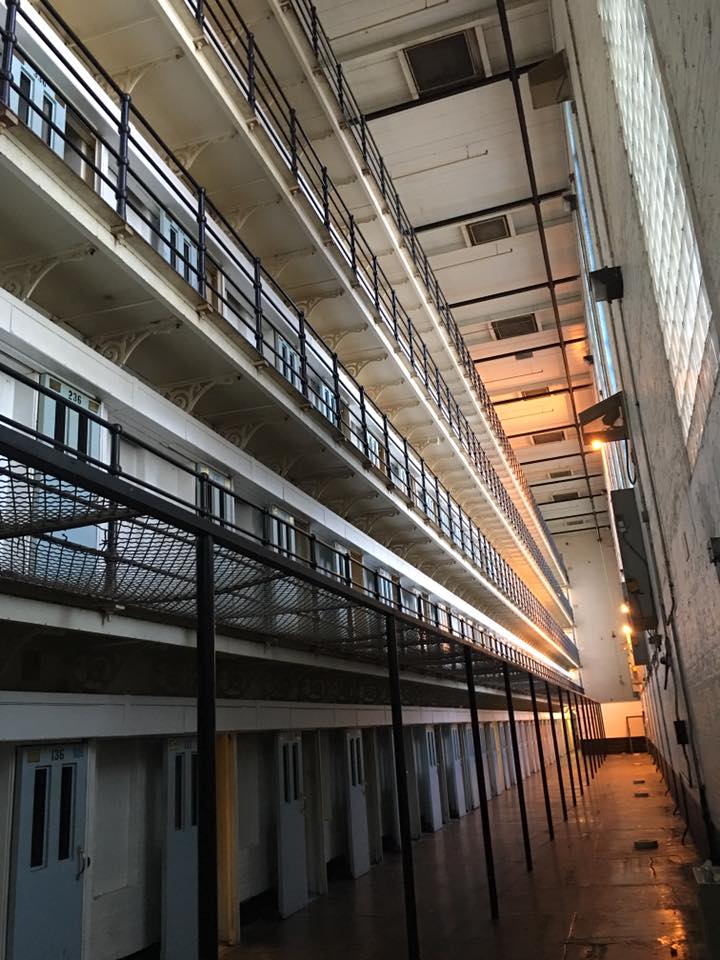 A row of cells inside Western State Penitentiary after its permanent closure. Photo by Doug MacGregor.
DGS spokesperson Vezzetti writes that DGS is “aware of general interest in the property,” but that it will be sold through a competitive bidding process once demolition is complete.
“While other reuse proposals have been suggested, the Land Use Study and the General Assembly’s legislation establish that demolition and competitive sale provide the most feasible path forward,” Vezzetti writes.
Tripoli says that demolition would leave it to languish like any other unused brownfield site, of which Allegheny County has 276, according to reporting by Pittsburgh’s Public Source.
“I really have no idea why they wouldn’t consider a valid restoration of the property that would provide all these benefits,” Tripoli says. “They’re going to spend $40 [million] to $50 million demolishing a building that, even if they sell the lot, what’re they going to get? One million dollars back? That’s wasted money.”
While historians, photographers and urban explorers have been allowed into Western Pen in the past, DGS did not permit a visit for NEXTpittsburgh. Tripoli says DGS gave him and Jordan a tour at the beginning of October.
It’s been about 50 years since Wideman first set foot in Western Pen. Through those years, he tried escaping, started taking drugs, went clean, got his GED, made friends and lost others.
That building is full of memories. Good and bad. Inseparable. Every day, he woke up with hope that he’d get out.
But if Western Pen reopened somehow, would he go visit?
“To see it?” Wideman says after a long pause. “I guess so. I have no clue what it must look like.”
“I have some fond memories, but whether they keep the building? It ain’t the building that I have those hopes in, it’s those experiences.”
Load more posts
Something went wrong. Please refresh the page and/or try again.