
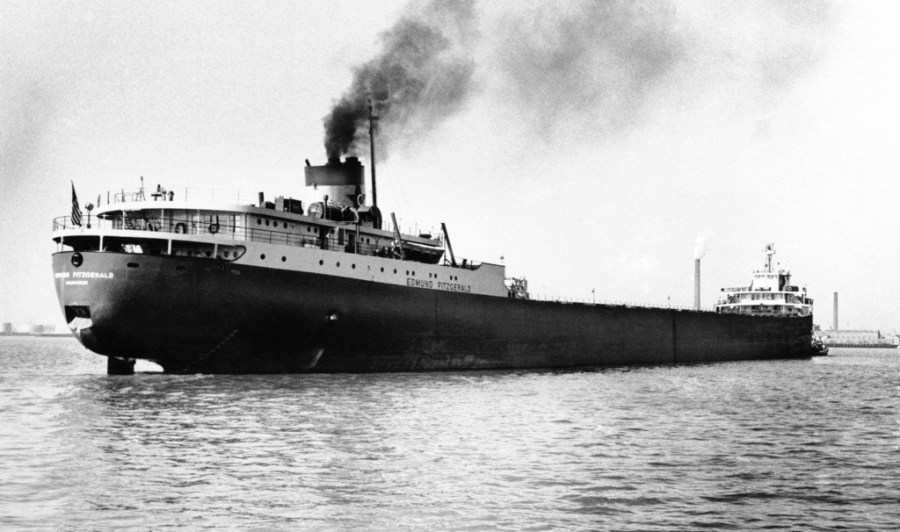
BUFFALO, N.Y. (WIVB) — The 50-year mark of the most well-known Great Lakes shipwreck just passed on Nov. 10, 2025 – the wreck of the Edmund Fitzgerald. It has gained popularity in recent years, allowing for more research to be done into the wreck.
On the afternoon of Nov. 9, 1975, the Edmund Fitzgerald, then the largest Great Lakes freighter ship until 1971, departed Superior, Wis., loaded with 52,000 pounds of iron taconite pellets. It was headed for a steel mill near Detroit.
The day after its departure, a severe storm hit, in this case called the gales of November.
A gale refers to a sustained wind between 39 and 54 miles per hour. The evening of Nov. 10, wind gusts reached as high as 75 knots, or 86 miles per hour. It happens in November, or late autumn, due to colliding air masses from the warm, moist south and the cool, dry north.
A strong low-pressure system swept across Lake Superior, bringing with it rain, then a drop in temperatures that brought freezing rain and snow squalls, making weather conditions on the lake treacherous. Waves of over 25 feet high were inevitably what caused the ship to break in half and wreck at around 7 p.m. the night of the 10th.
Photos: First snowfall of the season in Western New York
In theory, with the same weather pattern and the same timing, would the same outcome have happened if the freighter were on Lake Erie?
With the same northwesterly gale-force wind on the much smaller, much shallower Lake Erie, the waves would have been shorter than the ones on Superior, but much steeper and choppier. The ship would have been pounded by the waves more frequently, but would have taken less damage.
Lake Erie has an average depth of 62 feet, making it the shallowest of the Great Lakes. This also creates the potential for the storm to become more violent in less time, because less momentum is needed to make the waves thrash around. But, even then, at Lake Erie’s highest wave energy through a storm, it would not match the wave energy of Lake Superior.
Shallower water limits how big the waves can get, so it is possible that the Lake Erie waves would not have broken the ship in half like it did on Superior.
See the Buffalo and Western New York weather forecast here
As far as rescue efforts go, the warmer waters of Lake Erie may have given the Coast Guard more time to save any survivors. They only had about 10-15 minutes in the frigid waters of Lake Superior. If Erie were about 50 degrees, which is average for Nov. 10, it would have given the crew about an hour.
With more coastal cities and towns on Lake Erie, search and rescue may have been easier with more Coast Guard availability.
Overall, given the conditions and circumstances on Lake Erie, heavy damage may have been done to the ship, and crewmates may have been injured from the rolling, but it is unlikely that the ship would have wrecked on Lake Erie in the manner that it did on Superior.
Latest Local News
Sara Stierly is a meteorologist who has been a part of the 4Warn Weather team since 2025. She is a graduate of Penn State University. See more of her work here.
Copyright 2025 Nexstar Media, Inc. All rights reserved. This material may not be published, broadcast, rewritten, or redistributed.
For the latest news, weather, sports, and streaming video, head to News 4 Buffalo.