
By Jack Tomczuk
Abortion rights advocates and reproductive health care providers want City Council to do more to safeguard access to the procedure in Philadelphia, amid ongoing funding challenges stemming from President Donald Trump’s administration policies.
Other takeaways from City Council’s Thursday session include: Legislation mandating businesses charge a paper bag fee became law without Mayor Cherelle Parker’s signature, and a bill was introduced to tighten regulations on ‘absentee’ landlords.
Abortion push
Lawmakers passed a resolution, without opposition, recognizing Human Rights Day (Dec. 10) and “celebrating abortion access as a human right.”
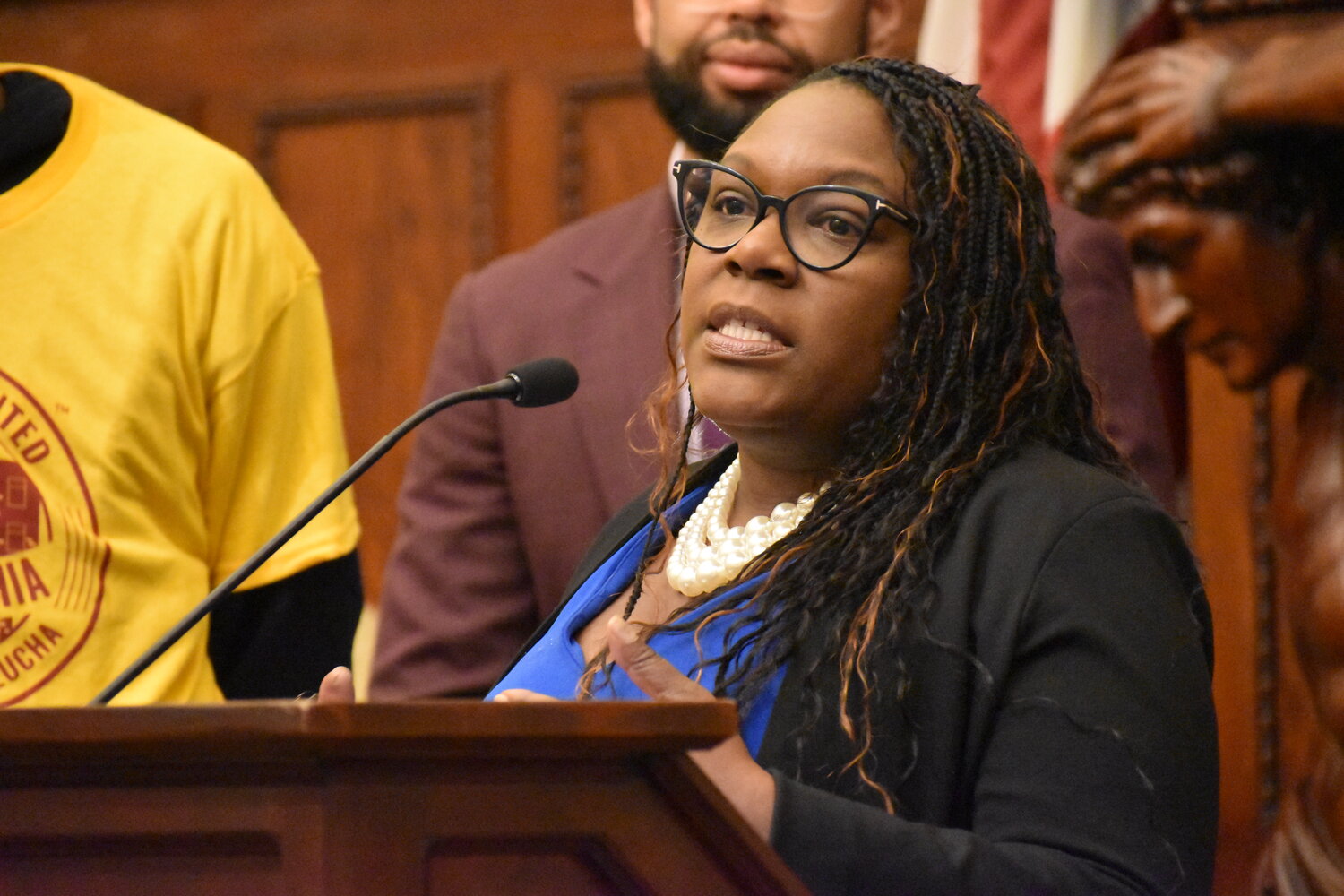
But advocates used the measure, a mostly ceremonial gesture introduced by Minority Leader Kendra Brooks, to press for a hearing on the issue and the restoration of City Hall funding for Planned Parenthood and other organizations.
Brooks ushered through a resolution in mid-September authorizing a committee meeting to examine federal threats and local challenges to reproductive health care; however, the hearing has not been put on the body’s calendar, and her staff say they have had no luck in trying to schedule it.
In 2022, Mayor Jim Kenney allocated $500,000 to the Abortion Liberation Fund of PA, two months after the U.S. Supreme Court overturned Roe v. Wade, ruling that there was no constitutional right to abortion.
Since then, the city’s budget has included a line item for the fund, Planned Parenthood and other groups, but no dollars were incorporated into the fiscal year 2026 budget, which went into effect July 1.
Being left out of the most recent municipal budget was “an unexpected blow to providers, patients and advocates,” Brooks said at Thursday’s meeting,
Two months ago, a court permitted the Trump administration to enact a plan to block Medicaid payments to Planned Parenthood, though the decision is subject to ongoing litigation.
“We’ve been shielding patients from harm by covering the cost of Medicaid to ensure our community has access to life-saving care,” Planned Parenthood clinician Katharine Kennedy testified Thursday. “But this is unsustainable.”
Ananya Rajagopalan, a University of Pennsylvania doctoral student, asked lawmakers to move forward with the hearing and funding. She said her research focuses on using data to predict and prevent a variety of women’s health conditions.
“If there’s one resounding takeaway from the work that I’ve done so far, it’s that, given how historically understudied and underserved these conditions are, every dollar matters,” she said.
Bag bill
Amid speculation about a possible veto, Mayor Cherelle Parker returned the paper bag fee legislation to Council without her endorsement.
The move allows the new rule to become law, leaving no need for the procedural hurdle of potentially overturning a veto. It passed Council in a 10-5 vote on Oct. 30.
Parker, in a letter to lawmakers, states that she supports the environmental goals of the measure but remains “concerned with some of the unintended consequences this legislation could have for our local economy and low-income Philadelphians, especially our communities of color.”
Under the ordinance, retailers, grocery stores and other shops will be required to charge customers at least 10 cents per paper bag. City Council outlawed single-used plastic bags in 2019.
Excluded from the mandate are paper bags used for delivery, drive-through and take-out food orders. Businesses will retain the fee revenue.
Though many supermarkets already tack on a bag fee, current city regulations do not require it.
Councilmember Mark Squilla, the bill’s sponsor, has maintained that the legislation is designed to encourage shoppers to bring their own reusable bags, thus avoiding the extra charge
“We can still work with people if they feel like they don’t have reusable bags,” he told reporters Thursday. “Happy to work with them to be able to provide them.”
As written, the bill instructs businesses to post signage about the changes within 30 days and begin charging the fee within two months, though Squilla said is open to collaborating with the Parker administration on an enforcement date.
Landlord legislation
Landlords may soon have to provide more detailed contact information and hire a Philadelphia-based agent to interface with city officials, if lawmakers approve a proposal introduced Thursday.
Councilmember Anthony Phillips asserts that his legislation will hold property owners accountable, particularly those residing outside of the city. Oftentimes, when there is a code violation, inspectors and tenants are unable to reach the owner, he said.
Any landlord who does not live or operate a place of business at their building would be required to register their phone number and address with the Department of Licenses and Inspections. Post office boxes and mail drop locations will not be accepted.
In addition, landlords would need to designate a “local agent” or property manager who lives or works in Philadelphia and can receive notifications and act on behalf of the property owner.
Violators could face fines, and tenants would be able to use noncompliance to withhold rent and fight an eviction case.
“I want to be clear that we are talking about landlords that are irresponsible,” Phillips said. “We’re not talking about every landlord because many of our neighbors who live in our communities are great landlords.”
Keywords
Abortion rights,
Planned Parenthood,
Reproductive health,
City Council,
Philadelphia