
Pennsylvania American Water filed a request Friday with state regulators for rate hikes ranging from $120 to $240 more per year, depending on whether a customer gets water or wastewater service or both, according to a company announcement.
The rate increases, filed with the Pennsylvania Public Utility Commission, on typical customers would include:
• Water: $168 a year ($14 per month).
• Wastewater: $120 a year ($10 per month).
• Combined water/wastewater: $240 a year ($20 per month).
If approved, rate hikes would take effect in August 2026.
The announcement said the increases would support $1.2 billion in ongoing water and wastewater service system investments through mid-2027 for more than 2.4 million people served statewide; as well as a new summer wastewater billing adjustment and a renter assistance pilot to expand an existing affordability program.
“These investments directly benefit the communities we proudly serve and provide our customers with even more reliable service and improved water quality — from treatment to the tap. It all underscores every employee’s commitment to the health and safety of our customers and the communities we serve,” PAW President Justin Ladner said in a statement.
The investment will replace 117 miles of aging water main, continue eliminating lead service lines, and address emerging contaminants such as PFAS in drinking water; and also support critical wastewater system upgrades, including replacement of 32 miles of aging sewer mains.
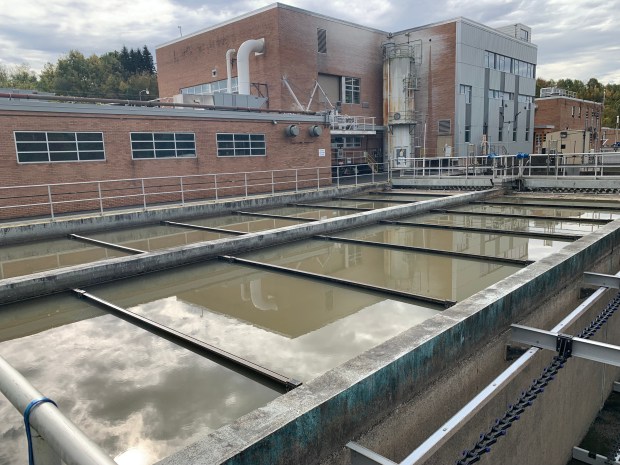 Pennsylvania American Water hosted a tour Friday, Oct. 17, 2025 of the Scranton Wastewater Treatment Plant for local officials, environmental partners, community stakeholders and members of the media. (JIM LOCKWOOD / STAFF PHOTO)
The rate request also includes:
• A “deduct adjustment” that calculates summertime wastewater charges based on a customer’s average winter water usage when outdoor use is typically low. The adjustment excluding seasonal outdoor uses such as lawn watering and car washing would provide a more accurate representation of water entering the wastewater system. “This proposed adjustment allows customers to manage summer wastewater charges by accounting for outdoor water use,” Ladner said. “It’s a change that can lead to real savings for many customers.”
• A Renter Assistance Pilot Program (RAPP) to support low-income renters in master-metered buildings who are currently excluded from traditional utility aid. The pilot program would provide quarterly stipends for participating customers in Scranton and Butler, reflecting the company’s existing discount levels.
All rate changes require approval from the PUC. Its review process offers several opportunities for customer involvement, through advocacy organizations that participate in the proceedings and by submitting written comments and attending public input hearings.
A water company rate hike request in November 2023 generated a deluge of widespread opposition from area legislators, residents and the municipalities of Scranton and Dunmore, as well as numerous complaints about water quality and service.
In July 2024, the PUC slashed the big rate increase sought by PAW by over $100 million, or more than 50%, and launched an investigation into the company’s water quality and service in its Northeast Pennsylvania territory. This area includes the counties of Lackawanna, Luzerne, Schuylkill, Wyoming, Susquehanna, Wayne, Pike, Monroe, Carbon, Lehigh and Northampton. In these counties, PAW has 36 water systems, each with their own operating characteristics and raw water quality, and the largest of which is Scranton’s water system.
A PUC report dated May 7 and issued Aug. 5 on the investigation said it did not find any systemic problems, but identified localized issues involving breaks of old pipes and levels of chlorine and the mineral manganese in water. At the time of that report, the water company had already implemented or completed projects to address these matters. The report called for continued monitoring over the next three years of PAW’s northeast service area.