
It’s ‘infectious’
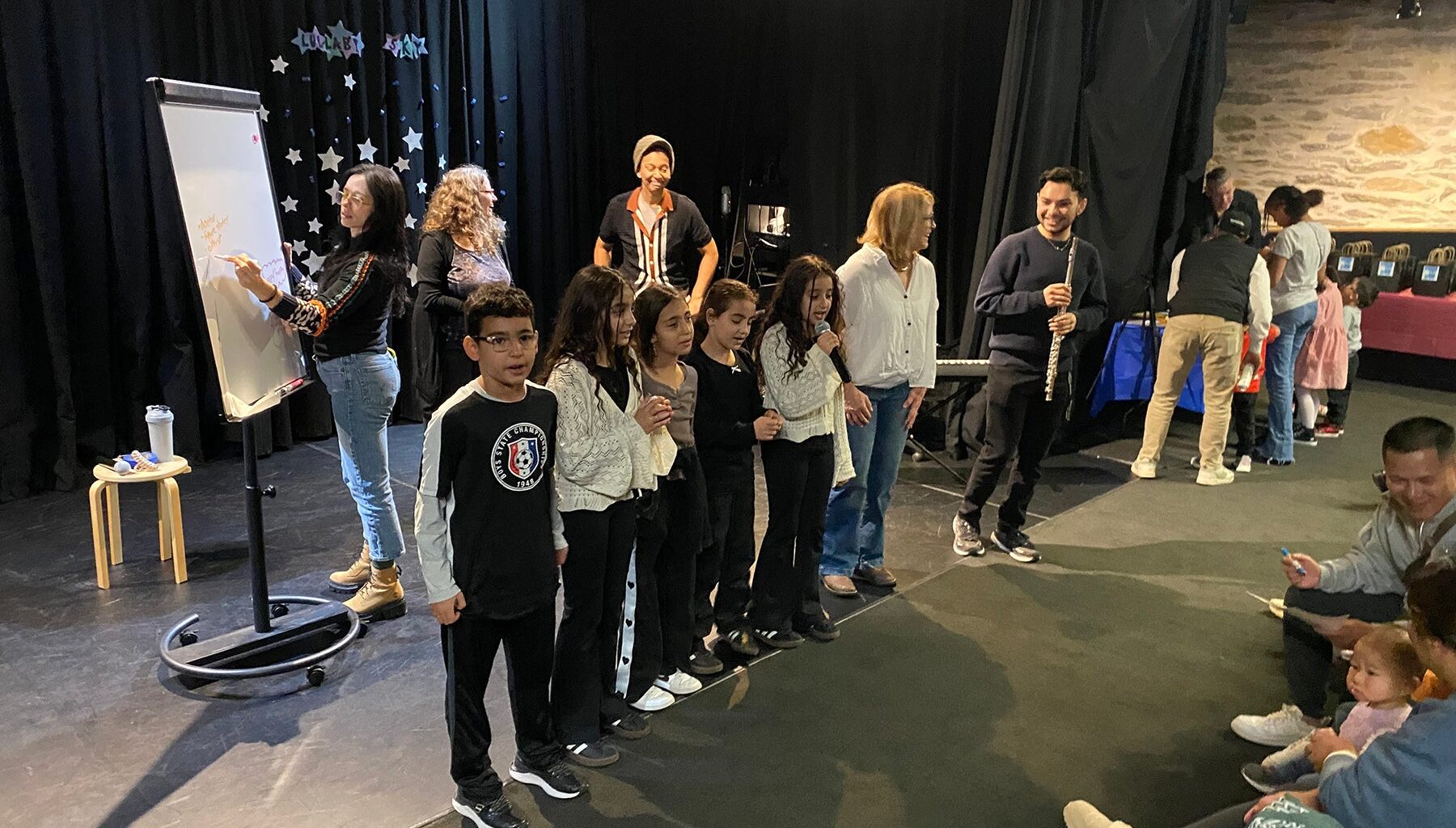
This is the second time that Musicopia has come to the Please Touch Museum for the Lullaby project. Sean Evans, the Please Touch Museum’s Museum Learning Coordinator, called the program infectious.
“It’s almost, like, hypnotizing,” Evans said. “You don’t even know you’re reaching that state. It was so funny. We were just humming and singing, repeating words, and then they started incorporating body movement, and the next thing you know, I’m doing things with my hands. I don’t even know what I’m doing, but this feels so wonderful. It really is just such an incredible program.”
Musician Lia Manaker, who played the piano, has worked with the program before, but was excited to share it with her 3-year-old daughter for the first time.
“I love how people can surprise themselves, that they can write a song that speaks to them, that feels like a real song,” she said. “I’m hoping that the process of creating and making music connects the people in a way where they feel like ‘I can do this.’”
Nathan Rifenburg, Musicopia’s program director, said that parents often come into the room a little self-conscious.
“At first they’re like … ‘I don’t know. I’m not really musical. I don’t think I can do that,’ he said. “But I think as they discover that connection that they actually then have, and there’s this way to express their love and a format that is really vulnerable for them.”
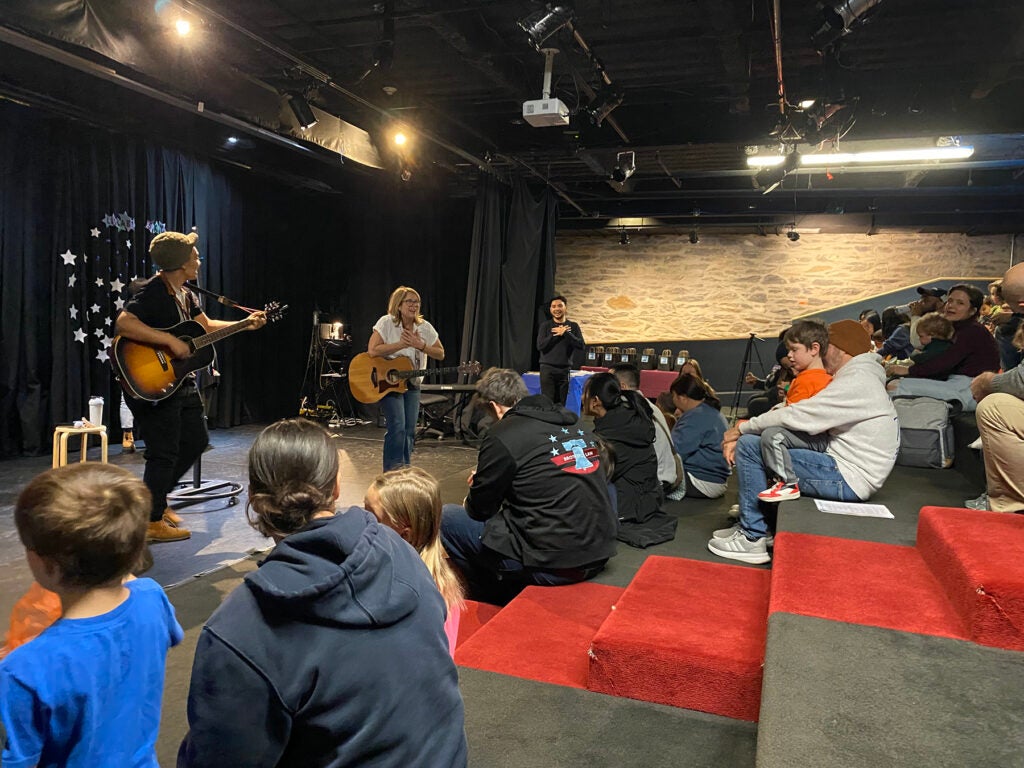 Lyrics for the original song included aspirations that parents had for their children, including “Be strong” and “Know your Worth.” (Julia Binswanger/ Billy Penn)
The Lullaby Project is backed by the William Penn Foundation. Rifenburg believes in the program not just because it is fun — which it is — but also because of how music can be vital for childhood development.
“We understand the research about the way that music can help with anxiety in children,” he said. “Music helps foster language in children. There are just so many studies [about] the benefits of doing music. But even for them to just have a moment to sit with a percussion instrument and bang, you know, it’s a very something within us that feels good.”
Music and its impact on young minds
A 2020 study from the University of British Columbia backs up Rifenburg point. The research, which looked at more than 110,000 students, found that kids who get involved in musical education, like band practice, dance class or chorus, were often academic overachievers. They also tended to gain higher scores on exams in multiple subjects, such as English, math and science exams, than their nonmusical peers.
“Caregivers are the first educators of young children, and that music is such an important part of that early brain development and function,” Rifenburg said. “It doesn’t have to be that you’re playing some Mozart … It could be singing a silly song. It could be a ‘Wheels on the Bus,’ and it’s okay to share that with your child, even if you’re not the best singer.”
Talukder echoed this sentiment.
“It’s so important to take time to sing songs with your kids,” he said. “Or, get them some toy instruments and just let them kind of jam out. You don’t have to wait until they go to school, or you want to get them a private music teacher. You are their first teacher, so go teach them.”
Editor’s Note: This story is part of a series that explores the impact of creativity on student learning and success. WHYY and this series are supported by the Marrazzo Family Foundation, a foundation focused on fostering creativity in Philadelphia youth, which is led by Ellie and Jeffrey Marrazzo. WHYY News produces independent, fact-based news content for audiences in Greater Philadelphia, Delaware and South Jersey.