
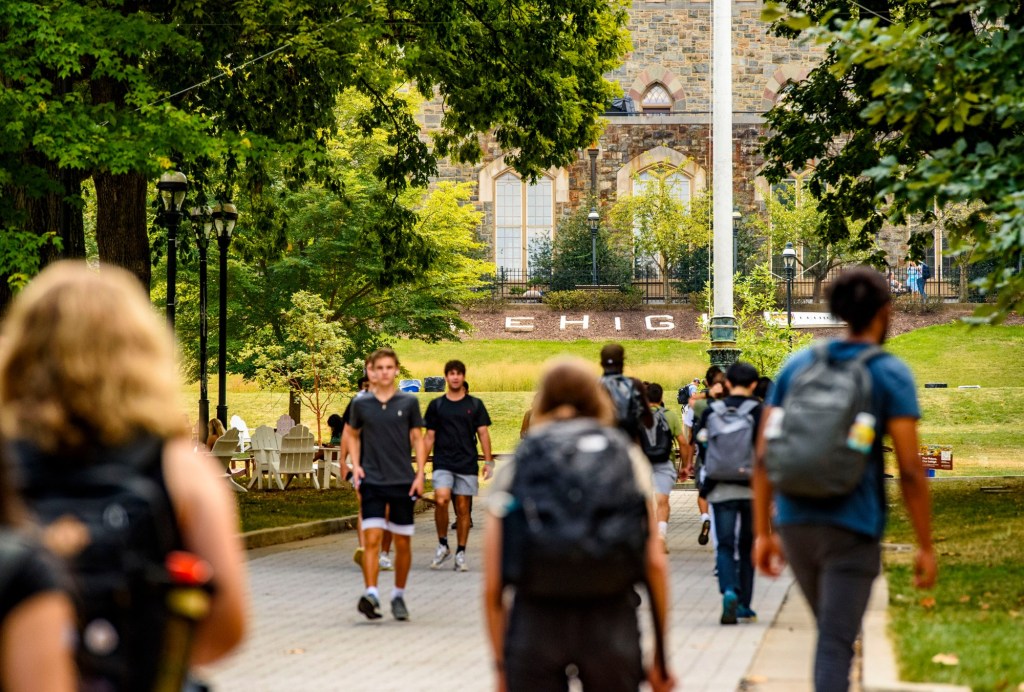
The Lehigh Valley likes to introduce itself with trucks, steel and logistics. Still, its real long-term engine is quieter: a dense constellation of colleges and universities shaping the region’s culture, workforce, and economic resilience. Lehigh, Lafayette, Moravian, DeSales, Muhlenberg, Cedar Crest, Penn State Lehigh Valley, Northampton Community College, Lehigh Carbon Community College, and others do far more than educate 18- to 22-year-olds and graduate students. They function as anchor institutions: rooted, durable, and generative in a way footloose corporations rarely are.
Start with the numbers, because even the romantics among us should understand the balance sheet. A recent analysis by the Association of Independent Colleges and Universities of Pennsylvania found that independent institutions in the Lehigh Valley support more than 15,800 jobs and generate over $2.2 billion in annual economic impact, including upwards of $119 million in state and local tax revenue. Lehigh University alone recently reported a $1.4 billion comprehensive economic impact, about 3.1% of the region’s total output. For a region with a roughly mid-$50 billion gross domestic product, that is not a “nice extra.” It is structural.
But if we talk only about dollars, we miss the real story. These campuses import curiosity and export capacity. Thousands of students arrive each year from across Pennsylvania, the Northeast corridor and the globe. Many stay. They become engineers designing medical devices in Hanover Township, nurses staffing St. Luke’s and Lehigh Valley Health Network, entrepreneurs opening restaurants in Easton, arts leaders at Miller Symphony Hall and Touchstone Theatre, and teachers in Allentown, Bethlehem and Easton schools. The Valley’s ability to tell companies “we have the talent” rests heavily on the laboratories, studios and classrooms of our higher education institutions.
They are also cultural powerhouses. On any weeknight, you can hear a world-class string quartetat Lafayette, a choral masterwork at Moravian, a provocative play at DeSales, an edgy studentfilm at Muhlenberg or a public lecture at Lehigh on artificial intelligence, election law, or climate policy. These are not cloistered perks for insiders; they are open doors — often free or low-cost — that give residents access to the kind of cultural and intellectual life that many regions our size can only glimpse when driving to New York or Philadelphia. The Valley’s self-confidence as more than a former steel town is reinforced every time a family sits in a campus theater, every time a teenager hears a scientist or activist and thinks, “I could do that.”
Educationally, the mix is a secret advantage. Prestigious research institutions sit a short drive from small liberal arts colleges, health sciences programs and two-year community colleges with deep ties to local employers. Lehigh Valley Association of Independent College’s collaborative model of cross-registration, shared libraries, and joint programs quietly multiplies opportunity. A Cedar Crest student can tap labs at Lehigh; a Moravian student can take a Muhlenberg course in theater or public health.
Community colleges and Penn State Lehigh Valley provide affordable on-ramps and mid-career reskilling in a labor market that can punish workers without postsecondary credentials. This ecosystem makes higher education less a gated privilege and more a regional utility.
Financially, these institutions are among the Valley’s most reliable “sticky capital.” They do not relocate for a marginal tax break in another state. They maintain payrolls through economic cycles, invest in construction and infrastructure, and purchase goods and services from local businesses. For every family anxious about tuition — and that anxiety is real —there is a parallel truth: institutional aid, local scholarships and transfer pathways keep thousands of students in the Valley who might otherwise be shut out of college entirely. The return on that investment comes in the form of lifetime earnings, homeownership, civic leadership and philanthropy that recirculates close to home. An individual with a higher education degree is far more likely to be a lifelong learner and a discerning citizen.
Yet we risk taking all of this for granted. Culture-war attacks on higher education, reflexive cynicism about “elites” and legislative indifference to public and nonprofit institutions flatten the distinction between our local campuses and caricatures drawn from cable news. The Lehigh Valley cannot afford that mental laziness. When we undermine our colleges, we are not “owning” some distant ivory tower; we are weakening our talent pipeline, our innovation capacity and our civic fabric.
The task now is not simply to defend these institutions, but to double down on partnership. Local governments should see colleges as co-strategists in transit, housing, and downtown revitalization. Employers should be in their classrooms and advisory boards, shaping programs that meet real workforce needs, and then hiring locally. Philanthropists and alums should target scholarships that tether promising students to the region. And the campuses themselves must keep earning this trust: controlling costs, championing first-generation and local students, and ensuring that every new arts center or research lab is also a front door for the community.
If the Lehigh Valley wants to compete not just for warehouses but for ideas, companies and families who could choose anywhere, our colleges and universities are not a line item; they are the headline. Treat them accordingly
This is a contributed opinion column. Tom Whalen is a retired physician and a member of the Board of Trustees at DeSales University. The views expressed in this piece are those of its individual author, and should not be interpreted as reflecting the views of this publication. Do you have a perspective to share? Learn more about how we handle guest opinion submissions at themorningcall.com/opinions.